Operation Economic Outcast: The US declares economic war on Iran – with China as the real target. Kellogg is back with a desperate message. Peskov: Britain is a party to the war
Scott Bessent takes over the Iran war from the Pentagon
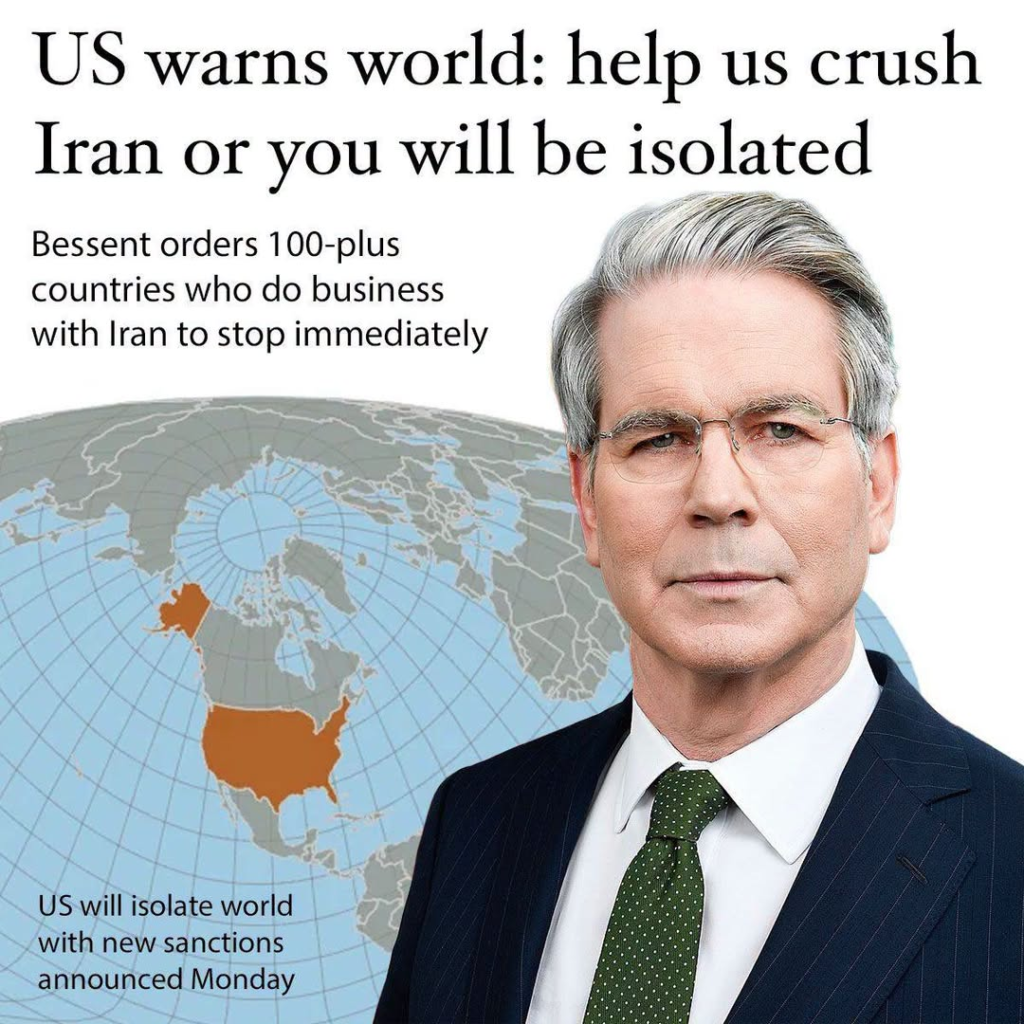
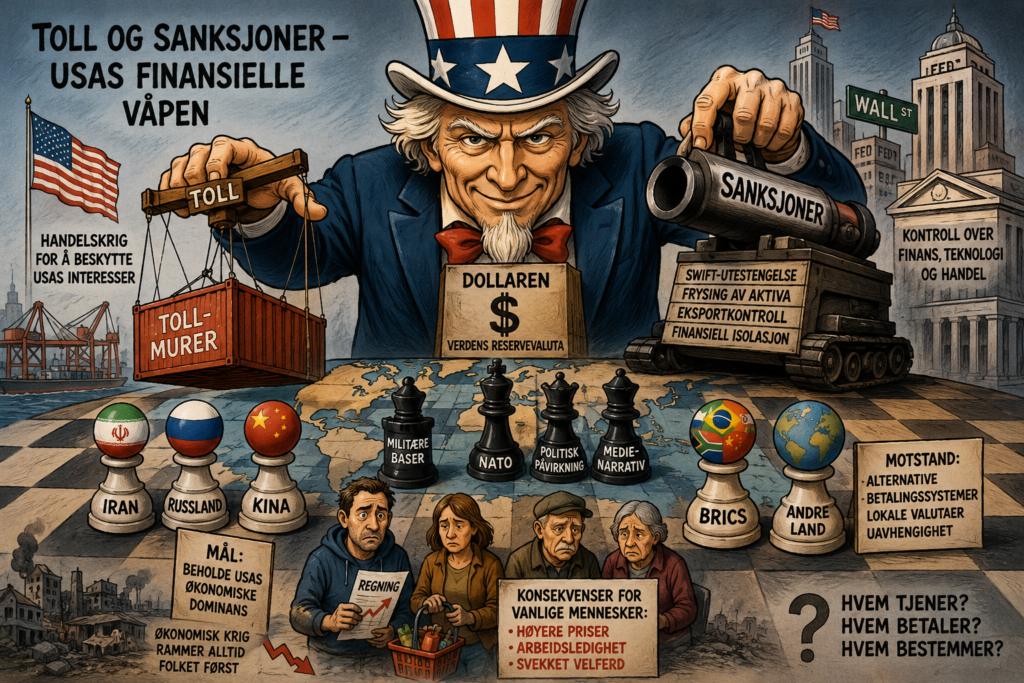
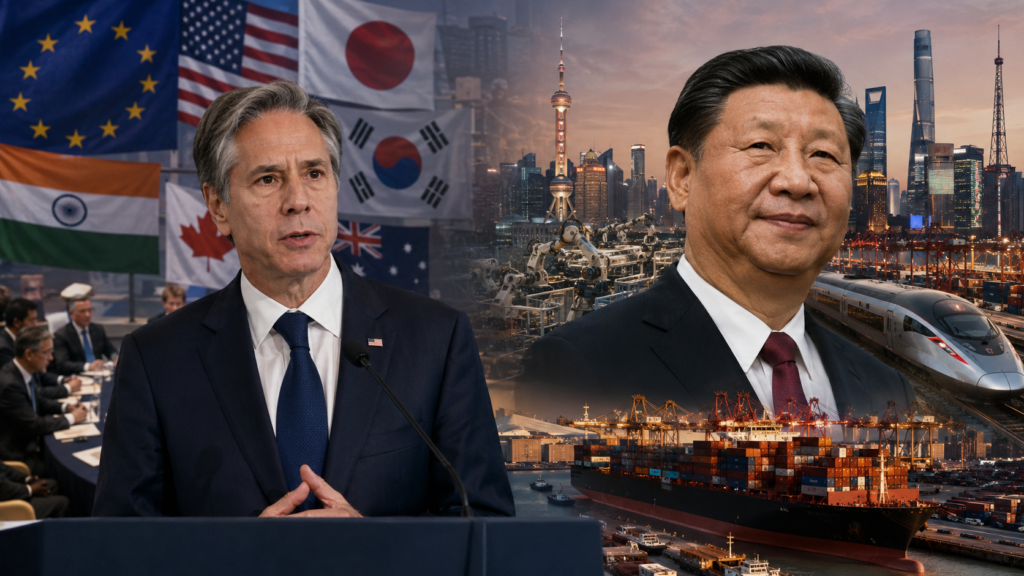
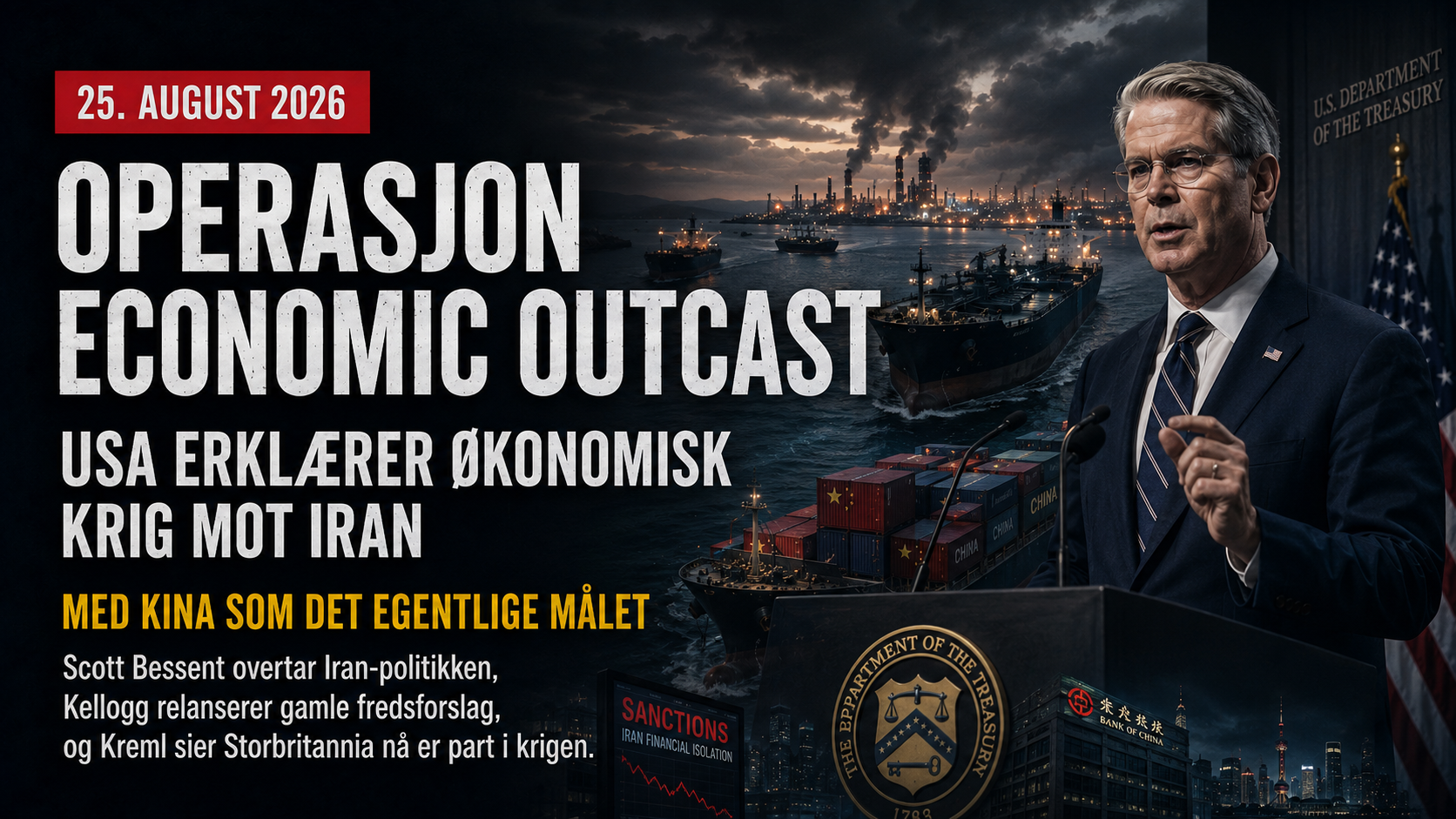
On Monday 24 August, US Treasury Secretary Scott Bessent held a press conference at which he announced “Operation Economic Outcast” – an umbrella term for what he called an “unprecedented campaign” to isolate Iran from the global economy. “Our goal is to cut every economic lifeline that sustains this tyrannical regime until Tehran stands alone”, went the opening line.
“We are enforcing a zero-leakage approach. There will be no minimal breathing room for the regime to build up its capacity to inflict terror on the world,” Bessent declared. Specifically, he announced five new sectoral sanctions on Iran – digital assets, technology, gold, aviation and shipping – as well as sanctions against more than 60 entities, individuals and vessels. According to Bessent, Trump himself is calling world leaders with personal demands that they cut their ties with Iran.
At its core, it is an announcement that amounts to an admission of military failure. The American military offensive against Iran – “Operation Midnight Hammer”, which became “Epic Fury”, which became “D-Day” – has not forced a new MOU or Iran’s capitulation. The Strait of Hormuz is still effectively closed. The six-month military stalemate with Iran is the direct reason why the treasury secretary – not the defence secretary – now leads Iran policy. It is a telling sign of what the Trump administration thinks about the prospects of the military strategy.
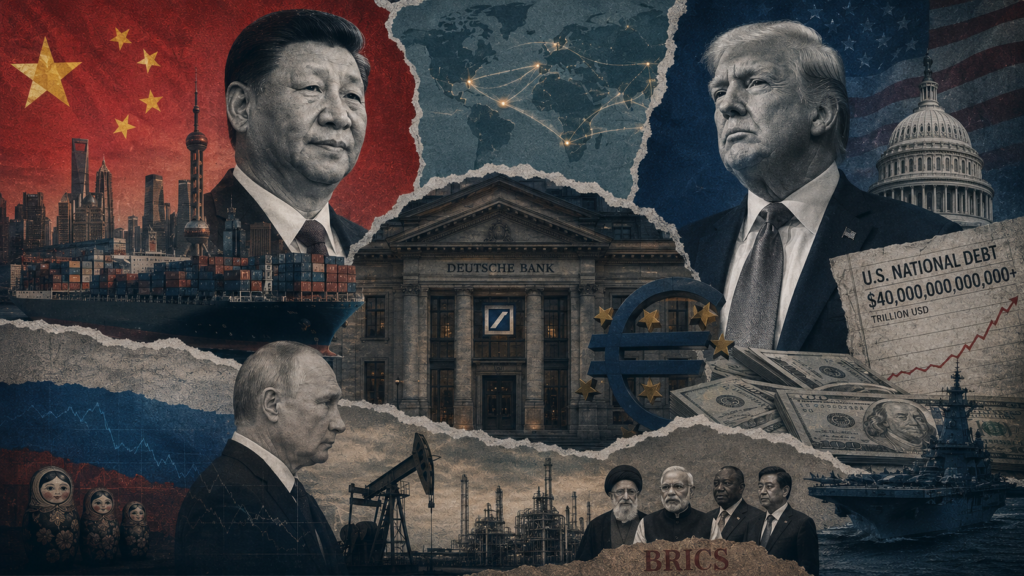
The problem with the “zero-leakage” approach is structural: China buys the vast majority of Iranian oil, and Chinese banks and shell companies help Iran evade sanctions. Beijing has already shown it will not be pressured by secondary sanctions. If the US actually tries to enforce these sanctions against China – a country holding over 700 billion dollars in US Treasury bonds and dominating supply chains for rare earths and semiconductors – the global financial instability that would follow is far more dangerous for Washington than for Tehran. That is the fundamental weakness Bessent did not address.
Zelensky’s “new” peace plan: the same offer Russia has rejected 25 times
In parallel with Bessent’s press conference, news leaked that Zelensky, in cooperation with the Trump administration, has drawn up a “new” peace proposal. Its content is identical to what has been put to Russia repeatedly: a freeze of the contact line where it is, a mutual withdrawal of a few kilometres, and a “free trade zone” in the remaining Ukrainian-controlled parts of Donbas – including Sloviansk and Kramatorsk. In addition, the US is said to have some unspecified “sweeteners” for Putin to make the proposal more attractive.
It is identical to what Kellogg presented in February 2025. It is identical to what Witkoff and Kushner presented in April 2025. It is identical to what was conveyed via Turkey, Brazil and Kazakhstan. Russia has rejected it every time. That it is now relaunched as “new” – at exactly the moment Dobropillia is about to be fully encircled, Orikhiv is about to fall and Mykolaivka is under pressure – is not diplomacy. It is an information operation aimed at Western public opinion, not at Moscow.
Kellogg is back: mobilise the women – Ukraine is “winning”
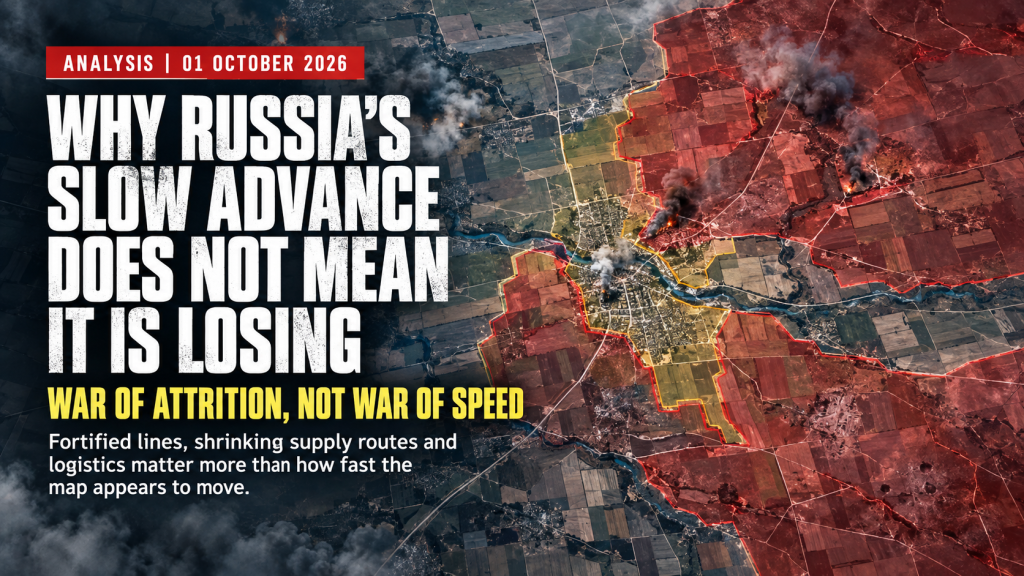
The reactivated Trump envoy Keith Kellogg gave an interview on Tuesday in which he claimed that “Russia thinks it is winning – it is not. Ukraine is the winning side.” As evidence he cited that Russia has not gained more territory than one would expect, that Russia is dependent on North Korean forces, and that Russia has “had to move its logistics further east” – referring to Wildberries having to move its warehouses towards Kazakhstan after Ukrainian drone attacks.
It is an argument that is hard to take seriously. Russia gained around 700–800 square kilometres per month through the summer. Kostiantynivka, Lyman and Orikhiv have fallen or are falling. Dobropillia is encircled. And an e-commerce company relocating warehouses is clearly not relevant to the military situation. The only consistent thing in Kellogg’s interview was his open promotion of sending Ukrainian women to the front lines – which he presented as “empowerment”, but which in reality is an admission that Ukraine is running out of men to send to the war.
Peskov: Britain is now a party to the war
Kremlin spokesman Dmitry Peskov said on Tuesday that Britain, through its decisions on Storm Shadow/SCALP classified information, has become a “party to the war”. Peskov added that Russia is “collecting data to map the production sites” – a clear warning that factories involved in SCALP production will be attacked.
It is Peskov’s second “party to the war” statement about Britain in a week. The previous one came in connection with AI war data exchanged between Kyiv and London during Burnham’s visit. The overall picture is clear: from the Russian side, the British military is no longer an indirect supporter of Ukraine. It is a direct participant in the war – and is treated accordingly in Russian planning.
In light of this, Britain’s current naval strength is a serious concern: as Admiral Lord West recently acknowledged to the Daily Telegraph, the Royal Navy has only two patrol ships deployed in the Indo-Pacific – where Russia has ordered its Pacific Fleet to seize Western vessels. A state regarded as a party to a war against Russia, with two patrol ships in the relevant area of operations, is not in a strong negotiating position.
Annalena Baerbock to Columbia University: the end of an era
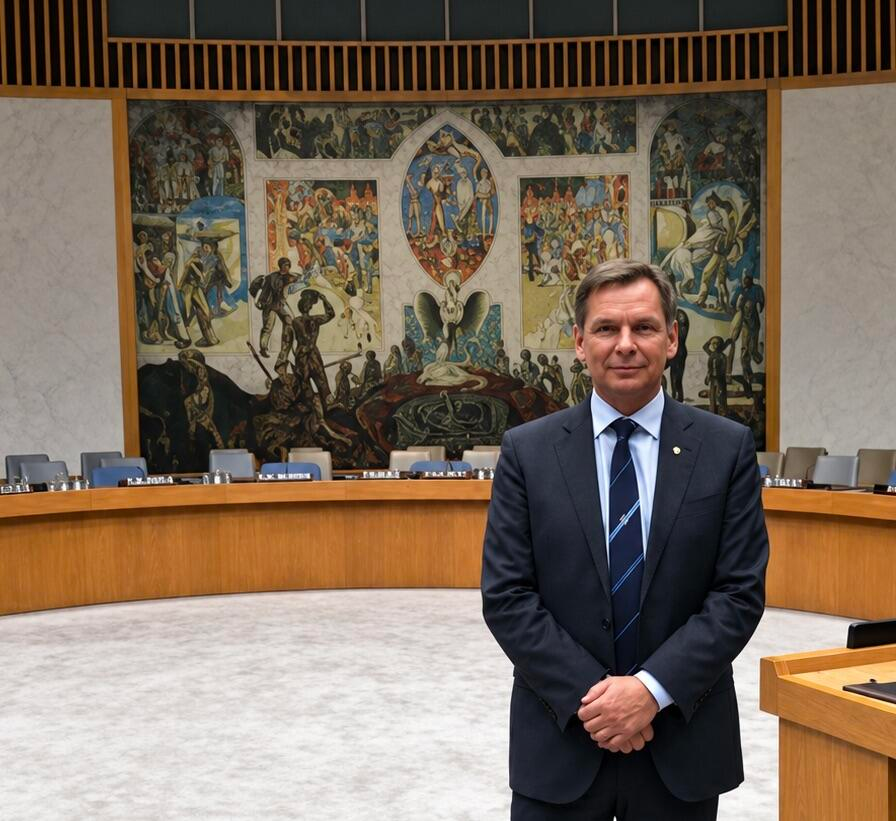
Finally: former German Foreign Minister Annalena Baerbock – according to the German press – has been appointed professor at Columbia University in New York after her one-year term as President of the UN General Assembly ends. It is the classic European politician’s journey: a term marked by spectacular statements without an empirical basis, a rhetorical embrace of Western values without the ability to turn them into practical policy, and a soft landing in an academic post in the US. Columbia, it should be said, is the same university where a number of the Western institutional class’s leading figures have found a harbour after their time in office. For Baerbock it is a fitting full stop to a period in which German foreign policy was dominated by symbolic gestures at the expense of strategic substance – with the consequences now fully visible in the form of empty industrial capacity, historically low gas storage and an energy crisis that will mark Germany for years to come.