Drones Against the Power Grid
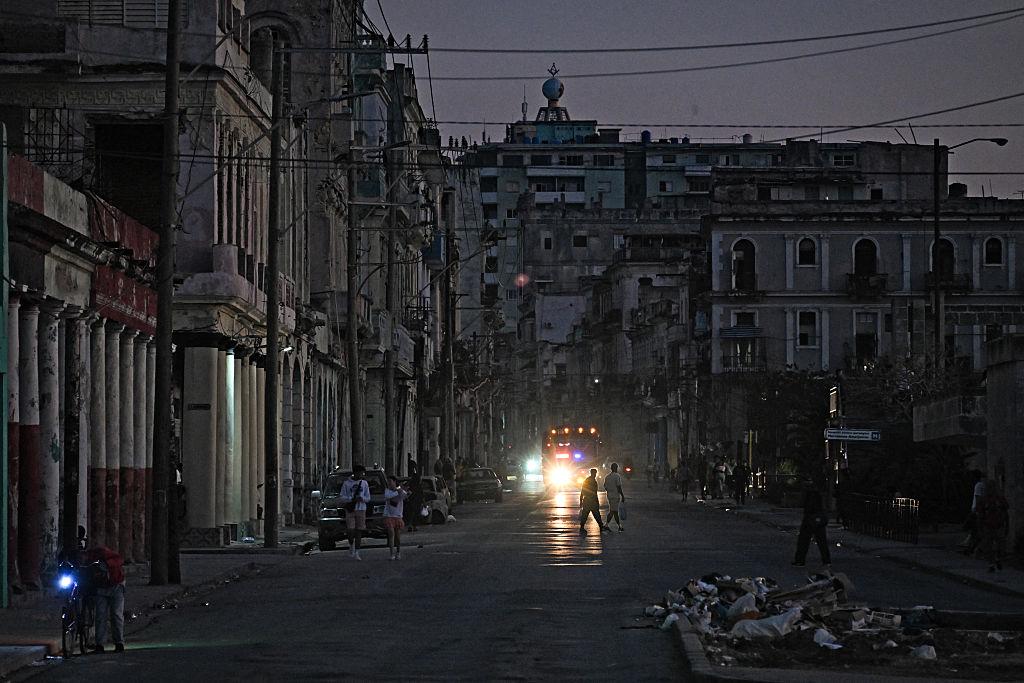
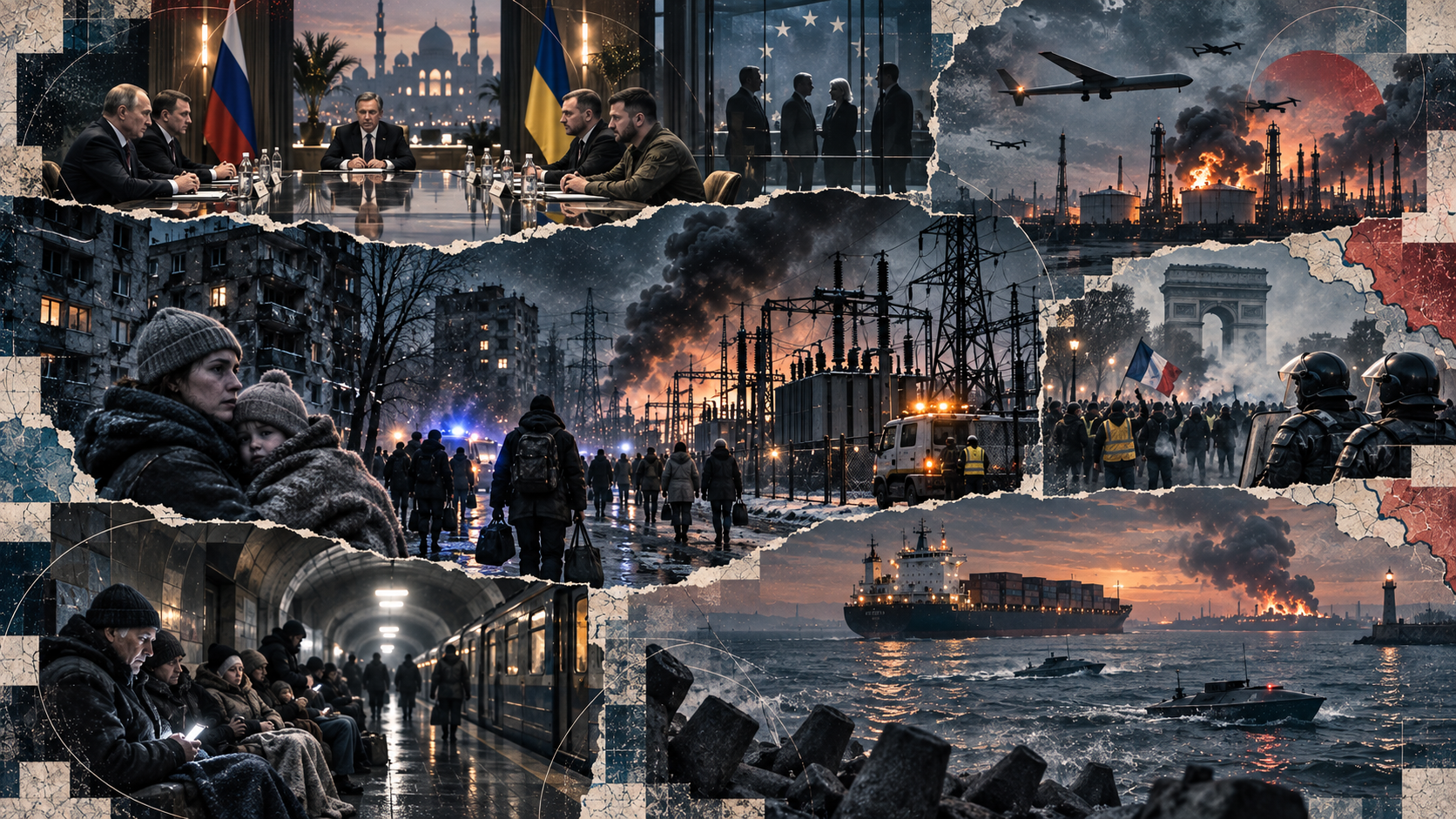
Ukraine was hit by one of the largest single drone attacks since the war began. The Ukrainian Air Force says 433 drones were launched, 64 of them jet-powered.
One possible explanation is that low cloud and fog are making it harder for mobile air-defence teams to detect and engage the drones visually. Hundreds of cheap drones spread across the country can therefore tie down air defences, and such a wave could be followed by missile strikes, perhaps as soon as tonight. Zelensky says the attacks have hit power supplies in four regions and that Russia is exploiting Ukraine’s shortage of interceptors for ballistic missiles. According to him, around 200,000 households in the Dnipropetrovsk region and more than 80,000 in the Kyiv region were already without electricity before the night.
That means the grid is being weakened at the beginning of winter, when demand is highest. Ukraine is responding with drone attacks of its own. Russia’s Defence Ministry says 235 Ukrainian drones were shot down overnight into Sunday, while regional authorities in Russia reported a major fire at the Kstovo refinery in the Nizhny Novgorod region. The refinery strikes form part of the background to Moscow’s diesel restrictions, discussed below.
Black Sea: A Pause Moscow Does Not Want
On Saturday, Zelensky met Erdogan in Istanbul. They agreed to work towards a new grain corridor, while Erdogan called on both Russia and Ukraine to halt attacks on civilian shipping. US Secretary of State Marco Rubio said the same day that interest in a limited ceasefire in the Black Sea is growing.
The Kremlin says no. Peskov has said that piecemeal arrangements do not bring peace any closer, while the Kremlin says its objective is to cut off all deliveries of weapons and fuel to Ukraine by sea. According to Reuters, both sides have intensified attacks on ships and ports since July. Moscow says Ukraine started the latest escalation when it attacked Russian vessels in the Sea of Azov earlier in the summer.
Moscow’s calculation is that the blockade hurts Ukraine more than Russia. Russia has shifted part of its grain exports to the Baltic and, according to Reuters, has begun using Murmansk in the Arctic, at greater cost and on a smaller scale. Russia says it is no longer interested in another grain deal. Giving up economic leverage over Kyiv without receiving anything in return is therefore not on the table.
Instead, Moscow links reopening the ports to a broader settlement. Russia has demanded that Ukraine withdraw from the rest of Donbas, while its demand that Ukraine remain outside NATO also stands. Pressure from Erdogan and the United States therefore does not appear to be changing Moscow’s position. From the Kremlin’s perspective, the only route to reopening the ports runs through concessions from Kyiv in the larger negotiations.
Talks Without the Europeans
According to the Kremlin, trilateral talks between Ukraine, the United States and Russia are planned in Abu Dhabi in the first half of November. Kyiv wants an energy ceasefire and a Black Sea ceasefire on the agenda. Peskov has said Moscow will not halt military operations beforehand.
Europe is not included. Finnish President Alexander Stubb and Norwegian Prime Minister Jonas Gahr Støre called Putin on 27 October, but as leaders of their respective countries, not on behalf of Europe. Peskov called the conversation constructive.
Moscow also points out that leaders in Brussels and other European capitals are still talking about inflicting a strategic defeat on Russia, and argues that this makes broader European participation impossible. Kremlin adviser Yuri Ushakov says Putin will answer if Zelensky calls, and that Zelensky can come to Moscow.
Diesel as Leverage
Trump said on 9 October that Russia had agreed to supply large quantities of diesel to the United States and the global market.
Russian media report that the export ban for direct producers will be extended until 31 January 2027, with some exemptions. The ban has been justified as a way to stabilise the domestic market after Ukrainian drone attacks on refineries.
An export ban can also give Moscow leverage over importing countries, perhaps especially over a US administration concerned about fuel prices. Russia does not describe it as retaliation, which would run counter to Moscow’s own criticism of sanctions.
The Front and the Rainy Season
The rainy season can slow major movements across open ground without stopping fighting in urban areas. Along the Dnipro, marshy terrain makes a river crossing particularly difficult.
A local humanitarian ceasefire around Oleshky in the Kherson region expired on Sunday, and no major moves are expected there over the next few days. Once frost hardens the ground, the room for manoeuvre may increase again. The weather may therefore explain a temporary slowdown, but it does not tell us where or when the next offensive will come.
In Donetsk, Bilozerske, north of Dobropillia, is under heavy bombardment. The city could fall quickly if the pressure continues, because Ukrainian forces have few urban centres behind it that can serve as supply bases or fallback positions.
Russian sources claim that the defensive lines in Zaporizhzhia have been broken and that Russian forces are positioned for further movement north of Orikhiv.
Europe Under Pressure
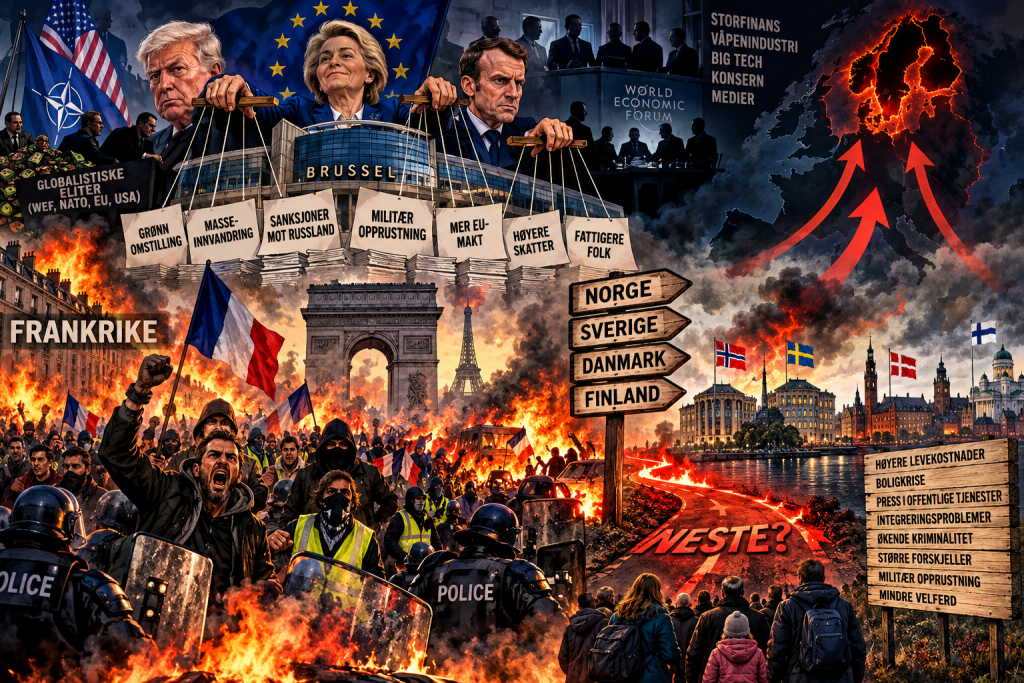
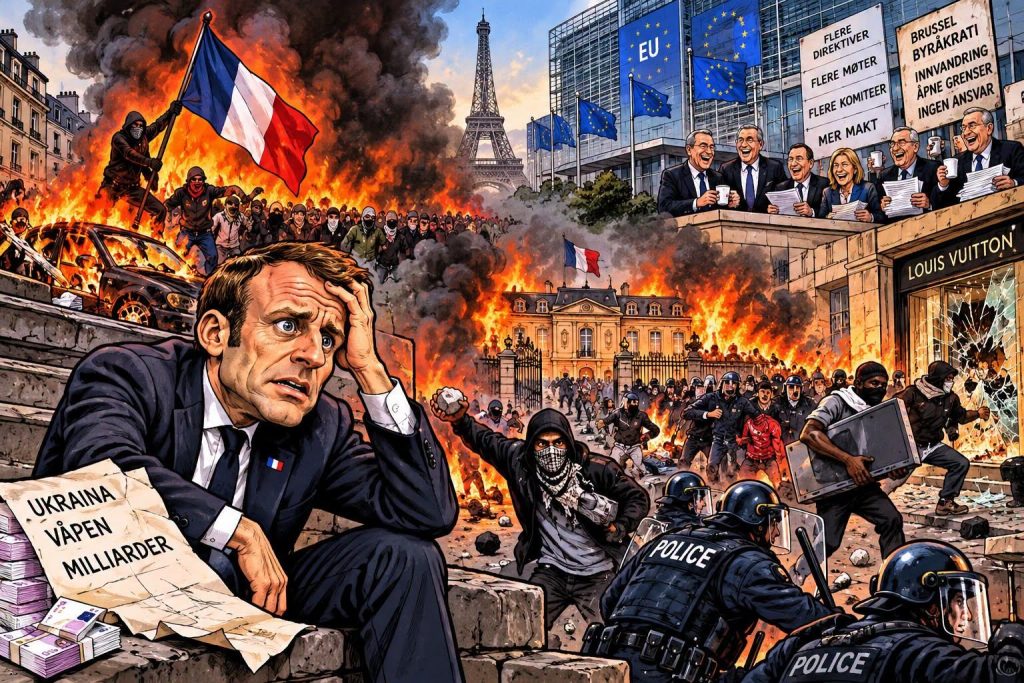
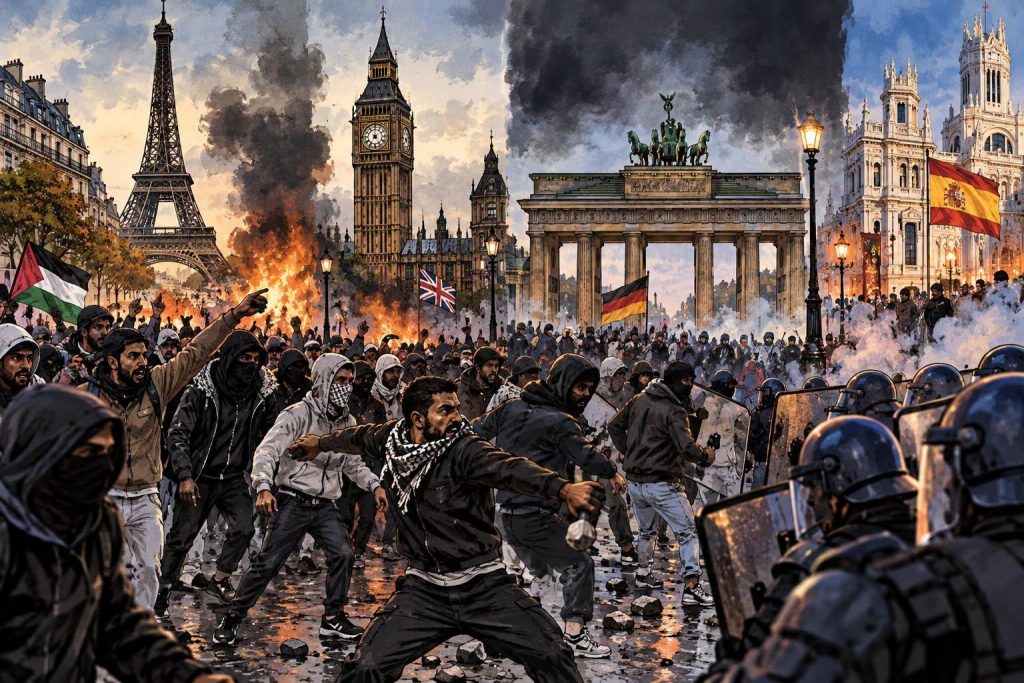
As the war continues, European governments are dealing with crises at home. In France, Saturday marked the third consecutive weekend of protests over living costs and conditions in schools. The Interior Ministry reported 320,000 participants, while police used tear gas in Paris and Lyon. The first weekend, on 17 October, ended in looting and around 1,800 arrests.
In Germany, “Gen Z regelt” demonstrations took place in 34 cities. Italian writer Thomas Fazi interprets the protests as an expression of a political system that cannot be changed through elections.
The same question is emerging in Poland, where the dispute over the Constitutional Tribunal escalated on Friday. Judge Anna Korwin-Piotrowska, citing her longer overall judicial service, declared the tribunal’s president, Bogdan Święczkowski, suspended, while riot police sealed off the building in Warsaw.
President Karol Nawrocki cut short a trip to Senegal and forced his way into the building. Police say they did not enter the building.
Prime Minister Donald Tusk, an EU centrist and former president of the European Council, says the government is restoring the court’s independence after a decade in which PiS filled it with loyalist judges. The European Commission has supported efforts to restore the rule of law, while in this specific dispute also stressing respect for the constitution and the need for newly elected judges to be allowed to take their seats.
The legal basis for the suspension is disputed. It came from a single judge within the tribunal, while police were used to secure the measure, turning the issue into a power struggle between the government and the president as much as a legal dispute.
The Polish case can be read as part of a broader pattern in which national institutions and the EU centre intervene forcefully against political opponents. One example is Romania, where the court annulled the first round of the presidential election in December 2024, only days before the second round. That is an interpretation, not a documented common pattern.
One possible explanation for the escalation now is that the government wants the judiciary aligned before any future change of government. The dispute also has a deeper background in the question of legal supremacy. In October 2021, Poland’s Constitutional Tribunal ruled that parts of the EU treaties were incompatible with the Polish constitution, rejecting the supremacy of EU law. Control of the court therefore matters far beyond Poland itself.
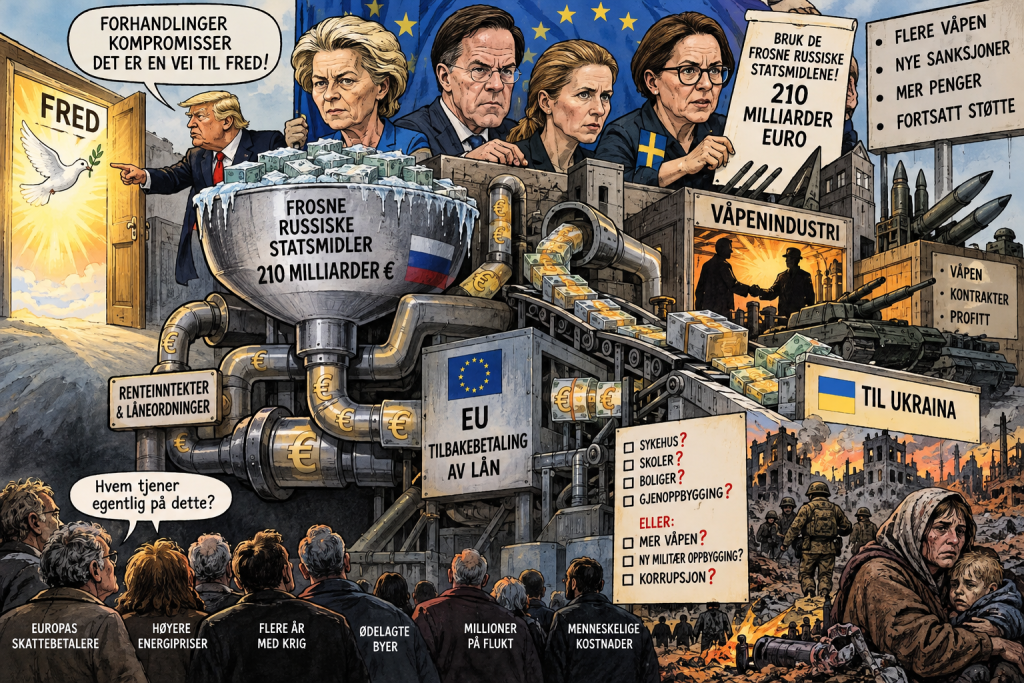
At the same time, the cost of supporting Ukraine is falling on governments already under pressure. The European Commission acknowledges a €70 billion gap in Ukraine’s 2027 budget, while Britain has promised more than £10 billion in support.
Winter could intensify that pressure. Higher energy and food prices will hit households already taking to the streets, while a renewed war in the Middle East could push energy prices higher still. That could fuel further protests and reduce the room European governments have to manoeuvre in a Ukraine diplomacy from which they are already largely excluded.