
Manila: A 35-minute meeting that confirmed the stalemate
Russia’s Foreign Minister Sergei Lavrov and US Secretary of State Marco Rubio met on Thursday 23 July on the sidelines of the ASEAN summit in Manila. The meeting lasted 35 minutes and was confirmed by the Russian side as initiated by the US. It was their fourth meeting since 2025 – previously in Riyadh, Kuala Lumpur and New York. Rubio said beforehand that his primary focus would be possible ways out of the war in Ukraine. Lavrov said he would ask Rubio about the Trump administration’s recent statements that a settlement is approaching, and confirm whether the concessions from the Anchorage meeting still apply.
Neither the Russian nor the American side made statements or took questions from the press after the meeting. The American side summed it up by saying they “discussed the US-Russia relationship and the need to end the war” – a phrasing without substance. Lavrov, for his part, confirmed Russia’s “readiness for a political and diplomatic solution” – the standard phrasing Moscow uses every time, without making a single concrete concession.
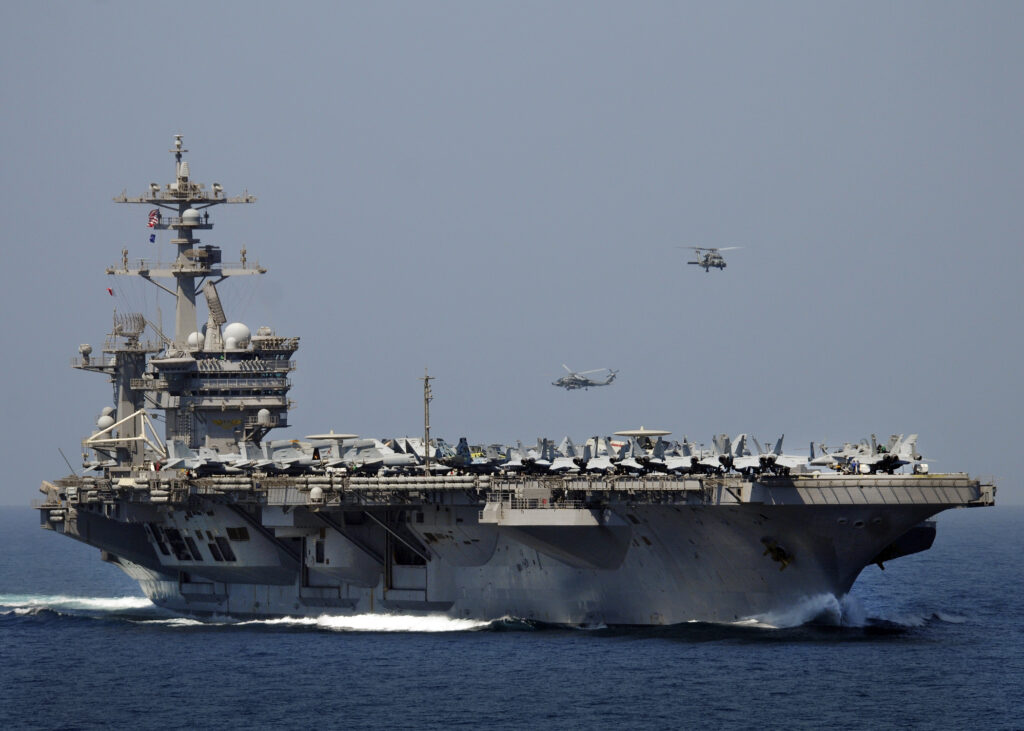
The most substantive part came before the meeting itself. US Defence Secretary Pete Hegseth had that same day accused Russia and China of assisting Iran with attacks on US forces in the Persian Gulf. Lavrov countered that the criticism is “doubly misplaced”: the US gives Ukraine long-range weapons, satellite data and artificial intelligence for use against Russia – exactly what the US accuses Russia of doing for Iran. It is an argument that is hard to counter logically, and probably the reason the meeting was short.
Anchorage is buried – the demands back to square one
A Bloomberg analysis confirms that Russia has communicated to the US that Putin has withdrawn the territorial concessions he accepted at the Anchorage meeting – reportedly a relinquishment of Russian-occupied parts of the Kharkiv and Sumy regions in exchange for Ukrainian withdrawal from Donbas. Peskov answered the question of what Ukraine must do with a simple reference to Putin’s speech to the Foreign Ministry on 14 June 2024 – what may be called Istanbul-plus: Ukrainian withdrawal not only from Donbas, but from Zaporizhzhia and Kherson as well.
Whatever Russia might have given in Anchorage has now been set aside. The demands are back to square one – and with the military progress of recent weeks, square one has become far worse for Ukraine than it was when Anchorage took place.
Maersk leaves Odesa – and where Maersk leads, others will follow
The Danish-owned shipping company Maersk – one of the world’s two largest shipping companies – announced on Wednesday that it will no longer send ships to Odesa. Cargo originally destined there is being rerouted to the Romanian port city of Constanța. Russian military blogger Alexander Kots put it precisely: “Maersk’s withdrawal is not a military blockade. It is market confirmation – Odesa’s ports have become a zone where major shipping companies will not go without an astronomical insurance premium”.
Russia does not need to formally declare a blockade. It is enough to make the risk so high that no insurer will cover ships calling at the port. And where Maersk leads, others will follow. Odesa is closed. Ukraine’s last sea-based export channel is gone.
Bilytske and Dobropillia: Donbas approaches its decision
The Russian Defence Ministry confirmed on Thursday that Bilytske – a town north of Pokrovsk – is under full Russian control after intense fighting with armoured vehicles and infantry. Mopping-up operations are under way to neutralise Ukrainian soldiers who have taken cover in basements. The Russian Defence Ministry reports that Ukrainian forces suffered losses of more than 1,420 personnel over the past 24 hours along the entire line of contact.
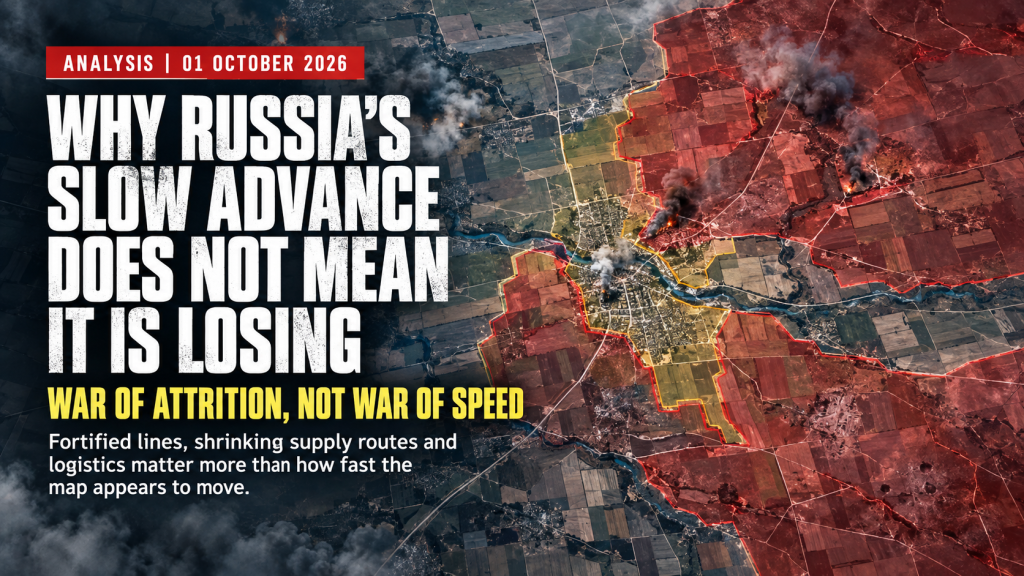
At the same time, Ukrainian and Russian military sources consistently report that Russian forces have broken into Dobropillia itself and that urban fighting is under way in the town’s streets. Dobropillia is the western end of Donbas – west of the town there is open steppe with no fortified lines of significance all the way to the Dnipro river. The fall of Dobropillia will close the ring around the Ukrainian forces in the salient between Sloviansk and Kostiantynivka. It is what the Gerasimov model has always worked towards: encircle large Ukrainian force concentrations, cut off the access roads and force a chaotic collapse. We saw it in Avdiivka, in Kursk, and now in Donbas as a whole.
EU sanctions package 21: Adopted – but hollowed out from within
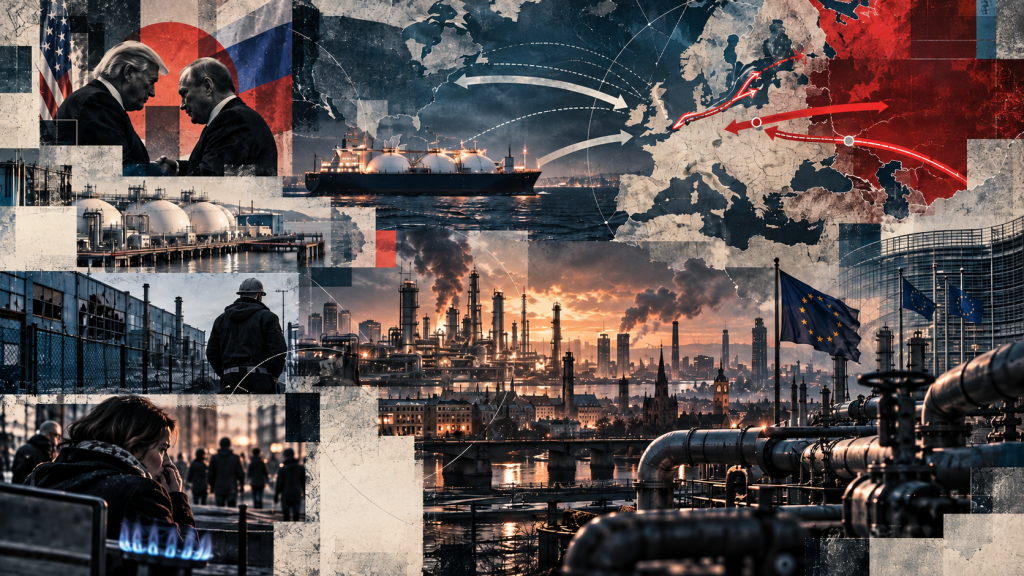
On Wednesday 22 July, the EU countries finally agreed on the 21st Russia sanctions package. But the content reveals more than it conceals. Greece secured an exemption allowing Greek ships to continue carrying Russian LNG from the Yamal facilities to third countries – “for now for one year”, with the possibility of extension. The price cap on Russian oil was lowered to 44 dollars a barrel – in a market where the crude oil price passed 100 dollars on Thursday. No one buys Russian oil at 44 dollars when the market price is 100. It is political theatre, not a real restriction.
Trump is also signalling that he will water down parts of the late Lindsey Graham’s “bone-crushing sanctions” bill and insist on full discretion to decide himself whether and when sanctions are imposed. The Americans are moving in one direction, the Europeans in another – and Russia continues to advance.
Oil passes 100 dollars: What it means
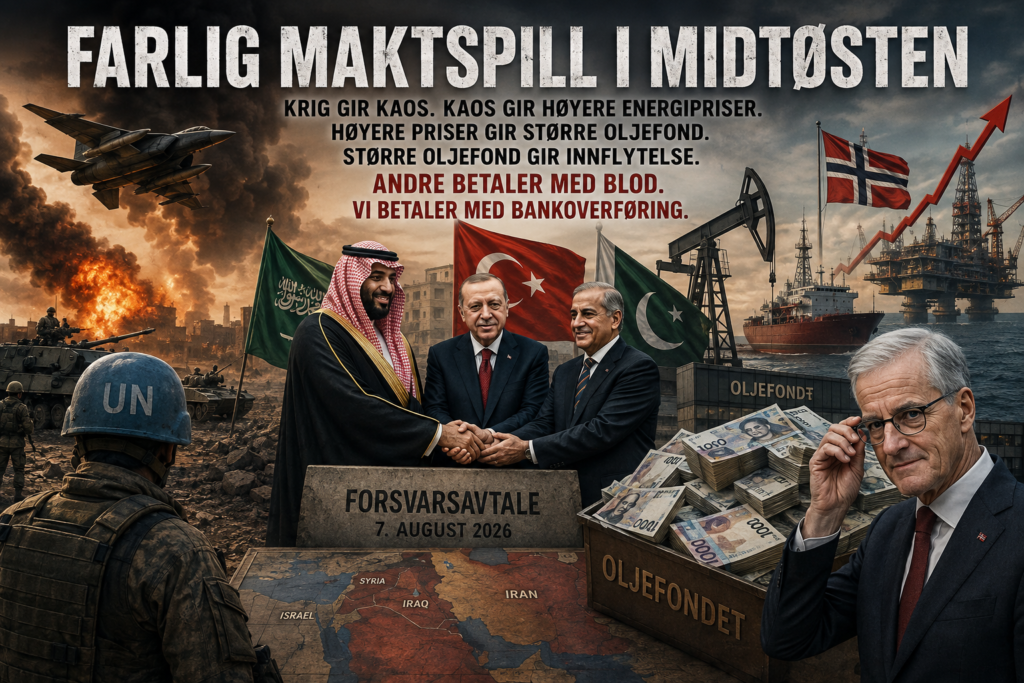
Brent crude passed 100 dollars a barrel on Thursday for the first time in two months. The trigger was that the Houthis in Yemen fired missiles and drones at two Saudi oil tankers in the Red Sea as part of what they call a blockade of Saudi ports. The Strait of Hormuz is already effectively closed, and the fear now is that both major maritime export corridors for Middle Eastern oil could be closed simultaneously. The S&P 500 fell 1.2 percent and the Nasdaq 2.4 percent on the news, while the Dow Jones was down almost 500 points.
Equinor’s chief financial officer warned earlier this month that Europe is unlikely to reach its 80 percent storage target even if the Strait of Hormuz opens today. With 100-dollar oil, heating and transport costs will rise further into the autumn. It is a combination of political decisions – support for the Ukrainian drone offensive against Russian refineries, failure to honour the MOU with Iran, ignoring the Anchorage process – that is now showing up in the market prices ordinary Europeans and Americans pay at the pump and on their electricity bills.
It is not a boomerang effect no one could foresee. It is a logical consequence.