Bila Kolodiazne and Uspenivka: Kharkiv’s north-eastern defence collapses
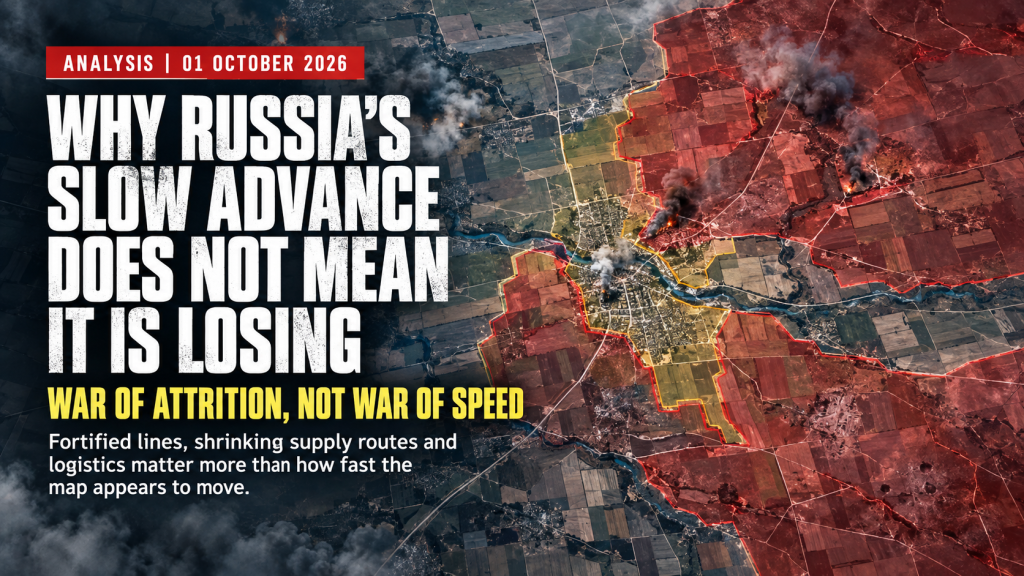
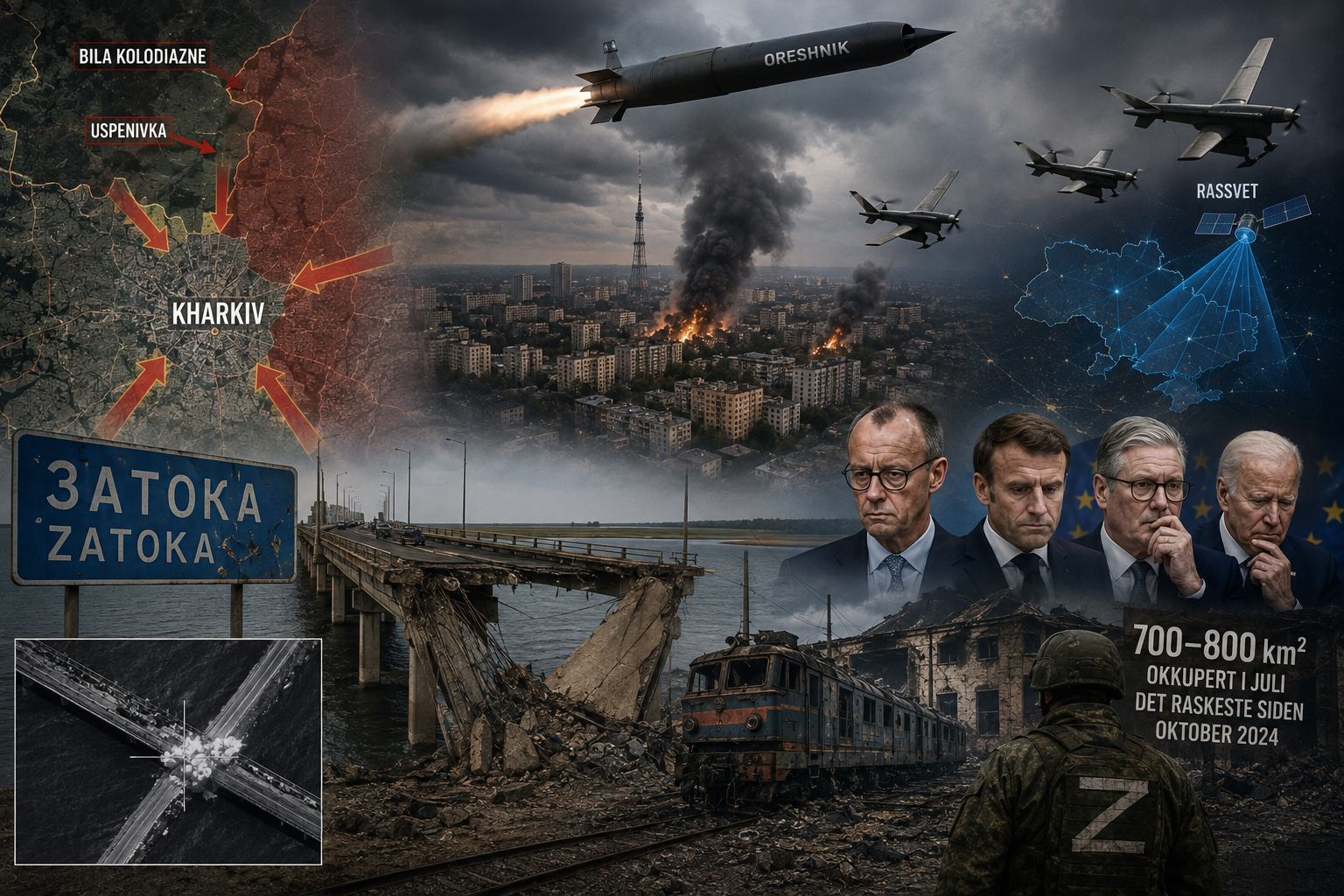
On Monday the Russian Defence Ministry confirmed that Bila Kolodiazne and Uspenivka in the Kharkiv region are under Russian control. Bila Kolodiazne is itself a small town – from 5,000 inhabitants when the Soviet Union dissolved to around 350 at this stage of the war. But it is home to an important railway station linking Kharkiv to Kupiansk, which has served as the main logistics hub for Ukrainian forces in this area of north-eastern Ukraine.
The loss of Bila Kolodiazne is not primarily the loss of a single town – it is the loss of operational control over an entire sector of the north-eastern Kharkiv region. The Russian Defence Ministry reports that Ukrainian forces in the area withdrew south and west, which is consistent with a broader pattern of envelopment rather than frontal assault. A sizeable part – an estimated quarter to a third – of the north-eastern Kharkiv region now appears set to come under Russian control shortly, with no fortified lines of any significance remaining in this territory.
What matters is what this opens up: Russian forces can now move south towards Kharkiv city itself from yet another direction. The city is now threatened from the north, north-east and east simultaneously. The logistics situation has deteriorated dramatically – Russian drones have destroyed petrol stations along the main roads into Kharkiv, and the Russians report having destroyed about 15 percent of Ukraine’s locomotive fleet through systematic attacks on railway infrastructure.
The situation is fundamentally different from 2022. Then Ukraine managed to drive the Russians back in the Kharkiv region because Russia was thinly manned and overextended, Ukrainian air defence was intact, and the scale of drone warfare was a fraction of what it is today. Today Ukraine’s air defence against ballistic missiles is exhausted, the Ukrainian army is overstretched and worn out, and Russia operates with hundreds of thousands more men than in 2022. A repeat of the autumn 2022 scenario is unrealistic.
Oreshnik over Kharkiv: the third dimension
Kharkiv’s underground infrastructure – Soviet-built factory halls and command facilities beneath the city’s large industrial complexes – is a potential Oreshnik target of the first rank. So far the system has only been used against Ukraine with inert warheads as tests. According to well-informed analyses, the Oreshnik system has now probably been produced in sufficient numbers, and the infrastructure for mobile launch vehicles is being built up. When the system enters full operational use, it will probably be used against two categories of target: the underground industrial facilities in Kharkiv and command bunkers in Kyiv. It is in this context that Russia’s simultaneous military encirclement of both cities should be read.
The Zatoka bridge: first span collapses – the road to Romania is closed
During the night of 2 August, Russian forces carried out a combined attack on the Zatoka bridge over the Dniester estuary – the strategically crucial link between the Odesa region and Romania. As a result, one span in the northern part of the bridge collapsed – the first critical structural damage after at least twelve Russian attacks on the bridge since 2022. An electrical transformer facility near the bridge was also hit, causing power cuts in surrounding settlements. The bridge is out of service and undergoing emergency repairs.
Its strategic significance cannot be overstated. The Zatoka bridge is not just a road from Odesa to Romania – it is the only road link for goods that in theory were to be rerouted via the Romanian port of Constanța after the sea route was closed. Without the Zatoka bridge, this transshipment route by road and rail is in practice impossible. Ukraine is now genuinely landlocked – not only is the sea route closed, but the last functioning land link to Europe’s transport network is damaged and temporarily closed.
Russia has so far not used its most powerful missiles – Kinzhal, Iskander-M or Oreshnik – against the Zatoka bridge. It is reasonable to assume this is deliberate: the more destructive systems are being saved for the moment Russia wants to take the bridge down permanently, so that Ukrainian repair capacity is completely eliminated.
Russia’s pace: 700–800 square kilometres in July – the fastest since October 2024
In July 2026, Russian forces took more Ukrainian territory than Ukrainian forces managed to regain. Independent Western mapping services estimate net Russian territorial gains at between 700 and 800 square kilometres – the fastest rate of advance since October 2024, when the Russians surged towards Huliaipole and took town after town in south-western Donetsk and eastern Zaporizhzhia. DeepState, the Ukrainian-backed mapping service, acknowledges an acceleration, albeit with lower figures.
The narrative that Ukraine’s drone offensive has brought the Russian advance to a standstill is now completely discredited by the statistics. The drone offensive has not stopped Russian advances. It has not stopped Russia’s logistics. It has not put the Russian economy under decisive pressure. It has, on the other hand, deprived the frontline defence of resources and invited retaliatory attacks of ever greater destructive force.
Reuters: Russia has left the diplomatic table
On Monday Reuters published an analysis concluding that the Russian leadership has in practice given up believing a diplomatic solution is possible, and that the Kremlin is now fully focused on military victory. Peskov already put it this way on 25 July in Omsk – when he answered Tokayev’s peace appeal by saying Ukraine “knows what it needs to do” to end the war: that is the Istanbul-plus formula, and it is not up for negotiation.
The assassination attempt against Putin at Valdai in December 2025, the drone attacks on Russian cities, the killings of Russian generals in Moscow and the American denial of the Anchorage agreement have had a cumulative effect on the Russian leadership’s willingness to negotiate. It is now zero.
What really happened in Anchorage
An eyewitness to the Anchorage meeting – whose identity is not disclosed – has given a detailed description of Trump during the negotiations: a president in a euphoric mood, sincerely convinced that he had negotiated a good deal with Putin. Trump had no ulterior motives and no hidden agenda. He would have liked to stay longer and left early only for pressing domestic political reasons.
What followed was not a planned betrayal by the American side, but a series of unfortunate events. Zelensky did not come round. The turbulent meeting in the Oval Office between European leaders and Trump helped disrupt the course. And the process went off the rails – without any single individual necessarily having planned it that way. Some in the American administration may not be unhappy with the outcome. But Trump personally was not party to any deception against Russia. That is historically important – and it may become politically important if a future American-Russian dialogue is one day to be restored.
The bomb attack in Moscow: Ukraine’s dirty war escalates
During the night of 3 August, a terrorist attack was carried out against an Italian restaurant in the Kudrinskaya apartment block – one of the seven Stalinist “sisters” skyscrapers in Moscow. According to the Russian Foreign Ministry, a birthday party was planned for a senior officer in the Russian air defence forces. A woman tried to enter the restaurant with an improvised explosive device and was stopped by security staff – who died in the explosion. Among the dead is reportedly a relative of the officer concerned.
The Guardian reported on four Russian generals killed in Moscow in recent weeks, presumably through operations arranged by Ukrainian intelligence – and covered this without any notable moral discomfort. That a murderous attack carried out by someone who evidently did not know what she was carrying – and thereby put random civilian restaurant guests in mortal danger – is described in the Western press almost without comment illustrates the normalised brutality of war coverage.
Ukraine’s Myrotvorets website – which lists named “enemies of Ukraine” complete with personal details and addresses – has now added Wildberries head Tatiana Kim. She is a civilian businesswoman with no military role. In 1980s Greece, an organisation that published similar lists of prominent citizens it intended to kill was without hesitation called terrorist. No one in the West seems to react.
Saudi Arabia sent Trump its strongest warning yet
Trump called off a planned massive attack on Iran after, according to a source with direct knowledge of the conversation, the strongest and most direct warning Saudi Arabia has ever addressed to a sitting US president in this conflict. MBS – Saudi Arabia’s crown prince and de facto leader – warned Trump in plain language that an attack of the planned scale would trigger an Iranian and Houthi response against the entire Saudi energy and infrastructure complex: oil production, storage, refineries and potentially desalination plants.
There are also reports of internal criticism of MBS in Saudi Arabia for the first time in many years, after a failed Saudi attack on Shia militias in Iraq resulted in far higher losses than expected and has undermined relations with the Iraqi prime minister. If MBS’s domestic position is under pressure, he will need to show restraint in the Iranian confrontation – which further limits Trump’s room for manoeuvre.
The overall picture
Ukraine is landlocked at sea. The Zatoka bridge is damaged and closed. Bila Kolodiazne has fallen and Kharkiv is under pressure from three directions. Russia is taking 700–800 square kilometres a month. Russian diplomatic interest in negotiations is non-existent. The drone offensive hits e-commerce warehouses instead of refineries. And Trump – according to an eyewitness – sincerely believed that Anchorage was the start of a lasting peace agreement.
Iuliia Mendel – Zelensky’s former press secretary and an unequivocal critic of Russian aggression – now writes with growing despair about the gradual destruction of Ukraine. That is the voice Europe should have listened to. It is the voice Europe will try to silence when the final catastrophe, which now looks ever more inevitable, occurs.