Kh-101 in Lublin: Confirmed Russian missile on NATO territory
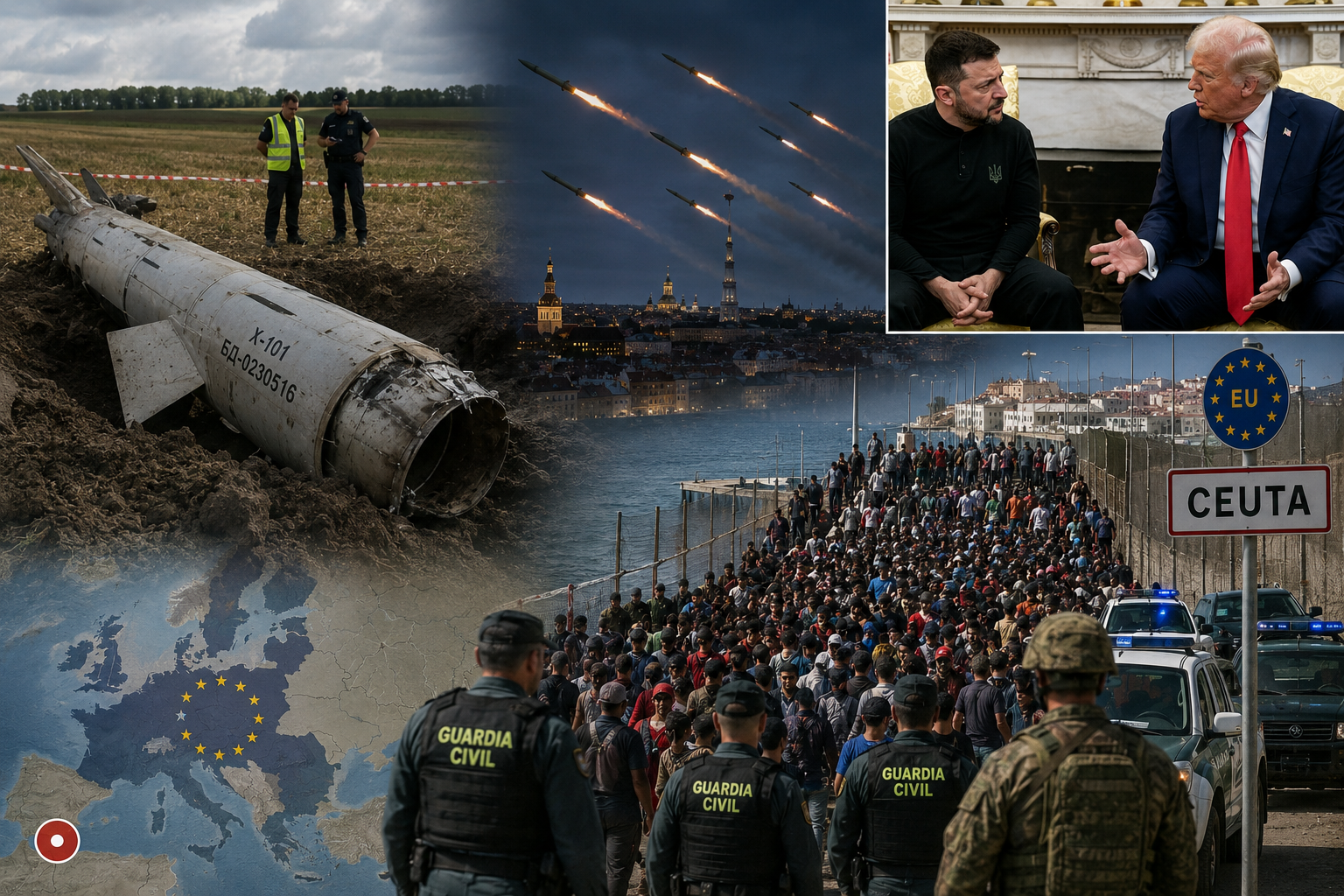
During the night of 30 July, a Russian Kh-101 cruise missile fell into a field near the villages of Tarnawa-Kolonia and Tokary in Poland’s Lublin region – around 90 kilometres from the Polish-Ukrainian border and 150 kilometres north-west of Lviv. Poland’s Deputy Defence Minister Cezary Tomczyk explicitly confirmed it was a Kh-101 – a cruise missile also capable of carrying nuclear warheads. Polish prosecutors say the missile contained a “significant amount of explosive material” and left a crater around 10 metres wide and 5 metres deep.
The missile was produced in the second quarter of 2026 at a facility in the Moscow region – that is, a few months ago, not leftover stock from the beginning of the war. The missile travelled around 100 kilometres inside Polish airspace before it exploded. A Ukrainian fighter pilot pursued the missile up to the Polish border but broke off 20 seconds before crossing because the aircraft could not enter Polish airspace without authorisation and risked being mistaken for a threat by Polish F-16s.
Polish Prime Minister Donald Tusk said there are no grounds to believe Poland was the intended target. The most plausible explanation is that the missile was diverted by Ukrainian electronic jamming or suffered a technical failure and overshot its target in the Lviv region. Russia has maintained complete silence about the incident.
Just as important as the incident itself is the reaction – or the absence of one. Compared with the strong reactions in 2022 and 2025 when Russian missiles and drones previously ended up in Poland, this incident has been handled with a caution bordering on silence. That is not because it is less serious. It is because Western governments realise that escalating the rhetoric would force them to answer questions they do not want to answer – about the West’s own satellite and intelligence contributions to Ukrainian missile strikes inside Russian territory, something recently confirmed by the Financial Times.
Lviv without air defence – eight Kh-101s hit two military facilities
During the massive attack on the night of 29–30 July, which hit targets across ten Ukrainian regions, Lviv was struck by at least eight Kh-101 missiles. What is remarkable is not the number – it is that there was no functioning air defence around Lviv. All eight missiles hit their targets. Among the targets were the LORTA plant, which produces electronics for missiles and radar systems, and an aircraft repair facility involved in maintaining MiG-29 fighters and turbine engines for Flamingo cruise missiles.
Lviv is not a city near the front line – it is 600 kilometres from Donbas. That Russian missiles are now hitting military-industrial facilities there without any form of resistance illustrates what has become the operational reality: Ukrainian air defence exists only in the southernmost pocket around Kyiv, where the last of the allied Patriot batteries are concentrated. The rest of Ukraine is open.
The Patriot promise is already broken – Boeing refuses a licence
In an interview with the Financial Times on Friday, Trump said it is far from certain that the US will actually allow Ukraine to produce the Patriot missile, and that “there are many problems in the way”. This is a direct retreat from what was presented as a concrete promise at the NATO summit in Ankara three weeks ago, when Trump handed Zelensky documents that allegedly contained the design drawings for the system. One of the key Patriot manufacturers, Boeing, has said the company refuses to license its patented technology for Ukrainian production. Trump has no legal authority to override a private company’s intellectual property rights. The promise was legally empty from the start.
The total US stockpile of PAC-3 interceptors is now down to 750–850 units. Zelensky asked for 300 – around 40 percent of the entire US stockpile – at a time when the US is actively engaged in a conflict in the Persian Gulf where Patriot missiles are being used continuously. Trump said no. It was not a political choice. It was a military necessity.
Ceuta: 50,000 migrants across the border in one day – Europe in shock
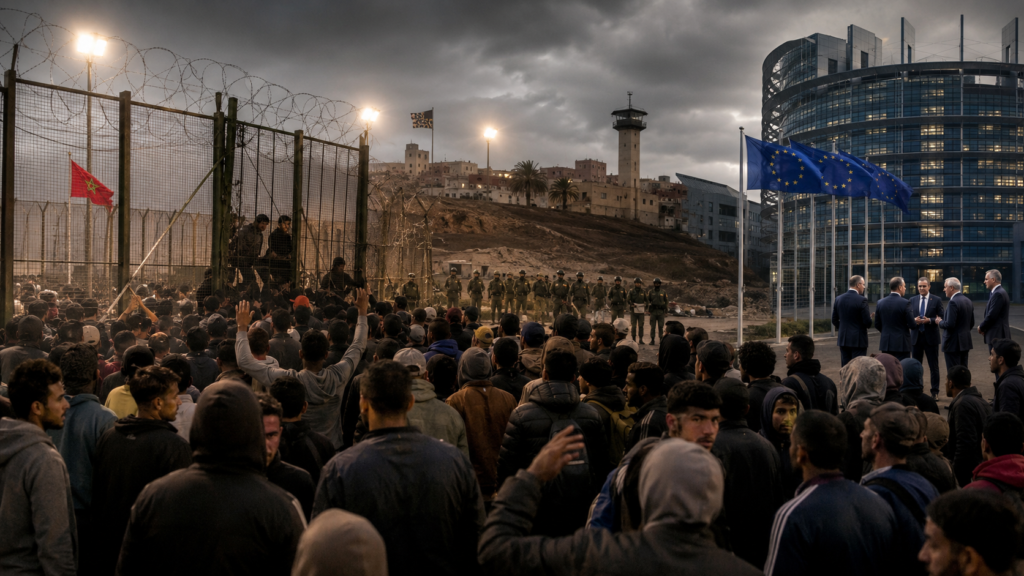
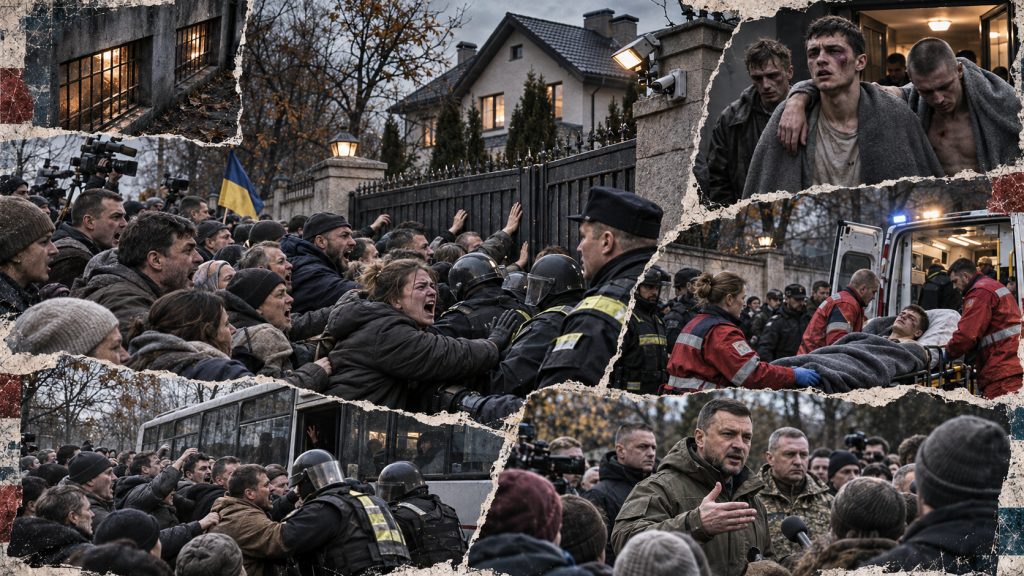
While the war in Ukraine and the energy crisis have dominated the geopolitical agenda, an event of historic character has unfolded along Europe’s southernmost border. During the night of 30–31 July, around 50,000 people crossed the border from Morocco into the Spanish enclave of Ceuta – the largest single day of border crossings in European history. At least 57 people died – most drowned as the crowds poured across by sea and by land. Spanish border guards and the army were immediately reinforced with 200 special police officers and 60 soldiers.
The Spanish Interior Ministry says more than 48,300 of the migrants had already returned to Morocco by Friday afternoon – pushed back by Moroccan forces with batons and tear gas. The crisis is thus for now under control in a purely numerical sense. But the political after-effects will not be dismissed as quickly. Italy suspended the Schengen agreement with Spain and demanded full border controls, prompting Madrid to summon the Italian ambassador. France introduced tighter border controls with Spain. Prime Minister Pedro Sánchez cancelled all appointments and travelled to Ceuta.
The event is not detached from the broader geopolitical situation. Morocco has repeatedly used migration pressure as a diplomatic tool – against Spain over the Western Sahara question in 2021, and now again during a period marked by European weakness and dispersal of resources. The energy crisis, the war in Ukraine and the Hormuz conflict have created a Europe that is politically and militarily overstretched. That Morocco chooses this moment to signal its bargaining power is hardly a coincidence. It is also a brutal reminder that the European migration crisis has not been solved – it has been temporarily dampened by bilateral agreements with transit countries that ultimately depend on Europe’s willingness to pay and accommodate. The day geopolitical pressure on a transit country increases, or the day Europe seems too distracted to react, the valve opens again.
Ukraine’s logistics are breaking down
The overall strategic picture is not primarily one of military victories and losses along the line of contact. It is a picture of systematic destruction of all Ukrainian logistics capacity. 80 percent of Ukraine’s foreign trade went through the Black Sea ports. They are closed. The rail network is attacked daily – according to their own reports, the Russians have destroyed hundreds of Ukrainian locomotives. Ukrainian railways use a broader gauge than the European standard, which makes Western replacement rolling stock unusable without a long conversion period. Petrol stations along the main roads in eastern and central Ukraine have been shut down after Russian Geran-4 drone attacks.
The result is that the Ukrainian army’s ability to move artillery ammunition, fuel and personnel from west to east deteriorates with every passing week. A Ukrainian official in Ukrainska Pravda confirms that Russia is now communicating with Geran drones through its own Rassvet satellite system and expects this to enable attacks on the scale of 1,000 drones per night combined with 100 missiles – a level that would overwhelm any remaining Ukrainian air defence.
India ignores the sanctions law – buys Russian LNG
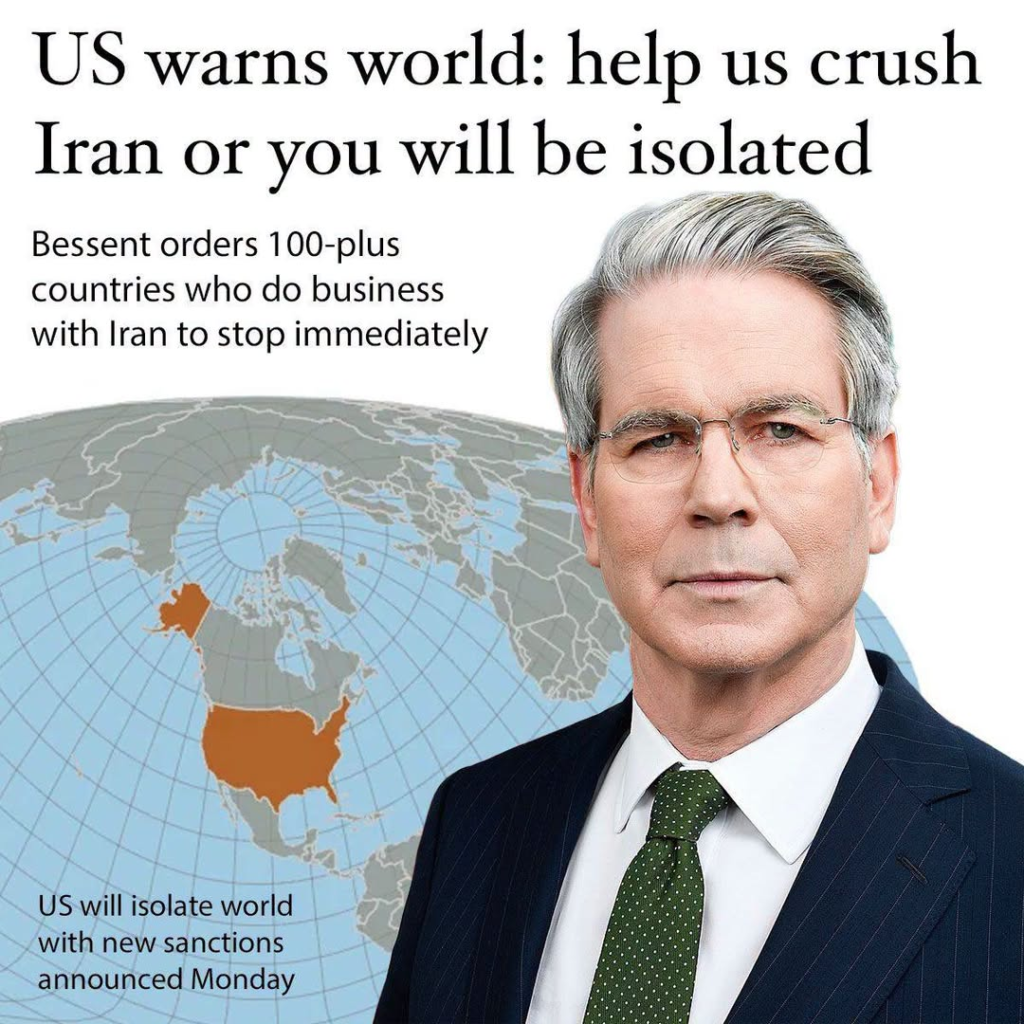
Even as there is growing talk in the US of passing Lindsey Graham and Richard Blumenthal’s sanctions package against Russia, Indian media report that India is now negotiating with Russia to buy Arctic LNG – because LNG from other sources has become scarce and expensive in the wake of the Hormuz crisis. That is the simple reality behind a sanctions package that gives the president discretionary authority to impose tariffs on countries buying Russian energy: India is not interested, China is not interested, and the global energy shortage gives them both structural cover to ignore it.
House Democrats are now questioning whether they really want to give Trump constitutional authority to impose tariffs in ways that cannot be challenged in the Supreme Court. Trump himself demands that the law be extended to cover Iran, which further splits the Democrats. The law appears to be stalling and coming under pressure from its own internal contradictions.
The EU tears up its rulebook
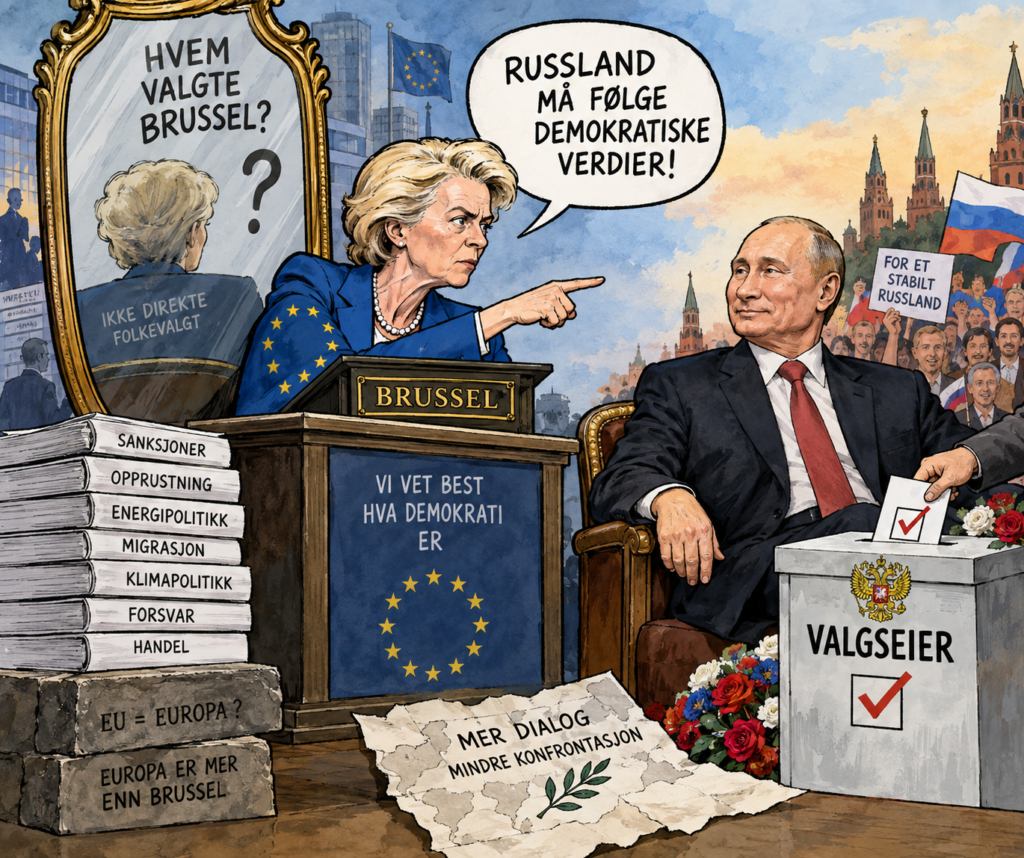
The EU’s 21st sanctions package was finally adopted on 23 July after Greece withdrew its veto in exchange for a compromise under which Greek ships can continue to carry Russian LNG from Yamal to third countries. According to EU diplomats themselves, the package is “significantly weakened” compared with what the Commission originally proposed. The price cap on Russian oil has been set at 44 dollars a barrel – in a market where the crude oil price is now above 95 dollars. No one buys Russian oil at 44 dollars when the market price is double. It is political theatre.
The European Commission is now working on a plan to circumvent the veto in future sanctions packages by presenting them as “economic policy” adopted by majority vote in the Council – not as foreign policy where individual countries have a veto. The result would in practice be that Greece could no longer block sanctions against Greek ships’ LNG shipments, and Austria could no longer protect Raiffeisen Bank. Any challenge would be sent to the EU Court of Justice, where it takes two to three years to reach a decision – and the EU would by then already have replaced any rejected provision with a new one. In Germany, there are parallel plans to circumvent the states’ constitutionally protected powers if the AfD wins eastern German Länder in the autumn elections – by seeking EU directives that override the German federal structure. Plans of this kind have a historical tendency to become reality.
Russia: Clarity and calm heading into the autumn offensive
Medvedev spoke to Russian youth organisations this week and declared that a turning point has been reached on the battlefield – in Russia’s favour. Russia reports a record number of voluntary recruits – 250,000 this year alone, more than the military system can absorb. The Western mapping service Rybar confirms that Russian advances are taking place at what is described as “normal summer speed” – the speed that in 2024 and 2025 ended in breakthroughs of 10 kilometres a day. It is the pattern that three years in a row has been ignored by Western commentators who declared the Russians stopped in April and May – and which has repeated itself with the same outcome both times. There is no reason to believe 2026 will be any different.