
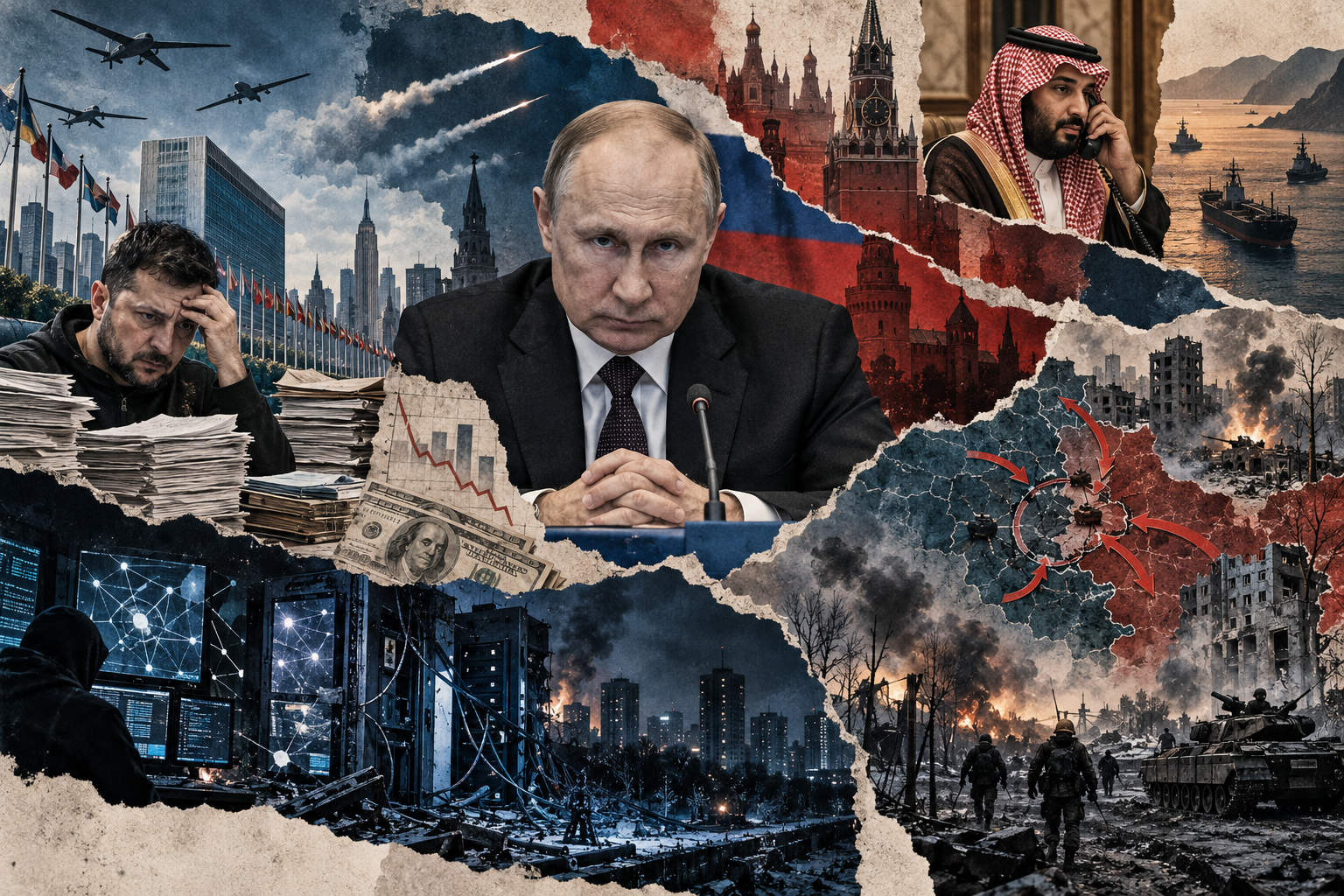
Putin to Zelensky: You Reap What You Sow — No Ceasefire Until Russia Has Decided What Serves Its Interests
Putin Responds Harshly to Ukrainian Appeals for a Ceasefire
Putin’s full response, reproduced in its entirety, deserves careful reading.
He listed a chain of Ukrainian actions that he says triggered Russia’s retaliatory strikes: the drone attack on election day, when Russian authorities said more than 1,600 drones had been shot down over Russia, around 450 of them heading toward Moscow; attacks on polling stations across the country, including one in which a school was almost destroyed; attacks on the homes of local election commission heads, in one case killing a female commission chair; an attack on Ugolnaya Gavan — “Coal Harbour” — in St Petersburg while the city was hosting the International Economic Forum in June; the 40-day drone offensive against Russian refineries beginning that same month; the attempted maritime blockade of Russia’s Black Sea coast, which damaged more than 100 ships; and finally the attacks on Wildberries and Ozon warehouses.
“What was the point of that?” Putin asked rhetorically.
“All these actions aimed at so-called reconciliation, and the proposal to resume negotiations — all of this is possible. But after everything they have done, we will think very carefully before responding. And in any case, we will make all our decisions in this area, including on any possible resumption of negotiations, solely on the basis of Russian interests.”
The message is not difficult to decipher: Ukraine is now asking for ceasefires on several fronts — in the air, at sea and in the energy war.
But its own previous actions demonstrate, as the Russians see it, that there is no sincerity or good faith behind those requests, and Russia’s response will be based exclusively on calculated self-interest.
Given that the Ukrainians, as the Russians clearly see it, are on the ropes, it is difficult to see why Russia would give them a pause now.
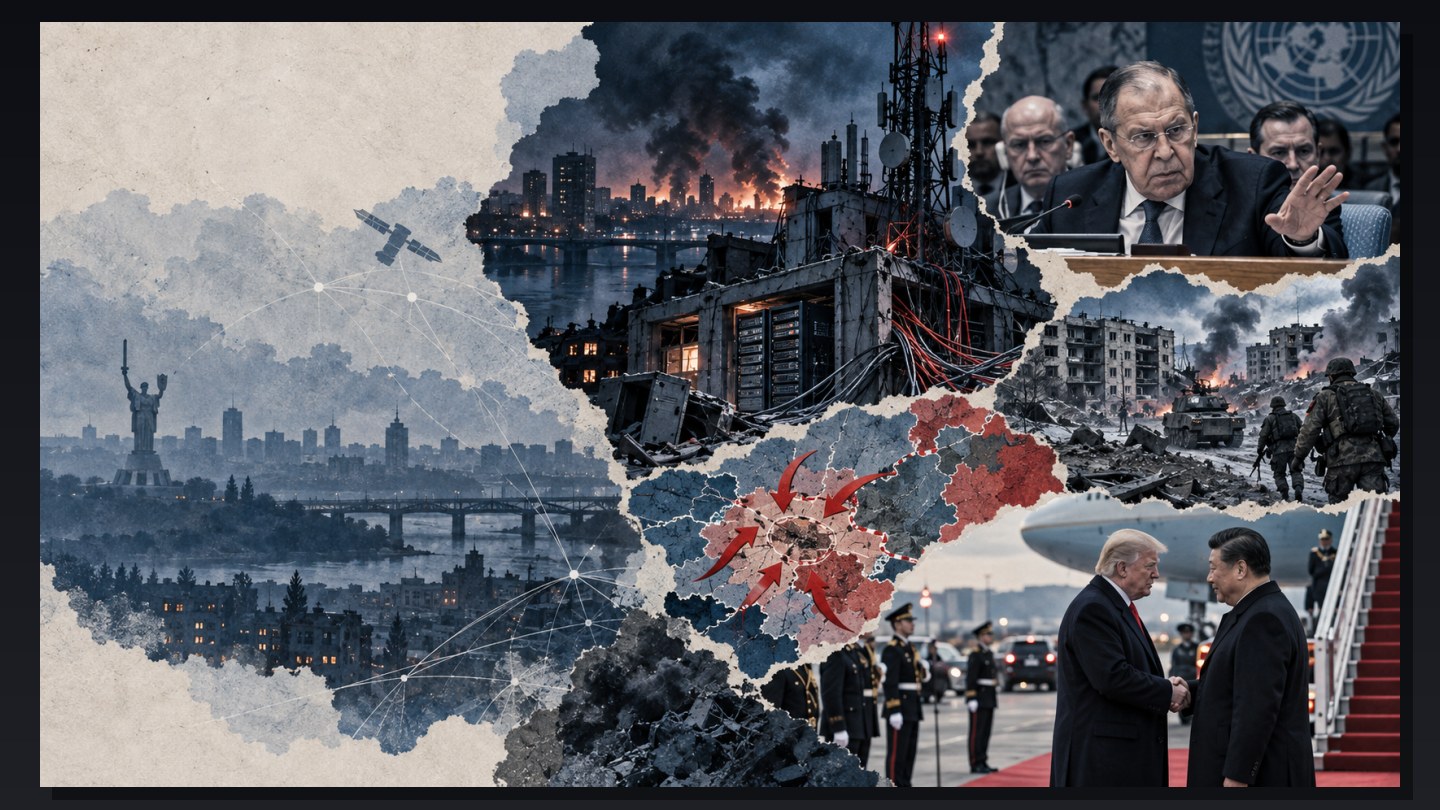
It is worth noting, as a critical observation, that it is unlikely that this entire air offensive — the blockade of the Black Sea, the destruction of the railway and petrol stations, the attacks on internet infrastructure, the systematic destruction of Ukraine’s metallurgical industry — is merely a spontaneous response to Ukrainian provocations in recent months.
Developing drones such as the Geran-4 and Geran-5, and building and launching a satellite system such as Rassvet, takes years.
It bears all the hallmarks of a carefully prepared air campaign planned over a long period.
But it naturally serves Putin’s and Russia’s interests to present it as pure retaliation — and that is exactly what the skilled politician and diplomat Putin is doing.
A Possible, Cautiously Signalled Position: No Negotiations With Zelensky at All
What makes the statement even more significant is that Putin briefly hints at something far more consequential: that the complete absence of good faith on the Ukrainian side — demonstrated, in the Russian view, by the attacks on polling stations and election commission officials during the Duma election itself — may make talks with the current Ukrainian leadership pointless in themselves.
Russia will probably continue trying to keep the door formally open to talks, partly out of consideration for Trump and BRICS partners such as India, Brazil, South Africa and, to some extent, China, none of whom would welcome a complete rejection of negotiations.
But the ambiguity in Putin’s wording raises a question: is he, as always careful with his formulations, cautiously beginning to suggest that the period in which Russia was willing to sit at the table with a government led by Volodymyr Zelensky — a man they regard as legally illegitimate and involved in what they consider terrorist acts on Russian soil — is coming to an end?
That the moment may soon arrive when Russia says: yes, we are willing to talk, but only once Ukraine has a government we consider legitimate — and that government cannot be led by Zelensky.
Zelensky: Ukraine Is $27 Billion Short — Drone Financing Could Become Critical This Winter
Zelensky, still in New York, has made a number of remarkable statements in recent days.
He says Ukraine has contacted Turkey, India and Egypt in an effort to persuade them to pressure Russia into a ceasefire in the Black Sea.
Putin had said around two weeks earlier that several friendly countries had conveyed Ukrainian requests for such a ceasefire, without naming these three countries himself.
Zelensky now appears frustrated that the Egyptians, Turks and Indians have been unable to deliver the ceasefire he wants.
More striking was his warning of a $27 billion shortfall in Ukraine’s defence budget.
The figure does not concern the drone offensive alone. Zelensky said the money is needed to cover soldiers’ salaries, drones and missiles, among other things, and that roughly one third — perhaps somewhat more — relates to requirements for January, February and March, primarily drones.
The point nevertheless stands: Ukraine must secure the financing now if it is to place orders and pay for drones and missiles that need to be available through the winter.
It also confirms how expensive the drone war has become, and how dependent Ukraine remains on European financing to sustain it.
Bloomberg Report Rejected by Zelensky’s Office
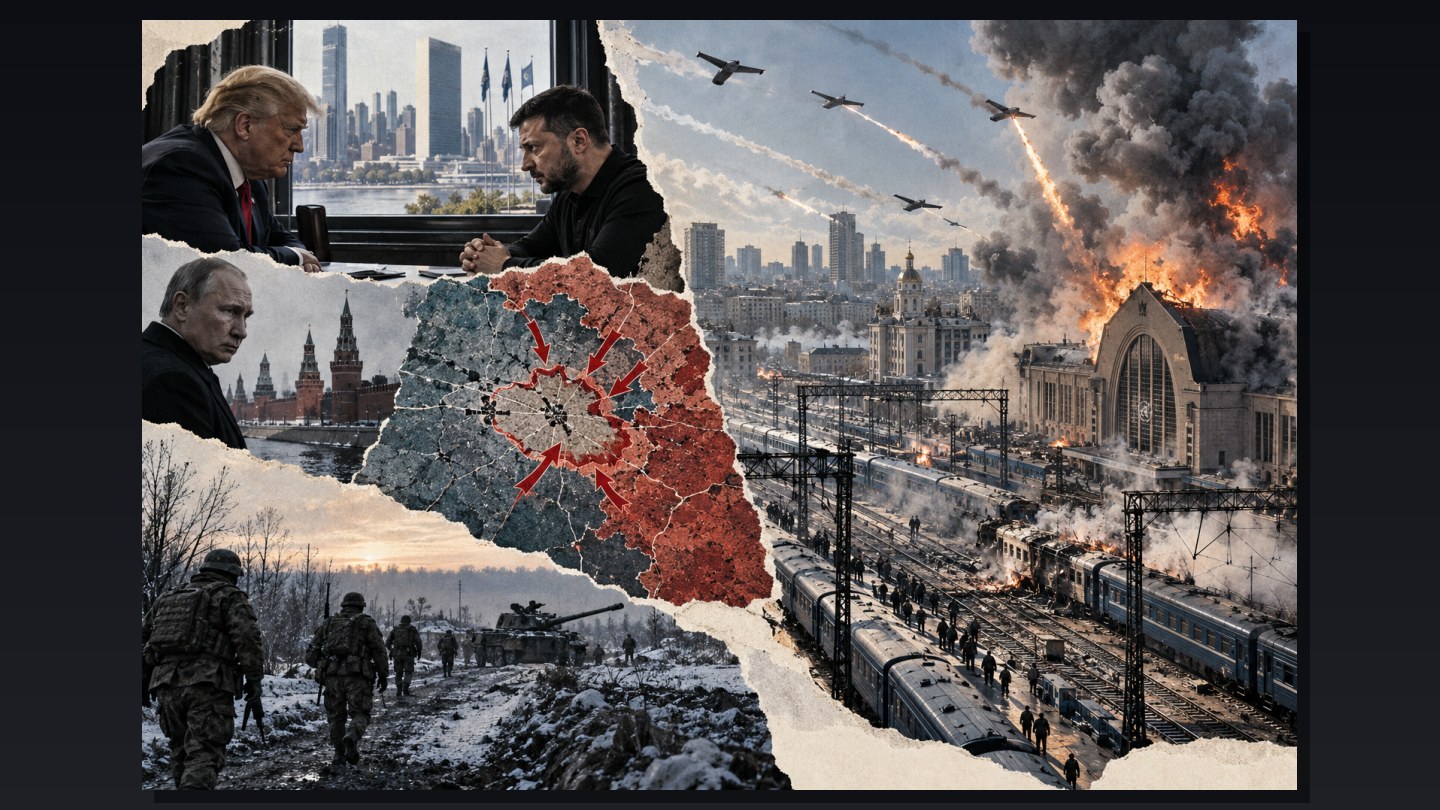
Bloomberg published an article claiming that Trump, during his 40-minute meeting with Zelensky in New York, suggested that Zelensky travel to Moscow to meet Putin.
Zelensky’s office rejected the story a few hours later and called it “false information”.
Two contradictory versions therefore stand against one another: Bloomberg’s anonymous sources and the Ukrainian presidential administration’s categorical denial.
If the Ukrainian denial is correct, the obvious question is where the story came from and why it was leaked.
One possible explanation is that someone wanted to portray Trump as a president pressuring Zelensky to travel to the enemy’s capital after a meeting in which the Ukrainian president did not receive everything he wanted.
But there is currently no evidence establishing who the source of the Bloomberg story was.
What Zelensky actually wanted included more PAC-3 Patriot interceptors.
The problem is that stocks are under severe pressure. After the wars in the Middle East and several years of deliveries to Ukraine, demand for PAC-3 interceptors has far exceeded production.
Zelensky complains that the United States may have used as many as 800 PAC-3 interceptors in conflicts in the Middle East over the past year, while Ukraine has allegedly never received anything close to that number.
That is, however, only one part of the picture.
Ukraine entered the war with a large Soviet S-300 air-defence system and used large quantities of those missiles before Patriot deliveries began in earnest.
The point is not that Ukraine received exactly 800 PAC-3 interceptors, but that the consumption rate of air-defence missiles of all types — S-300, Patriot, NASAMS and IRIS-T — has been enormous throughout the war.
The Front: Dobropillia, Velykyi Burluk and the Coming Battle for Izium
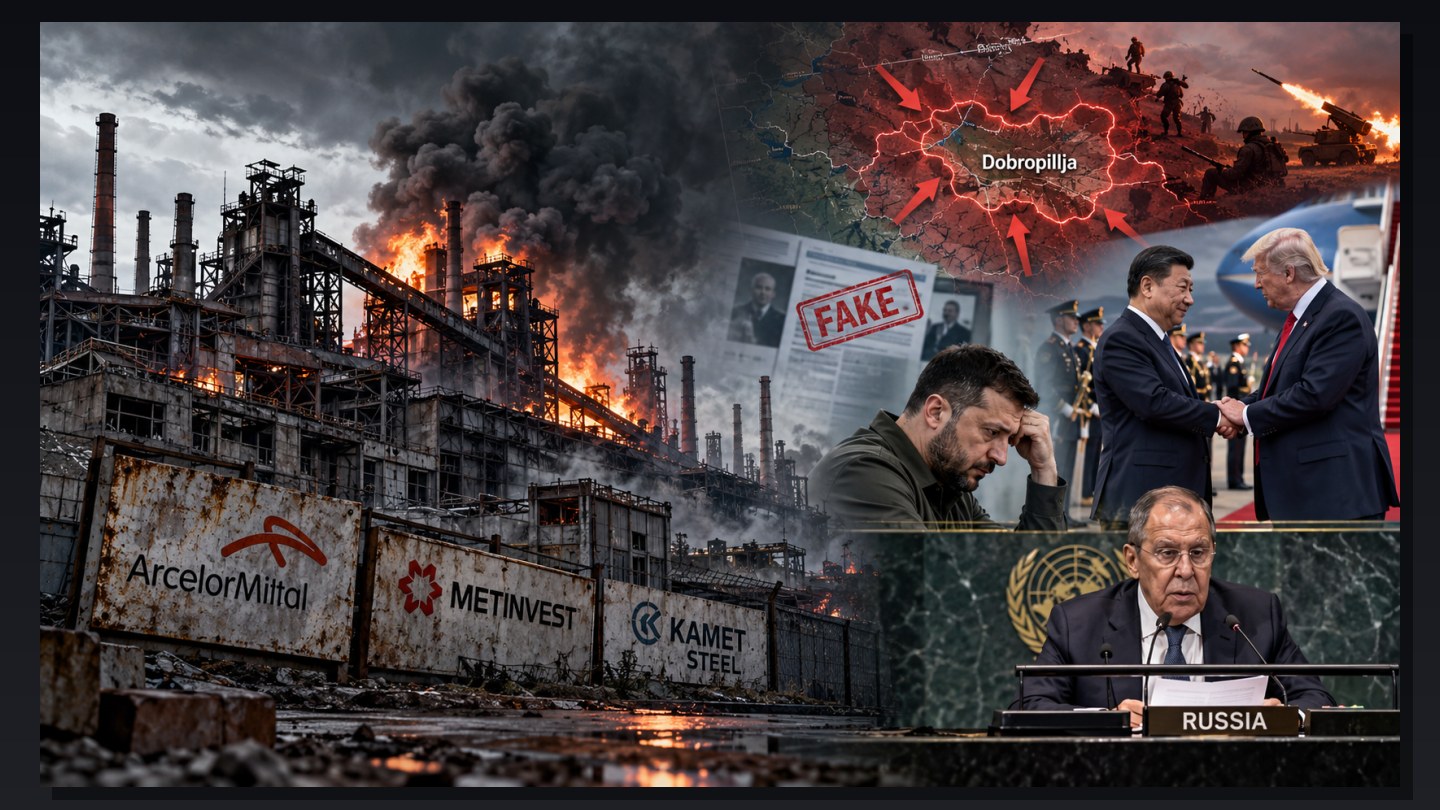
The battle for Dobropillia continues.
Russian sources claim that their forces are pushing north toward the area around Bilozerke, north of the city, and onward toward Oleksandrivka.
Marat Khairullin and other Russian military commentators are meanwhile reporting fighting in Druzhkivka and Oleksiievo-Druzhkivka south of Kramatorsk.
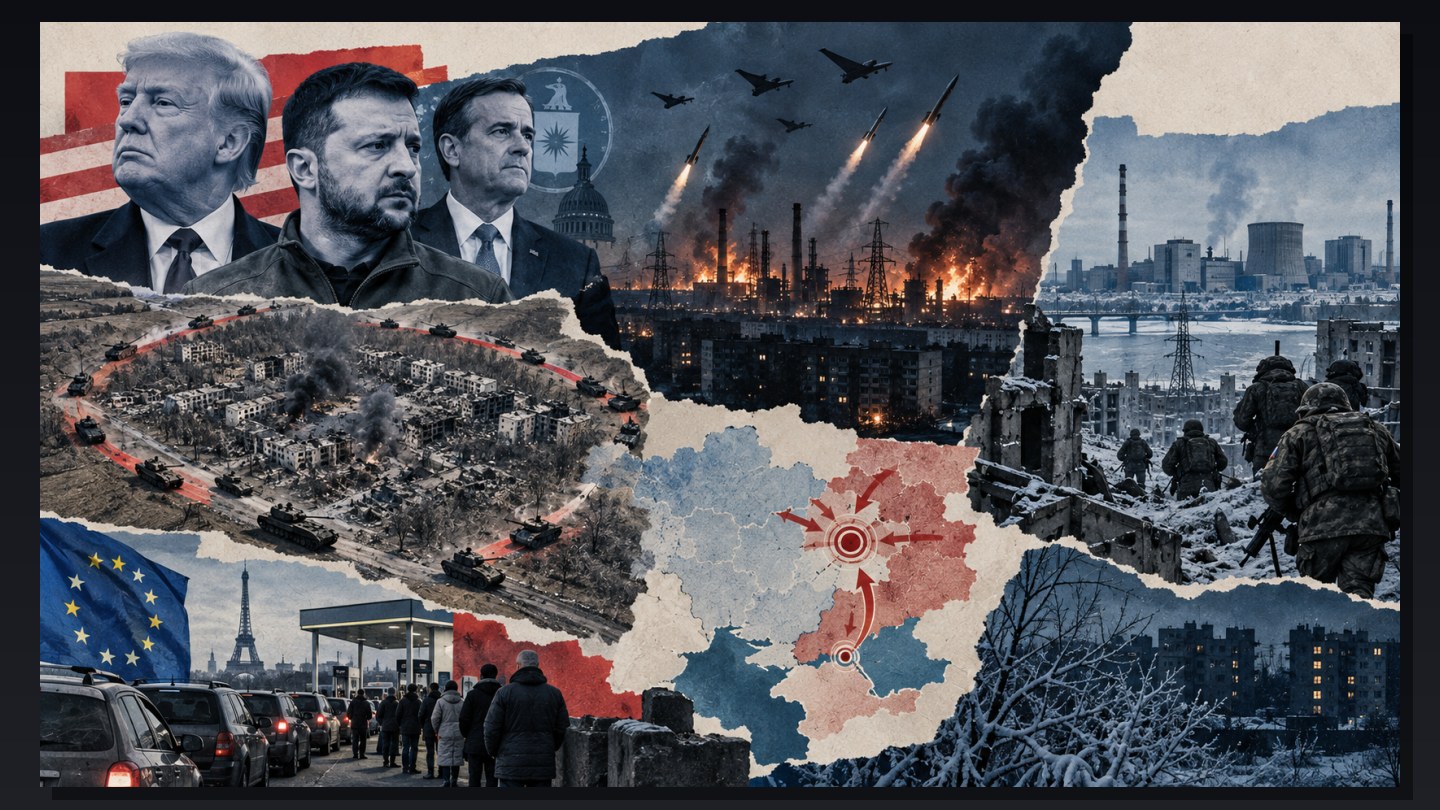
If Dobropillia, Druzhkivka and Oleksiievo-Druzhkivka were to fall, together with the areas north of Dobropillia, Russia would, according to this assessment, have established an arc around Kramatorsk from several directions.
In northeastern Kharkiv region, the Russian cauldron is approaching its conclusion, according to Russian sources.
Group North would then be able to direct more attention toward Velykyi Burluk, a small town with a pre-war population of around 3,000.
If the town falls, it opens the possibility of a Russian advance south toward Kupiansk and onward toward Izium and Balakliia — cities the Russians controlled in 2022.
This time, such an advance would once again come from the north, where Ukrainian defences may be weaker than those constructed to stop an attack from the east.
If Izium falls, it would threaten the main supply route and railway line supplying Sloviansk and Kramatorsk from the north.
That is precisely the route the Russians tried to cut in 2022, unsuccessfully, because the Ukrainians could then reroute supplies through Kostiantynivka and Pokrovsk.
If those alternative routes are no longer available, a renewed Russian advance toward Izium would have an entirely different strategic significance from the one it had in 2022.
On the Lyman “offensive”, Readovka reports that Andriy Biletsky’s original push west toward the Zherebets River was stopped by Russian resistance, and that much of the actual fighting was in fact carried out by a unit composed of extreme Russian dissidents under Ukrainian military intelligence control — which is said to have suffered very heavy losses.
Reports of a Russian “counterattack” supposedly retaking several of the same villages shortly afterwards suggest a simpler interpretation: that the Russians may never have lost control of these locations in the first place, and that what is being presented as alternating Ukrainian advances and Russian recaptures may in reality have been one and the same failed Ukrainian push.
MBS Called Putin — Just as Predicted
Saudi Crown Prince Mohammed bin Salman contacted Putin on 22 September.
According to the Russian readout, the two sides agreed that “there is no alternative to political and diplomatic efforts to de-escalate the current crisis” in the Middle East.
The wording stands in stark contrast to Netanyahu’s UN speech about regime change in Iran and Trump’s own threats against Tehran.
The two also discussed Yemen, expressing support for a rapid ceasefire and safe passage through the Bab el-Mandeb and Strait of Hormuz.
In the days surrounding the call, the Houthis signalled to the EU that they did not intend to attack European-flagged ships in the Red Sea.
Iran simultaneously put forward a new proposal to revive the June agreement — this time with an extremely compressed seven-day timetable, under which Washington would, among other things, have to ease sanctions and the blockade before the Strait of Hormuz could fully reopen.
Trump reportedly rejected the proposal.
It is not possible to know with certainty whether these diplomatic moves by Iran and the Houthis are a direct consequence of the call between MBS and Putin.
But the conversation shows that Saudi Arabia and Russia are now discussing the same diplomatic solution to a conflict in which Riyadh has a great deal to lose from further escalation.
The question is how far MBS is willing to go if Washington and Israel choose a more military course.

Se og hør mer
Videoer, klipp og innslag knyttet til temaet.