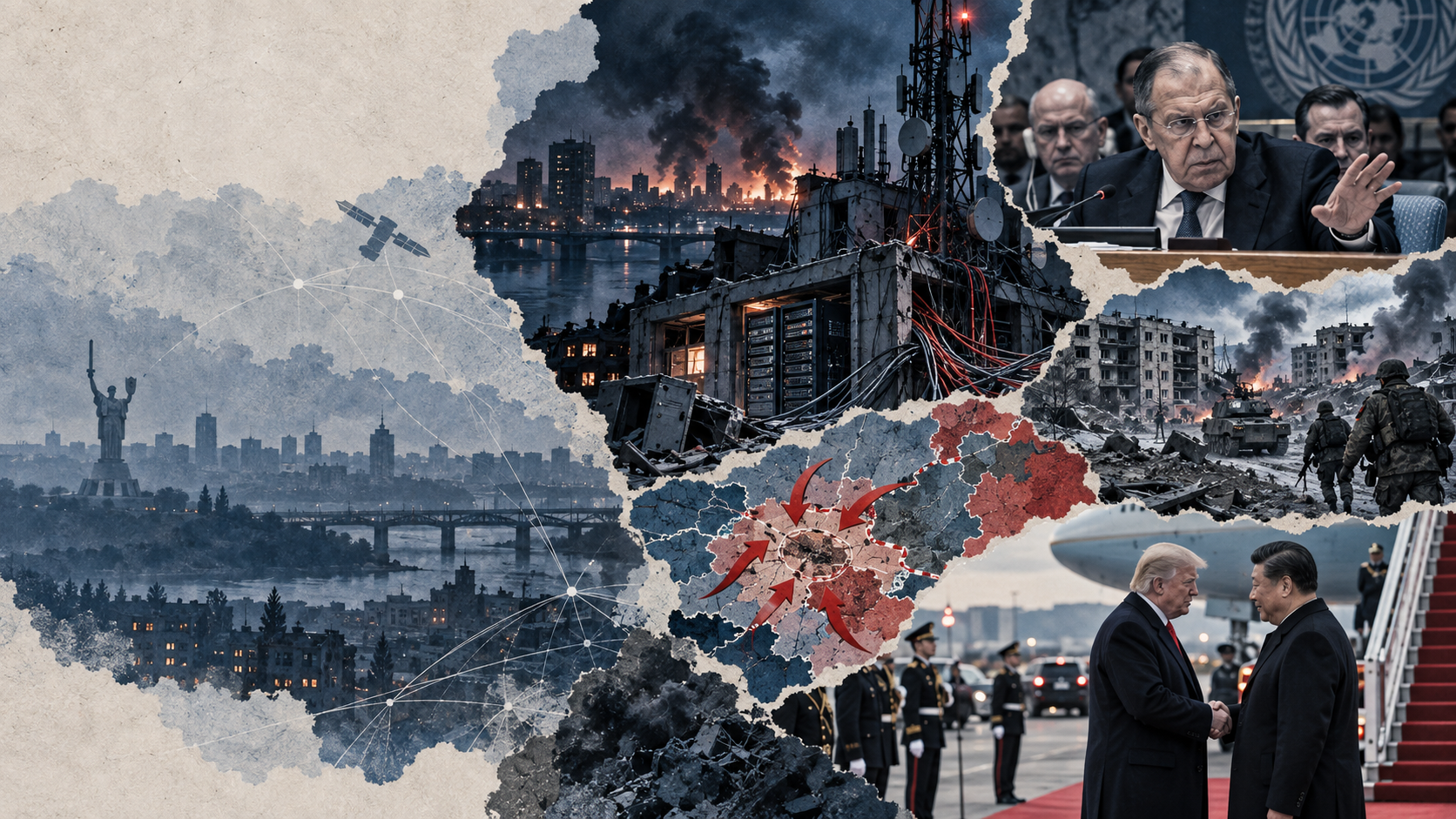
Lavrov to the UN: “We will not halt the special military operation for any negotiations, in any form”
Kyiv’s internet knocked out — and a hunted Starlink facility
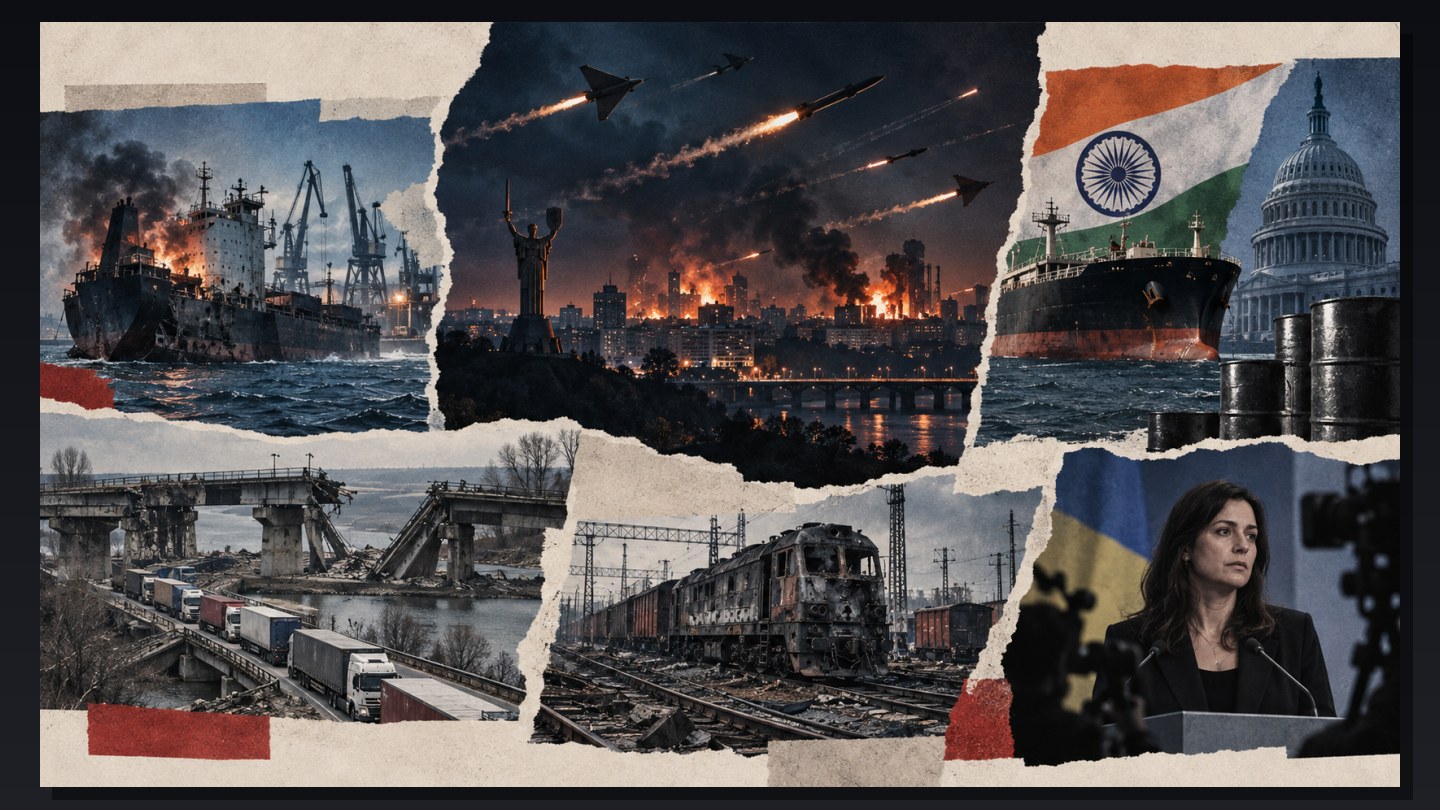
Overnight into Thursday, Russia carried out yet another strike on Kyiv — this time a combination of jet-powered Geran-4 and Geran-5 drones and up to ten Iskander-M ballistic missiles, as well as Zircon hypersonic missiles.
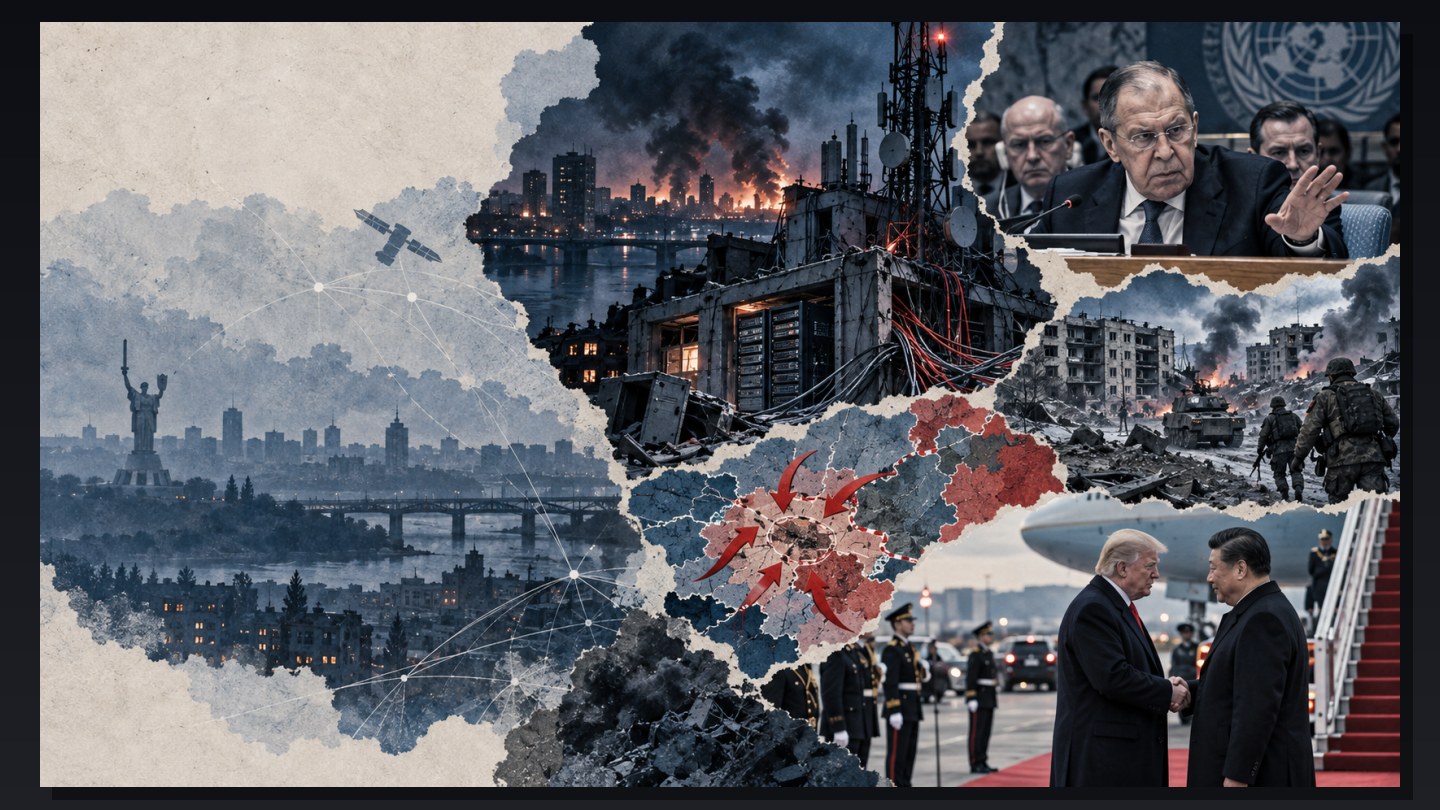
Among the targets confirmed by the Russian Ministry of Defence were two large data centres in Kyiv, which were severely damaged, causing a period of complete internet outage across large parts of the city.
Because data centres are far larger and less precision-demanding targets than a petrol station in the city centre, this strike could be carried out at night, unlike yesterday’s daylight operation.
It is worth mentioning an alternative theory that circulated afterwards: that the Ukrainian authorities themselves shut down the internet to hide the extent of the damage from yesterday’s daylight attack, and that this was later attributed to the Russians.
It is an intriguing thought, but the Russian confirmation of strikes on precisely two data centres is in itself sufficient to explain the outage.
Interestingly, according to some reports a facility linked to the Starlink system was also among the targets — which probably explains why Ukraine’s own drone attack on Russia that same night was unusually small in scale, just dozens of drones instead of the usual hundreds: without a functioning Starlink connection it is difficult to control and coordinate a large-scale drone offensive.
The railway, the internet and a pattern pointing towards isolation
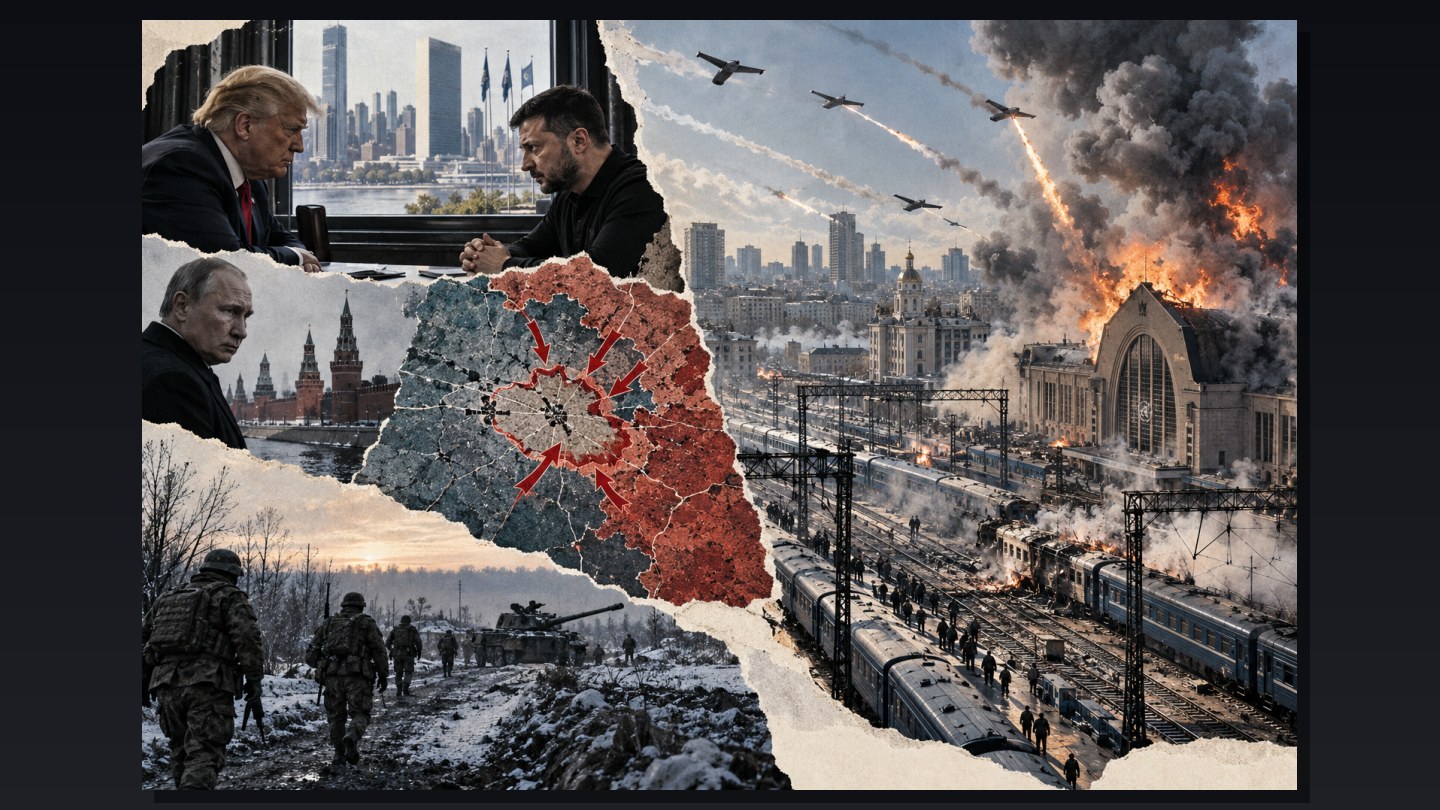
Russia is methodically continuing its campaign to cut the links between Kyiv and the outside world — not only the railway line to Poland, which was attacked directly yesterday, but now also the internet and communications infrastructure.
This will not happen tomorrow, and there will never be complete, total isolation — landlines, radio and other communication channels will remain, albeit under constant threat of Russian jamming.
But it is a clear, step-by-step process towards a point where the railway becomes too dangerous to use and where access to Kyiv from the West becomes severely restricted.
Should that happen, the most likely solution for evacuating Western personnel would be a locally negotiated ceasefire and transport by car to Belarus.
The front: Dobropillia “in its final days”, according to all Russian sources
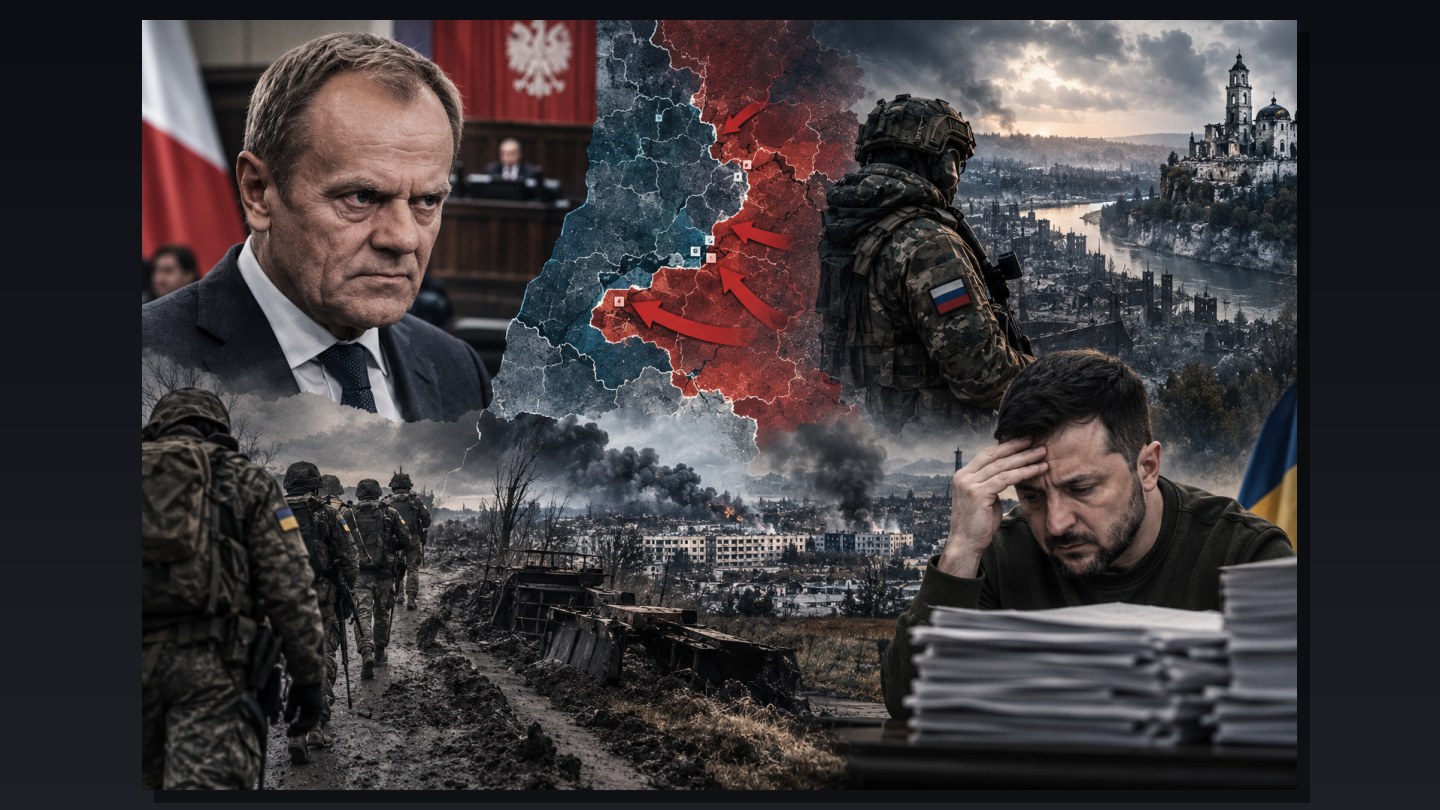
On Thursday morning the Russian Ministry of Defence confirmed the capture of Mala Dobropillia, south-west of the town of the same name — securing Russian control over the entire south-western approach.
Independent, reliable Russian sources such as Readovka and Khairullin confirm at the same time that Anivka, north-east of the town, remains under Russian control.
Readovka has published a detailed review: the Ukrainian garrison in Dobropillia is completely surrounded in the town centre, under heavy bombardment, and its days are numbered.
Meanwhile, the Russian 51st Army is not waiting for the town to fall — it is now advancing north towards the large village of Bilotserkivka, the Ukrainian logistics base that has been supplying the garrison.
All Russian commentators consider the fall of Dobropillia a matter of a short time, after which an outflanking manoeuvre westwards towards Sloviansk and Kramatorsk will begin in earnest.
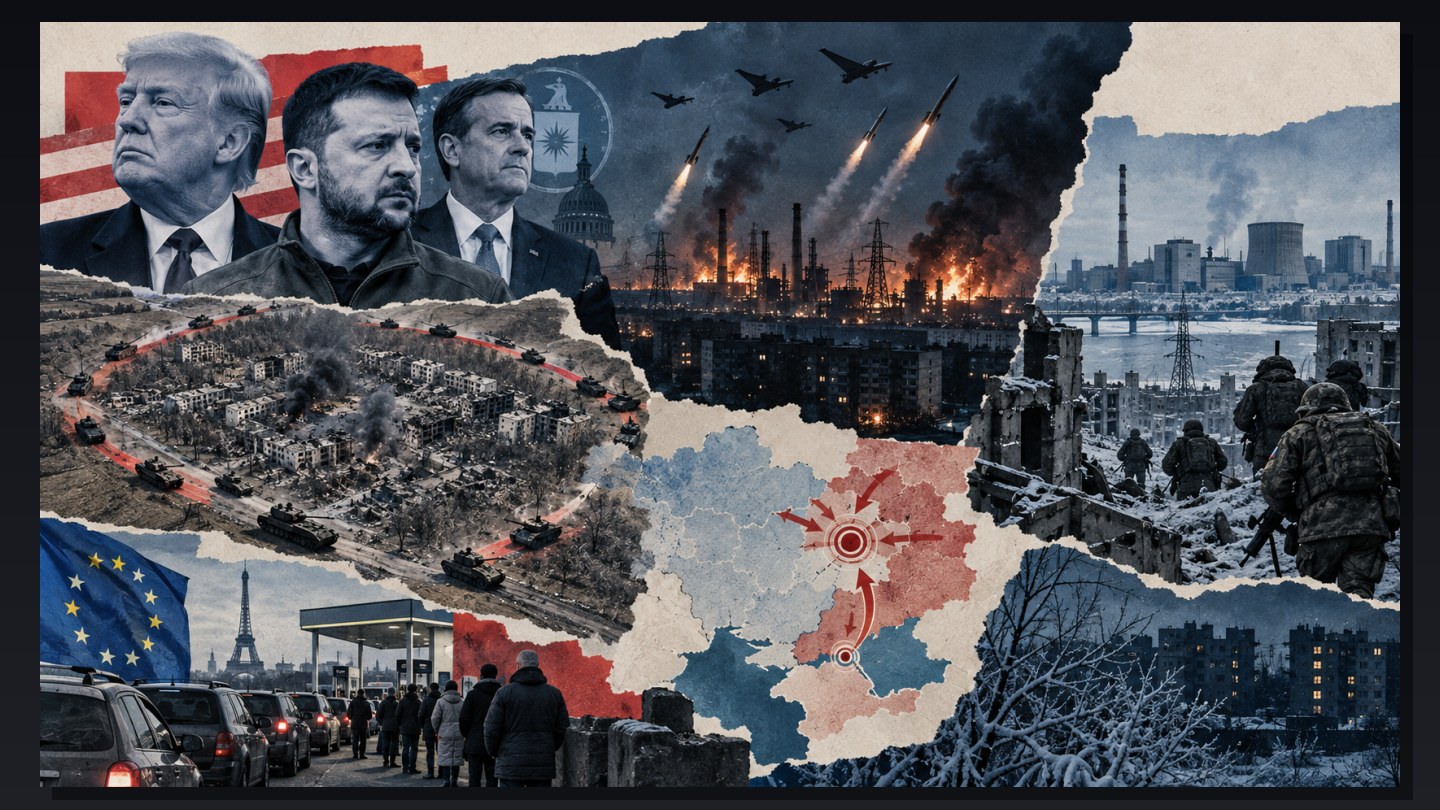
In Orikhiv, Group East continues to advance north-east and is approaching yet another settlement.
With Russian forces already confirmed in Novopavlivka and Novoandriivka north-west of the town, the Ukrainian retreat route appears to be cut off — exactly the same pattern as in Dobropillia.
Should the last remaining village fall, the cauldron around Orikhiv will be completely closed, with no organised escape for the garrison there.
In the north-eastern Kharkiv region, Group North has announced the capture of two villages in the centre of the cauldron encircling around 1,700 Ukrainian soldiers — the cauldron is now split into at least two, perhaps three, separate parts.
When an encircled force is split so that its units can no longer support each other, resistance usually collapses quickly.
The most striking thing about this whole situation is that, by all indications, it was entirely avoidable: after the village of Bila Kolodiazne fell weeks ago, all logic dictated that Ukraine should have withdrawn these forces.
That this did not happen is probably due to the power struggle in Kyiv surrounding General Syrskyi’s departure and General Drapatyi’s takeover — nobody wanted to appear weak or defeatist by ordering a retreat in the middle of an internal power struggle.
The result is that these men are now being isolated and hunted down, a fate that seems all the more tragic because it was unnecessary.
On the Lyman offensive there is still strikingly little reliable information — only ever more fantastic rumours without video confirmation.
The most solid available information still places Russian forces well west of the Zherebets River.
It is worth recalling that Ukrainian counter-offensives have repeatedly set themselves unrealistically ambitious goals — such as the attempt earlier this year to push all the way south to Velyka Novosilka in the Zaporizhzhia region, an attempt that ended in a serious defeat.
Should the Kharkiv cauldron collapse completely and Velykyi Burluk fall, Russia will be able to intervene in the Lyman area from the north — and potentially trap the Ukrainian offensive force there.
Lavrov at the UN Security Council: No pause, whatever the format
Lavrov’s logic is simple and self-interested: Russia is winning the war and has no incentive to give Ukraine a breathing space right now.
But Lavrov also makes a point of principle worth noting: there is no historical basis for negotiations having to wait for a ceasefire.
During the Korean War and the Vietnam War, fighting continued for years while the parties negotiated in Paris.
The West’s insistence that a ceasefire must come first turns the usual order on its head — and raises questions about how sincere the desire for real negotiations actually is.
Xi Jinping greeted on the tarmac — just like Putin in Anchorage
The parallel is striking, and probably not accidental.
The Anchorage summit ended, as is well known, with Putin going home believing he had a deal with Trump — based on a proposal conveyed by Steve Witkoff that essentially matched Russia’s own demands from June 2024.
Trump then never managed to deliver on his promise to bring the Europeans and Kyiv into line with the deal.
It is tempting to speculate whether the striking similarity between the Xi welcome and Anchorage is an attempt to normalise — perhaps even erase — the memory of last year’s embarrassing breakdown.
Either way, the pattern of grand ceremony, flypast and warm personal gestures, followed by little substantive result, appears to be repeating itself.
A US–China trade truce, if it materialises at all, is in direct conflict with the Graham sanctions law Congress has just passed — a law that authorises Trump to impose 100 per cent tariffs on China precisely because it buys Russian oil.
Conclusion: No negotiations, no European strategy — only panic
There are currently no negotiations to end the war in Ukraine, no articulated diplomatic strategy from any European quarter, and a US–China summit that will probably disappoint thoroughly.
A Ukrainian business leader recently said on Ukrainian television that the country has not prepared adequately for the winter — that the entire economic situation, not just the energy sector, is now critical, and that a major Russian attack could make reconstruction impossible.
It is this, not fantasies about a Russian invasion of Europe, that should worry Western decision-makers.