The Kremlin’s Own Protocol: Three Hours, No Concessions
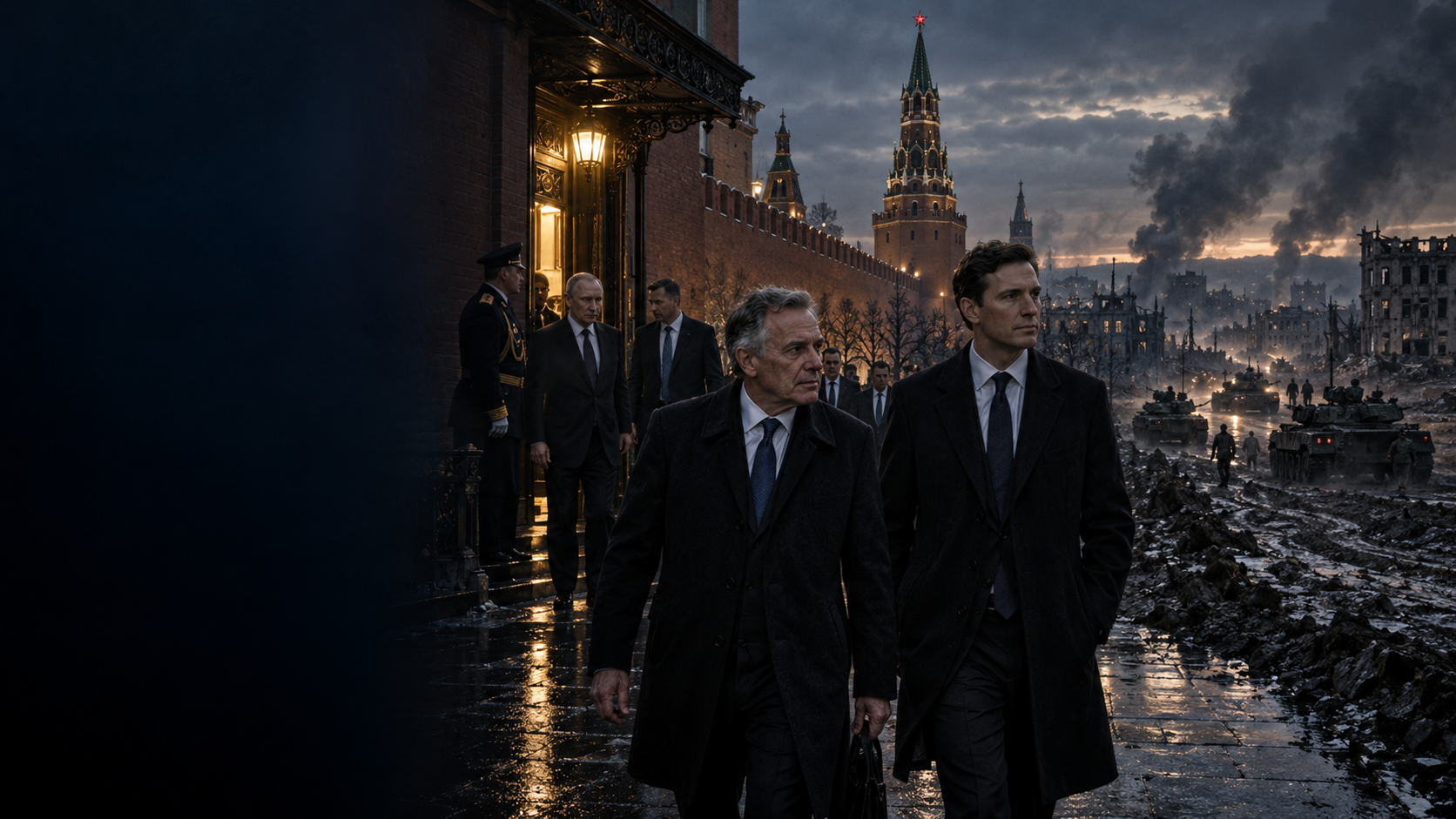
Steve Witkoff and Jared Kushner spent more than three hours with Putin in the Kremlin on Saturday evening — their eighth visit to Russia, according to the Kremlin’s own announcement. Putin’s foreign policy adviser Yuri Ushakov and investment envoy Kirill Dmitriev also took part in the meeting. Putin opened the conversation by describing the situation in Ukraine as “difficult,” noting that Russian forces had not attacked Kyiv since midnight and that “the Ukrainian side has significantly reduced the intensity of attacks on Russian territory since then”.
According to Ushakov’s official post-meeting readout, the talks covered more than the war alone: “The talks were not limited to an exchange of views on resolving the Ukrainian crisis. Economic issues were also discussed, including prospects for major Russian-American projects that could be mutually beneficial to both sides.” Ushakov confirmed that “the Russian side gave clear and comprehensive assessments of the situation” on the battlefield and “highlighted the significant advances of the Russian Armed Forces.”
What stands out is what the protocol does not contain: not a word about any concrete concession from the Russian side — whether on territory, Ukraine’s neutrality status, its political system, or the size of the Ukrainian armed forces. Ushakov did confirm that Witkoff and Kushner “had made extensive preparations” and “formulated a number of ideas regarding possible paths toward a settlement,” but there is no indication that the Russians found those ideas persuasive. An anonymous US official said after the meeting that “the two sides discussed substantive plans for next steps, which will be announced in the coming weeks” — a formulation containing no concrete commitment.
The Pause Applied Only to Kyiv — Not to the Rest of the War
It is important to clarify what Putin’s 72-hour pause actually covered. Putin had ordered the military not to strike Kyiv for three days from midnight, specifically in connection with Witkoff and Kushner’s visit to the Ukrainian capital. It was not a general ceasefire — not at sea, not in Odesa, and not against the broader energy system.
The envoys were not even able to fly directly from Moscow to Kyiv. Instead, they travelled onward to Kyiv by train, as Western visitors have done throughout the war.
Witkoff and Kushner described Sunday’s talks in Kyiv with Zelensky as “substantive,” while Witkoff said he was “very encouraged” — standard language American envoys have repeatedly used after similar meetings over the past year, without producing any breakthrough. NPR notes that Zelensky has shown little willingness to make the territorial concessions Moscow insists are non-negotiable — an impasse that has stalled earlier rounds of US-mediated diplomacy.
At the same time, Peskov described the meeting as evidence that there is “an atmosphere of trust, at least through this channel of communication” — a remarkable formulation given how little Russia otherwise appears to trust American and European diplomatic channels.
Lavrov on the Leipzig Drone: “This Is Almost a Declaration of War”
In an interview on Sunday, Lavrov criticised the German accusations surrounding a drone found near Leipzig Airport in early August — a drone German authorities claim was linked to Russia, without concrete evidence having been made public. “They found a drone there. They said it was Russian, and no one bothered to investigate it further. Roughly speaking, this is effectively the beginning of a real war,” Lavrov said. He also launched a direct attack on Chancellor Merz: “All these statements by Merz about making Germany Europe’s leading military power are now being put into practice. He is effectively declaring war on us.”
The background is that German authorities this week publicly accused Russia of carrying out a “hybrid attack” using an explosive-laden drone near Leipzig Airport — a major logistics hub for the German military, NATO and supply support to Ukraine.
It is worth noting that Russia has simultaneously maintained a strikingly mild tone toward the Americans — Putin used warm, almost sentimental language toward Witkoff and Kushner, while the rhetoric toward the Europeans, and Germany and Britain in particular, has grown steadily harsher. Peskov on Sunday described the Witkoff–Kushner channel precisely as a line of communication in which trust is “being strengthened”.
Russian authorities have also signalled a sharp cooling of contacts with Britain, and diplomatic communication between Moscow and London appears increasingly limited.
The Front: The Dobropillia Cauldron Confirmed on Video
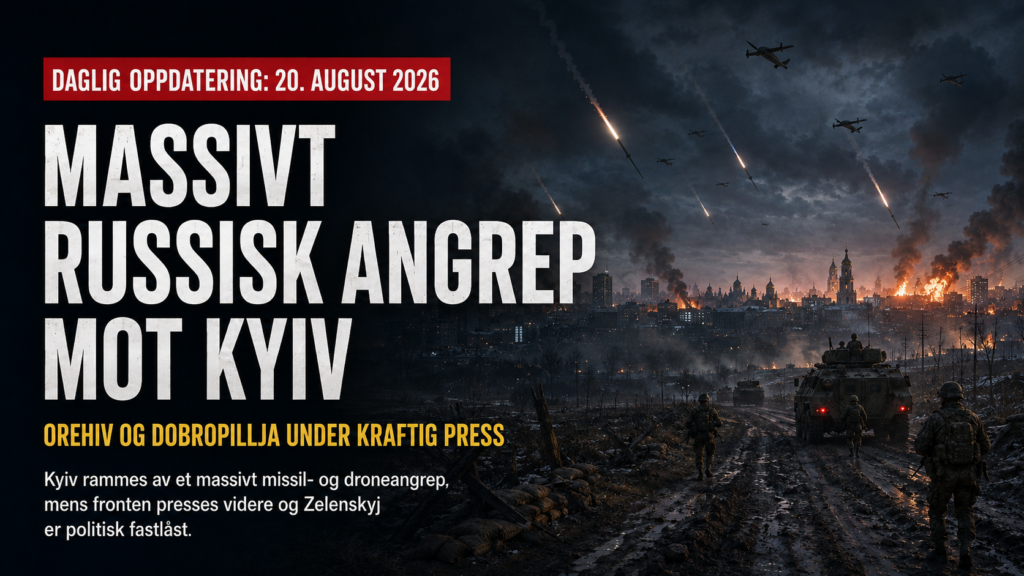
Ukrainian drone footage published over the weekend shows Russian forces fighting in the centre of the village of Dobropillia southwest of the city of the same name — exactly where Russian military blogger Andrei Marochko placed them the previous day. With Russian control over both this village and Hanivka northeast of the city, the two remaining main supply routes into Dobropillia city are effectively cut. The fall of the city would allow Russian forces to outflank the entire Sloviansk conurbation from the south — while consolidation in Sviatohirsk northwest of Sloviansk would create a corresponding threat from the north.
Ukrainian drone footage also shows Russian forces in parts of central Orikhiv where they were not previously known to be operating, while Russian sources claim that the entire southeastern section of Orikhiv is now under their control, with aerial bombing underway in the southwest. If the Russian reports regarding the supply lines are accurate, the city’s connection to the rest of Ukrainian-controlled territory is now highly vulnerable.