The night of 20 August: a seven-figure attack
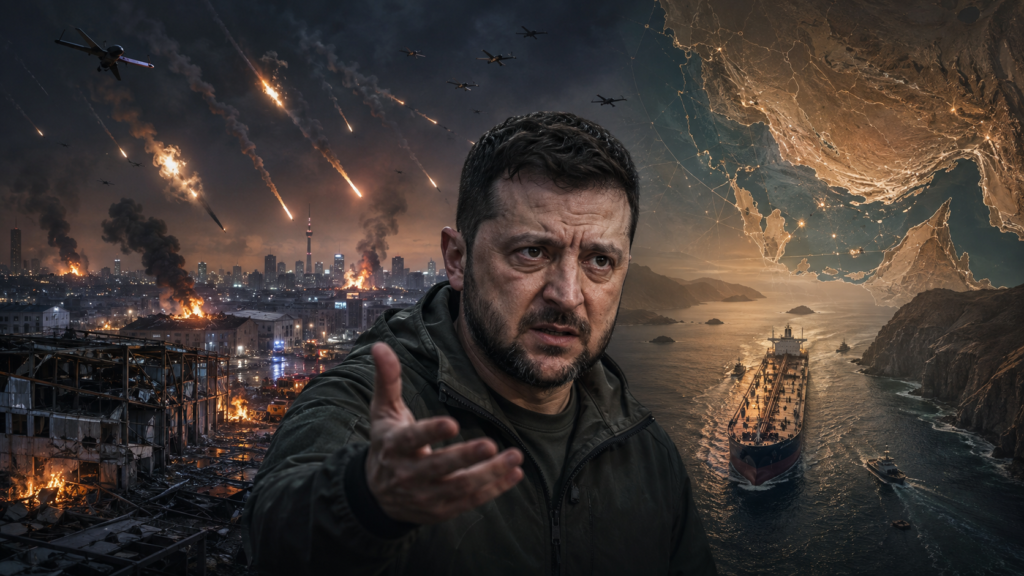
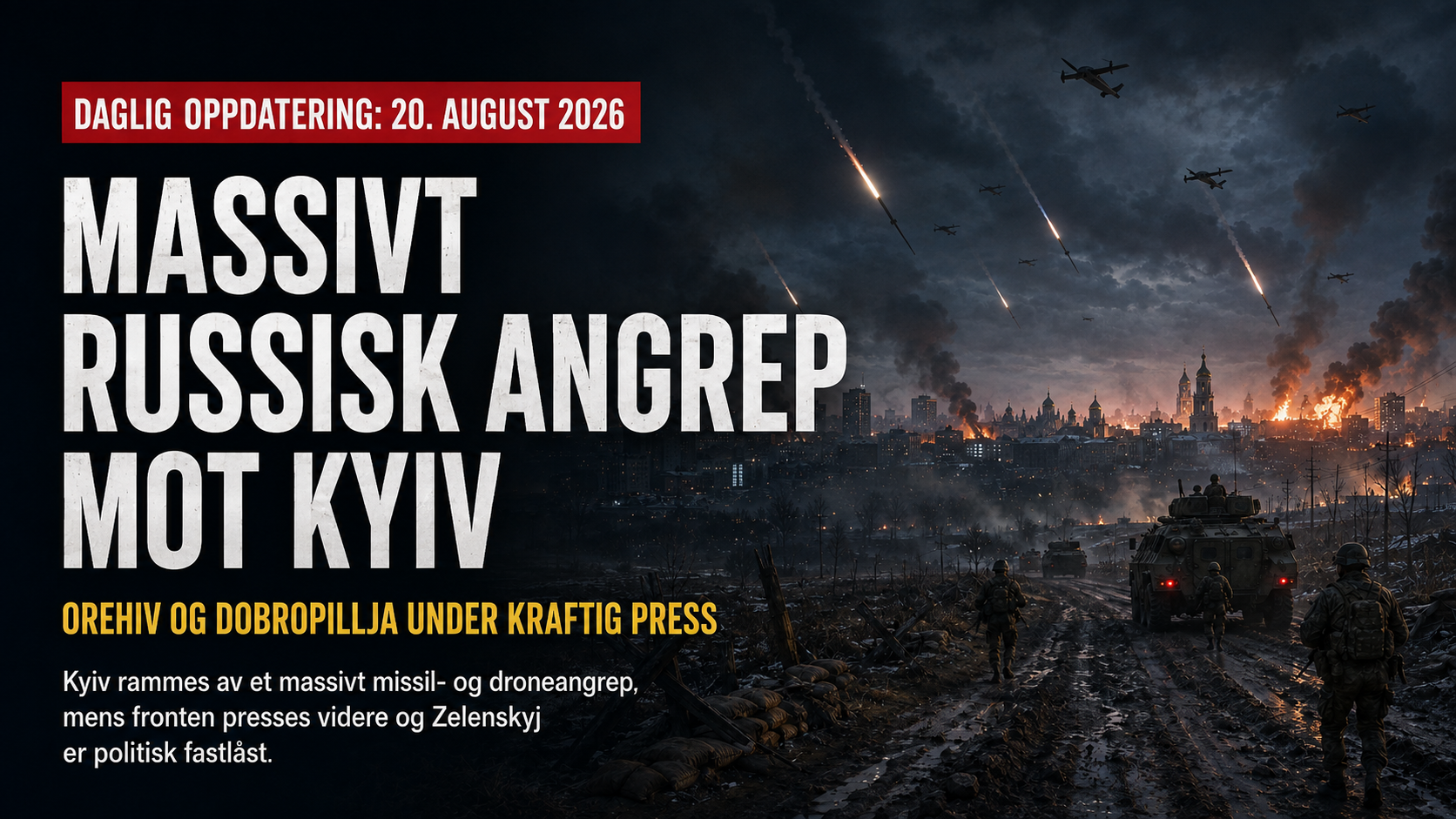
During the night of 20 August, Russian forces attacked Kyiv with ballistic and hypersonic missiles – including Zircon, Iskander-M and S-400 missiles – as well as 168 Shahed-type and other drones in a massive combined attack. At least 13 Zircon hypersonic cruise missiles, 8 Iskander-M ballistic missiles and 2 North Korean KN-23 ballistic missiles hit Kyiv. Apartment blocks, a children’s hospital and railway infrastructure were hit. 14 people were killed and more than 40 injured. Strikes and drones were recorded at numerous locations in Kyiv and the region.
The Antonov factory is a particularly bitter target for the Russians. Oleg Antonov was one of the Soviet Union’s great aircraft designers. After the dissolution of the Soviet Union, the production plant and design bureau ended up in Ukraine. Russian intelligence shows that the country now possesses over 600 Oniks missiles, more than 450 Kalibr, over 120 Zircon and around 130 Iskander-M, in addition to producing over 200 missiles per month.
A new attack with Kh-101 cruise missiles fired from Russian bombers is expected to follow within hours – this time against targets spread across all of Ukraine. That is the usual Russian pattern: ballistic missiles and Zircon against Kyiv, Kh-101 against the rest of the country.
The drone offensive against Russia: almost everything shot down
Ukraine’s own drone attacks on Russia in the same period were essentially repelled by Russian air defence. Military Summary reports a seven-hour “mega-strike” in which Russian air defence shot down the vast majority of Ukrainian drones and missiles. Russian military commentators have begun to refer to the Flamingo cruise missile with open contempt – not as a missile, but as “a big, heavy jet-powered Ukrainian drone”. It is a sign that the nervousness surrounding the Flamingo early on has been replaced by confidence.
According to an analysis in the German press, A-50 AWACS surveillance aircraft and MiG-31 fighters are the main reason the Russians are now shooting down the vast majority of Flamingo missiles. The combination – the Beriev A-50 detecting missiles far away and sending data to MiG-31s armed with long-range air-to-air missiles – is exactly the system developed in the late 1970s to counter Western Tomahawk cruise missiles. The Flamingo is slower and larger than the Tomahawk. In practice it is an easy target for a system designed against something harder.
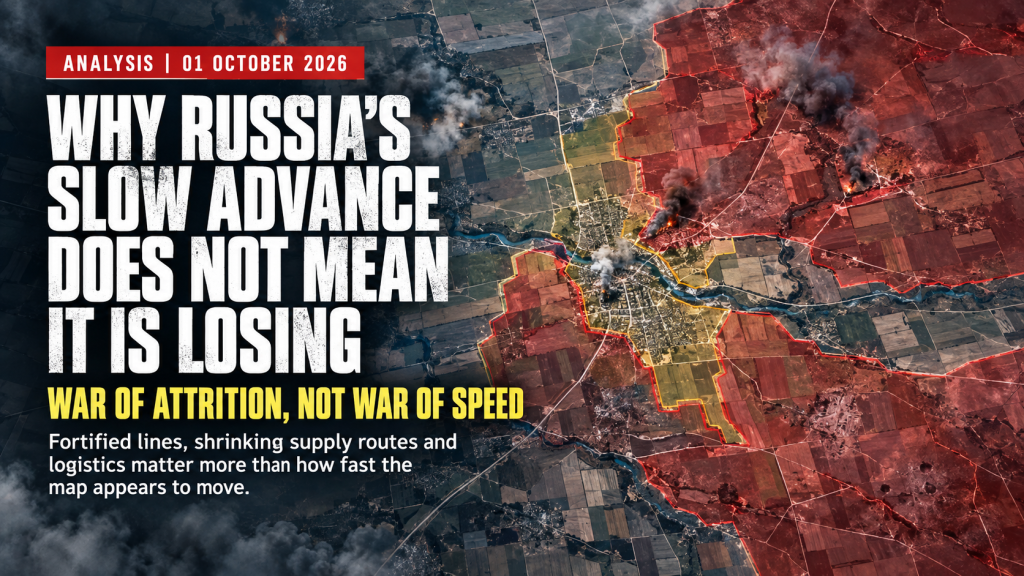
Orikhiv: from foothold to collapse
The Russian outlet Readovka – which has access to information from active soldiers in the field – published a detailed situation report on Orikhiv. The report explains why the Russians managed to break into the town itself: Ukrainian command assumed the Russians would not try to enter Orikhiv as long as the supply routes to the town were open. The garrison inside Orikhiv itself was therefore relatively small – most of the troops were deployed to protect the supply routes. The Russians learned this through their advanced battlefield intelligence system, exploited the gap and carried out a rapid attack via the village of Novodanylivka in the south.
The Ukrainians now face an insoluble tactical dilemma: if they pull in the forces protecting the supply routes to the garrison inside Orikhiv to attempt a counterattack, they risk an even larger Ukrainian force being caught in an encirclement. If they leave those forces in place, the garrison inside Orikhiv is left to its own devices. Readovka describes both options as losing and recommends an immediate withdrawal north to establish a new defensive line east and south of Zaporizhzhia city along the Yerobets river. But Readovka does not believe this is what Zelensky will choose. Instead, as in all previous battles, he will reinforce a failing defence – and ensure that the collapse, when it finally comes, does even more damage.
Dobropillia: supply routes cut and the centre stormed
A Ukrainian drone operator from the Dobropillia sector – who has a far broader operational overview than an infantryman – reports a situation that is “absolutely critical”. Supply routes are being cut one by one by Russian advances. Russian forces control the industrial facilities, coal mines and slag heaps east of Dobropillia – high ground that gives the Russians a direct view down into the town. A village on the eastern edge of Dobropillia is under Russian control – there is no open ground between this village and the town centre itself. According to these sources, Russian forces are in the process of taking high-rise blocks in the town centre.
Combined with the fall of Andriivka and Russian control of a wide area between Dobropillia and Duiivka, the picture is clear: an encirclement of the Sloviansk–Kramatorsk conurbation is no longer hypothetical. It is taking shape. Scott from Kalibrated believes Ukrainian command has already acknowledged internally that a withdrawal from Sloviansk and Kramatorsk is being prepared – but Zelensky will in all likelihood refuse to order it.
Zelensky is not in danger – and that is a problem
The Ukrainian parliament confirmed Yevhen Khmara as defence minister when it reconvened after the summer recess. Fedorov’s demand to be reinstated has formally been rejected. But the dismissed minister’s next move is remarkable: he is now demanding that parliament call a presidential election. Fedorov is now demanding that a legal mechanism be established for holding elections during the war. Ukraine’s constitution regulates the presidential and parliamentary mandates differently, but the current martial law expressly prohibits both presidential and parliamentary elections as long as martial law applies.
That is exactly what Vladimir Putin has argued since 2024: that Zelensky is constitutionally illegitimate because he did not hold the presidential election that fell due in 2024. Now one of Ukraine’s most prominent politicians is saying the same.
Still, Zelensky will not fall. He controls the Azov brigades, the SBU and the security apparatus. Western Europe – including London – still supports him as the person holding the political system in Kyiv together. Removing Zelensky now would in practice remove the last beam in an already tottering building. The collapse would accelerate, not slow down. But it means the war will continue – with Ukrainians fighting and dying in Orikhiv, Dobropillia and soon Sloviansk and Kramatorsk.
Russia’s missile stockpile: overwhelming and growing
Russia possesses over 600 Oniks missiles, more than 450 Kalibr, over 120 Zircon and around 130 Iskander-M – and produces more than 200 missiles per month in total. Kinzhal production has reportedly been temporarily reduced due to precision problems, but the stockpile of around 50 units is held in reserve while Russia redirects resources to other ballistic systems. And the Oreshnik system – not yet used with a full conventional payload against Ukraine – is being built up as production increases.
Ukraine’s economy is effectively gone
Russia has now reduced Ukraine’s power generation capacity by around four fifths over the four years of the war. The ports are closed. The Kremenchuk refinery has been put out of action after the Iskander strikes. ArcelorMittal’s steelworks in Kryvyi Rih is badly damaged. The agricultural economy cannot export its harvest and lacks diesel for harvesting. Empty shelves are now being reported in Kyiv’s grocery stores. And all these crises are escalating simultaneously.
The most important financial insight is simple: Ukraine does not survive without Western emergency financing. And that is precisely what keeps Zelensky in place – Europe’s willingness to keep sending money. As long as it does, no one in Kyiv has any real incentive to stop. It is a war prolonged by the money coming in, with every new strike dismantling the country further.