Peskov: “Full force” – the Kremlin says the special military operation has become a “real war”
Daily update: 04.10.2026
Why the Dnieper bridges were not attacked until now
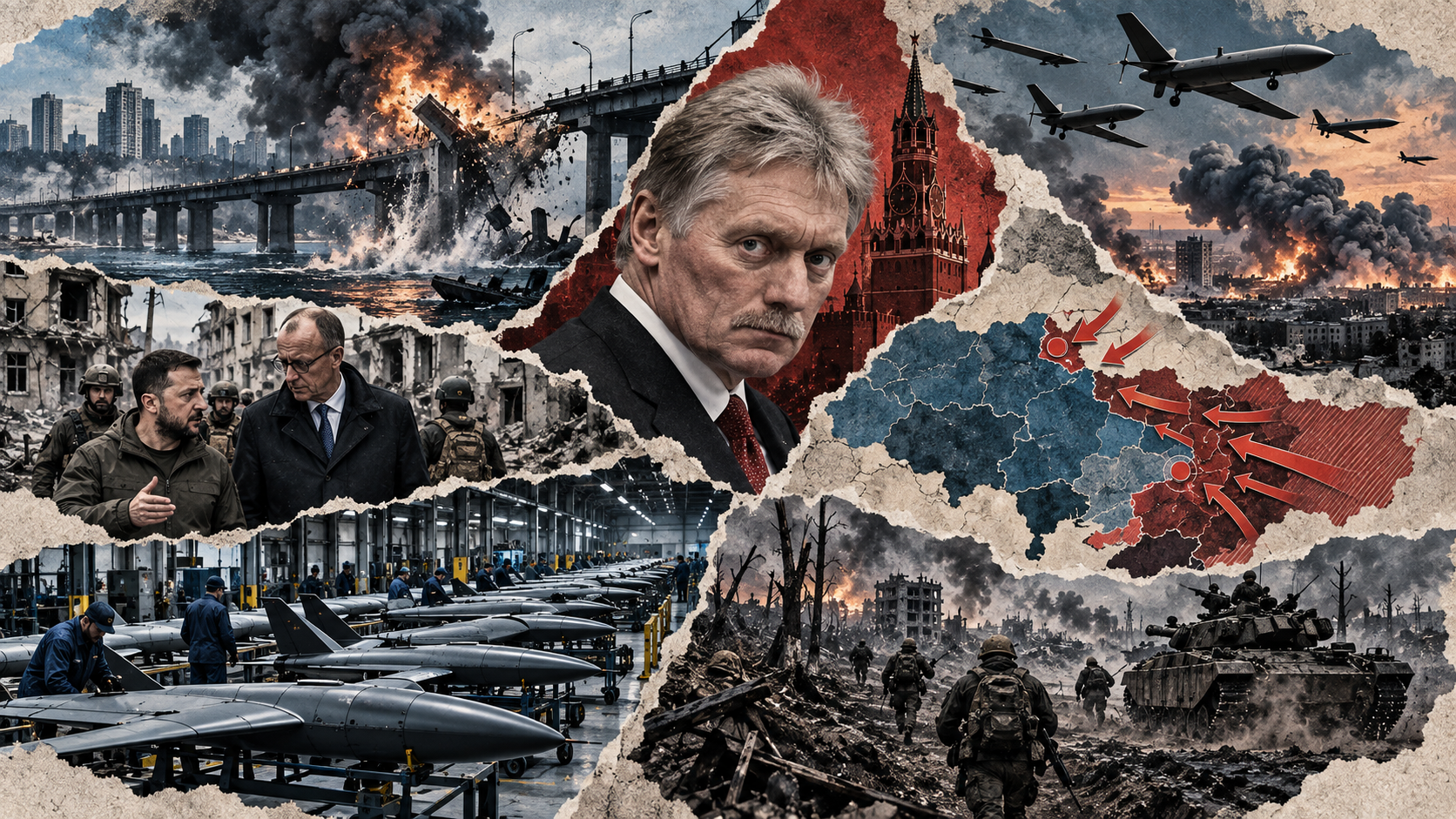
At the weekend, the New York Times published an article that probably provides part of the answer to why Russia waited four years before attacking the bridges over the Dnieper in Kiev. The bridges are enormous structures, and complete destruction would require massive, repeated hits. What Russia instead appears to be doing is weakening them enough that heavy traffic becomes risky or impossible.
This fits with the development of the new Geran-4 drones and specialised warheads against steel structures. Previously, such an attack would have required far more expensive weapons and entailed a greater risk of civilian casualties. Now Russia can inflict more controlled damage – while preserving bridges that can later be repaired should the city one day come under Russian control.
The New York Times also points out that Kiev is one of the most important logistical crossings over the Dnieper. Alternative bridges further south are closer to the front and more exposed. That makes the bridges in the capital a far more important part of the supply system than their distance from the front would suggest.
Four years of industrial build-up
It is tempting to believe that Russia could have done this as early as 2022. That is probably wrong. Jet-powered drones, specialised warheads, relay stations in Belarus, better satellite surveillance and the systems that tie it all together are the result of several years of industrial and technological build-up.
Dmitry Medvedev has played a central role in this work as first deputy chairman of Russia’s Military-Industrial Commission. This may also explain why his political weight appears to have grown during the war.
Zelensky: “The aim is to push people out of the capital”
In an interview with Reuters, Zelensky said the purpose of the Russian air campaign is “to push people to leave the capital, to leave various cities”. At the same time, he announced new strikes on Russian refineries.
On Sunday, the Russian Ministry of Defence responded that the attacks on Kiev and other regions will be intensified, placing the responsibility for the escalation squarely on Zelensky.
Even so, it is hard to believe that the air campaign was improvised in response to the latest Ukrainian strikes. The capacity now being used has obviously been built up over a long time. The Ukrainian strikes have above all given the Kremlin a political justification for using it.
Merz’s empty-handed trip
Federal Chancellor Friedrich Merz came to Kiev with more than 1.3 billion euros in new support. The package includes, among other things, drones, long-range weapons and support for the energy system, but no publicly announced delivery of new Patriot interceptors.
Nor did the visit change the Russian campaign. The attacks on Kiev continued while Merz was in the city.
At home in Germany, the situation looks even worse. A fresh INSA poll puts the AfD at 30 per cent and the CDU/CSU at 18 per cent, while 79 per cent say they are dissatisfied with Merz.
Peskov: “Full force”
The most interesting statement, however, came from the Kremlin.
There is no public decision showing that Russia has formally lifted all the restrictions surrounding the special military operation. But the Kremlin’s own language has changed. As early as July, Peskov said that what began as a “special military operation” has now become a “real war”.
Peskov also added: “Those who think they can make plans to inflict a crushing blow on Russia will pay the price for it. The price Ukraine is paying now.”
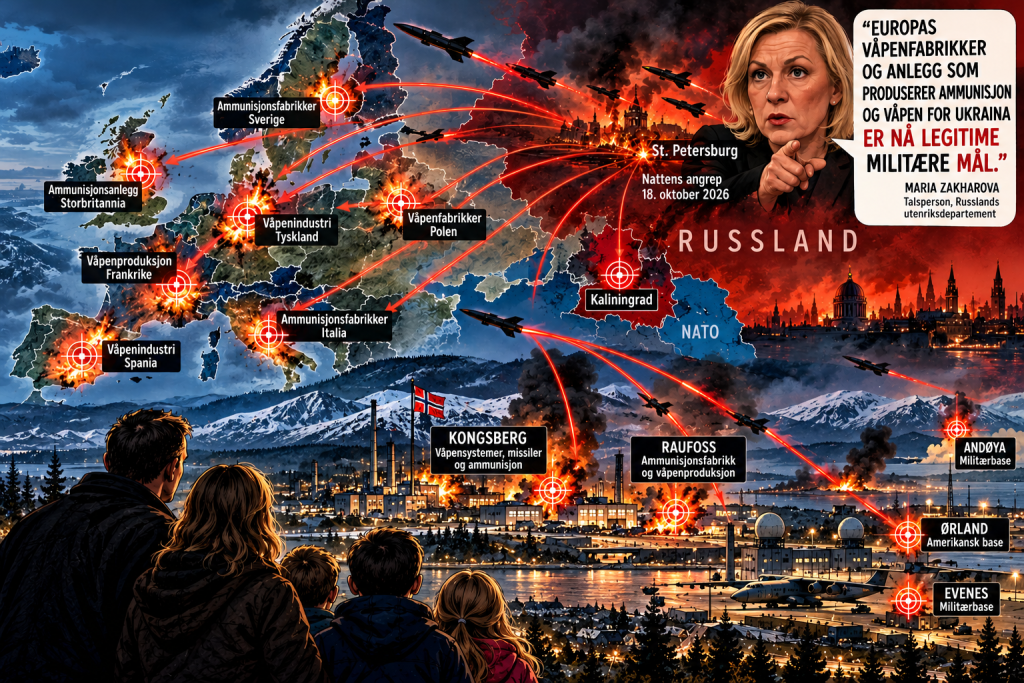
On Kaliningrad, the wording was just as direct: “This is not a threat, it is a consequence.”
Medvedev: the demands stand
At the weekend, Dmitry Medvedev reiterated that an end to the war must be based on the demands Putin set out in June 2024: Ukrainian neutrality, no NATO membership and withdrawal from Donetsk, Lugansk, Zaporozhye and Kherson.
If this does not happen through negotiations, the message is that Russia will try to achieve it militarily.
Peskov’s statements point in the same direction.
Modi pushes – Russia says no
Putin showed no public irritation towards Narendra Modi at Valdai. On the contrary, he praised Modi’s attempts to find a solution.
But Russia shows no willingness to freeze the conflict along the current lines either. The demands stand, and Modi thus finds himself caught between the wish to preserve relations with Moscow and pressure from Washington over India’s purchases of Russian oil.
The front: Dobropolye shrinks, Sumy hit harder
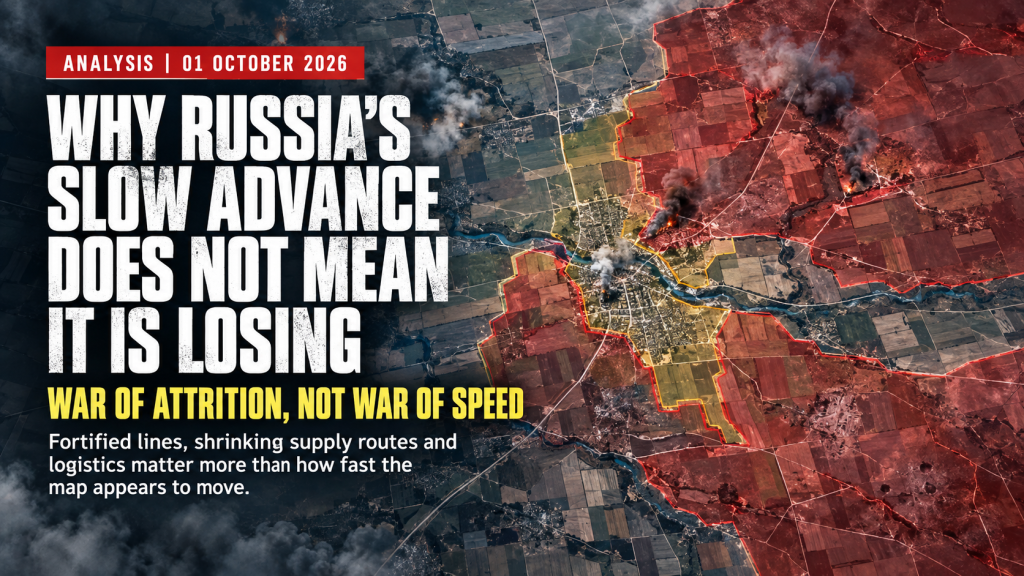
The Russian Ministry of Defence reports further progress in Dobropolye and continued pressure south of Kramatorsk and in the Kharkov region.
The most interesting development came in Sumy. Russian forces used several guided glide bombs against the city itself and the surrounding area, and at least 19 people were reported wounded.
It is too early to conclude that an assault on the city has been decided. But Russian tactical air power is now operating ever more intensively against Sumy, while ground forces push south from the border.
If this continues, Sumy could become the next major city where the air war and the ground offensive begin to merge.