From the deck of the Varyag: An order, not a warning
On Wednesday 12 August, Putin was aboard the Russian missile cruiser Varyag – sister ship of the Moskva, the flagship Ukraine sank in the Black Sea in May 2022 – during the navy’s major exercise off Sakhalin Island in the Pacific. There he received a report from the commander of the Pacific Fleet, Admiral Viktor Liina – and then issued what Western media consistently describe as a “warning”, but which is in fact something far more serious: an order to the Russian armed forces to begin seizing European vessels.
“We see that the authorities of certain countries are trying to restrict the movement of vessels belonging to our businesses by peaceful means, in violation of international maritime law”, Putin said. “Recently it occurred to them that they can seize our ships and sell the plundered property. This is nothing other than piracy and robbery. If this happens, we will be forced to respond in kind. Not necessarily in the waters where they plan raids against our ships, but wherever we consider it necessary and appropriate – including in the Pacific Fleet’s area of responsibility”.
He then added: “The Ministry of Defence has received corresponding instructions.” Admiral Liina confirmed that between 24 April and 6 August a total of 1,011 vessels had passed through Russia’s exclusive economic zone along the southern Kuril island chain, 379 of them sailing under the flags of “unfriendly states” – including 26 British and 9 French vessels. He concluded: “We have the necessary forces to inspect and detain vessels belonging to unfriendly states and their shadow fleet. Interagency cooperation has been established and we are ready to carry out these tasks”.
The EU’s 21st sanctions package – adopted in July – is the triggering factor. The package contains a provision allowing EU states to seize and sell oil and other cargo from Russia’s shadow fleet, even if the cargo legally belongs to third-party buyers in the Asia-Pacific region. Putin’s legal assessment is correct: this is a breach of international maritime law. The Russian retaliation is proportionate in its logic – and far more dangerous in practice.
Russia has a considerably more powerful navy than any single EU country. A recent article in the Daily Telegraph by former Royal Navy captain Tom Sharp openly praises the presence of Russian frigates in British coastal waters and notes that the Russian vessels are more powerful than their British equivalents – and that the state of the Royal Navy and its shipbuilding programmes is “lamentable”. The Russian navy rotates vessels through the North Sea, the Baltic and now the Pacific with a capacity no European state can match.
If the EU continues to seize Russian shadow-fleet tankers in the Mediterranean, the Baltic or the North Sea, the Russian navy has now been ordered to respond by seizing European merchant ships – not in European waters, but in places of Russia’s own choosing, including the Pacific. These are waters where the EU is almost entirely absent militarily. Japan and South Korea have the capacity to escalate in response – but neither wants to be dragged into a maritime conflict between Europe and Russia. The US has the capacity, but is unlikely to want to provoke China and North Korea in the same region to protect European ship seizures. My assessment is that the Americans are already sending private messages to London and Paris: stop this now.
Europe’s shadow-fleet policy turns against itself
There is an irresistible irony in Admiral Liina’s statement that European ships sailing under third-country flags constitute a “European shadow fleet”. That is exactly what Western media and politicians have called Russian shadow-fleet ships. The term “shadow fleet” has never had any legal content – it simply means ships that are not registered and insured in London. There is no international legal obligation to do so. Russia has now made the term mutual: Britain and France operate their own shadow fleets, and they are just as exposed to seizure as the Russian one.
This is not a warning about what might happen. It is an order to the Russian navy about what will happen.
Orikhiv: A Ukrainian brigade is trapped
From the Zaporizhzhia region, video footage has now been published in which soldiers from a Ukrainian brigade, identified as located in the Orikhiv sector, appeal to the high command in Kyiv for immediate rotation. The tone is desperate. They describe an “extremely serious situation” and speak of being surrounded or close to being surrounded. That an entire brigade is now publicly appealing to be withdrawn – something Syrskyi effectively suppressed in his time – is in itself a sign that discipline in the Ukrainian military is beginning to fail under the new leadership.
Russian mapping and drone geolocation confirm a Russian military presence in south-eastern parts of Orikhiv. Mala Tokmachka, the suburb that controlled the south-western approach, has in practice been cleared of Ukrainian resistance. The northern supply line was cut with the fall of Liubymivka a few weeks ago. The remaining supply corridors are under constant Russian drone interdiction and can only be used in brief windows. Orikhiv is not about to fall – it is about to collapse.
Zelensky mocks North Korea while Kramatorsk airfield is threatened
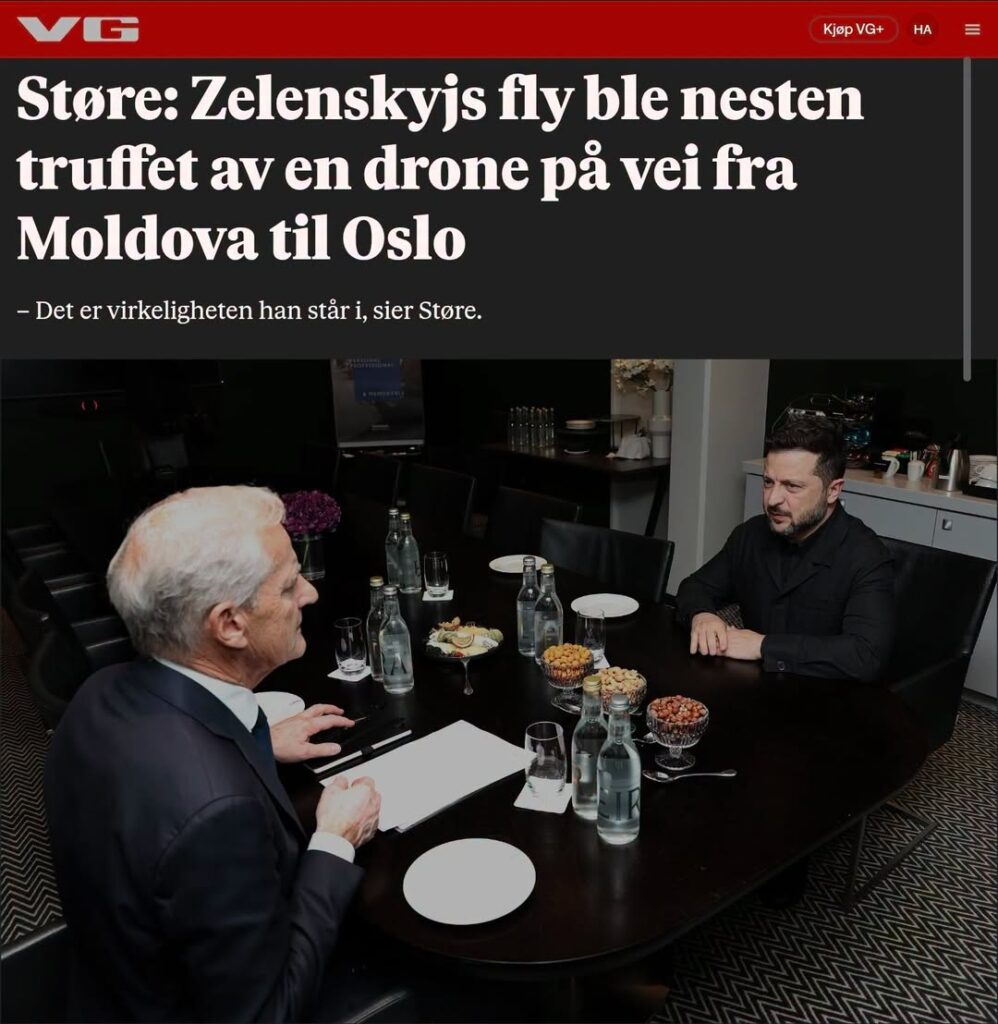
This week Zelensky has repeatedly tried to play down the use of North Korean KN-23 ballistic missiles against Zaporizhzhia and Dnipro by calling it a sign that Russia has “run out of resources”. It is an assessment bordering on the absurd. Ukraine is being pounded day and night by Russian missiles and drones. The front lines are failing. The ports are closed. And Zelensky mocks Russia because a North Korean missile brigade with around 170 missiles has fired six of them.
It is not North Korea that worries Ukrainian soldiers in the trenches. It is the 8,300 glide bombs dropped in July alone. It is the Iskander missiles, now produced at a rate of 120 per month. It is the jet-powered Geran-4 drones attacking railways, petrol stations and logistics across the country. A single North Korean missile brigade changes none of this. But it gives Zelensky the image he needs for the foreign press.
Meanwhile, Marat Khairullin and Scott Ritter (Calibrated) report something far more serious: Russian forces are now just a few kilometres from a military airfield east of Kramatorsk – a fortified structure that, according to Ukrainian military sources, is a key operational support point for the defence of the entire Kramatorsk complex. If this airfield falls, the structural integrity of the Kramatorsk defence will begin to crumble. The same applies to Mykolaivka and the Sloviansk thermal power plant, where Russian pressure is intensifying.
The DeepState problem: Kyiv is getting the wrong map
Scott Ritter recently made a striking point based on a comparison of the DeepState maps – the Ukrainian-run mapping project used by Western media and probably by the Ukrainian military itself – with actual observed Russian positions based on drone footage, geolocation and consistent Ukrainian and Russian bloggers. The conclusion is depressing: DeepState has in practice stopped recording Russian advances in the sectors around Pokrovsk, Duvivka, Oleksiivka and Dobropillia. The sectors appear unchanged for weeks – even when Russian soldiers have been filmed and geolocated in those very territories.
This is not only a problem for Western readers and journalists. If the Ukrainian General Staff receives its maps from the same source, Zelensky, Drapatyi and the new defence minister Khmara may have a fundamentally wrong picture of the actual situation on the front line. That is the risk you always run when you spend more time managing information about the war than running the war itself.
Fyodor Lukyanov: Russia has no choice but to win
Fyodor Lukyanov – Russia’s most influential and moderate establishment commentator, known for his closeness to Putin – gave an interview this week in which he stated that Russia “has no choice but to fight on to a decisive victory”. To do anything else, he said, would now be “extremely dangerous” for Russia. This is not Medvedev or a hardliner speaking. It is the man who has come closest to representing the “reasonable” Russian establishment throughout Putin’s presidency. It is the latest clear indicator that the diplomatic space that once existed is now closed.
The reciprocity of the dirty war: Who started it?
The last point that deserves attention is the broader logic behind what is now unfolding at sea and in the dirty war. Russia responds to European ship seizures with an order to retaliate. Iran, attacked by the US and Israel, closes Hormuz and develops assassination plans. Russia, attacked by drones targeting Valdai, responds by escalating its strikes on Kyiv. A dirty war that begins with one act of retaliation has no natural stopping point – because both sides can always say the other started it.
The fundamental Western mistake is the belief that other parties cannot or will not react in natural self-defence. That is never true. It has never been true. And yet this is the premise underlying European shipping policy, the logic of the Ukrainian drone offensive and US policy on Iran. All three are now at various stages of backfiring on those who launched them.