Talks, Yes. Concessions, No.
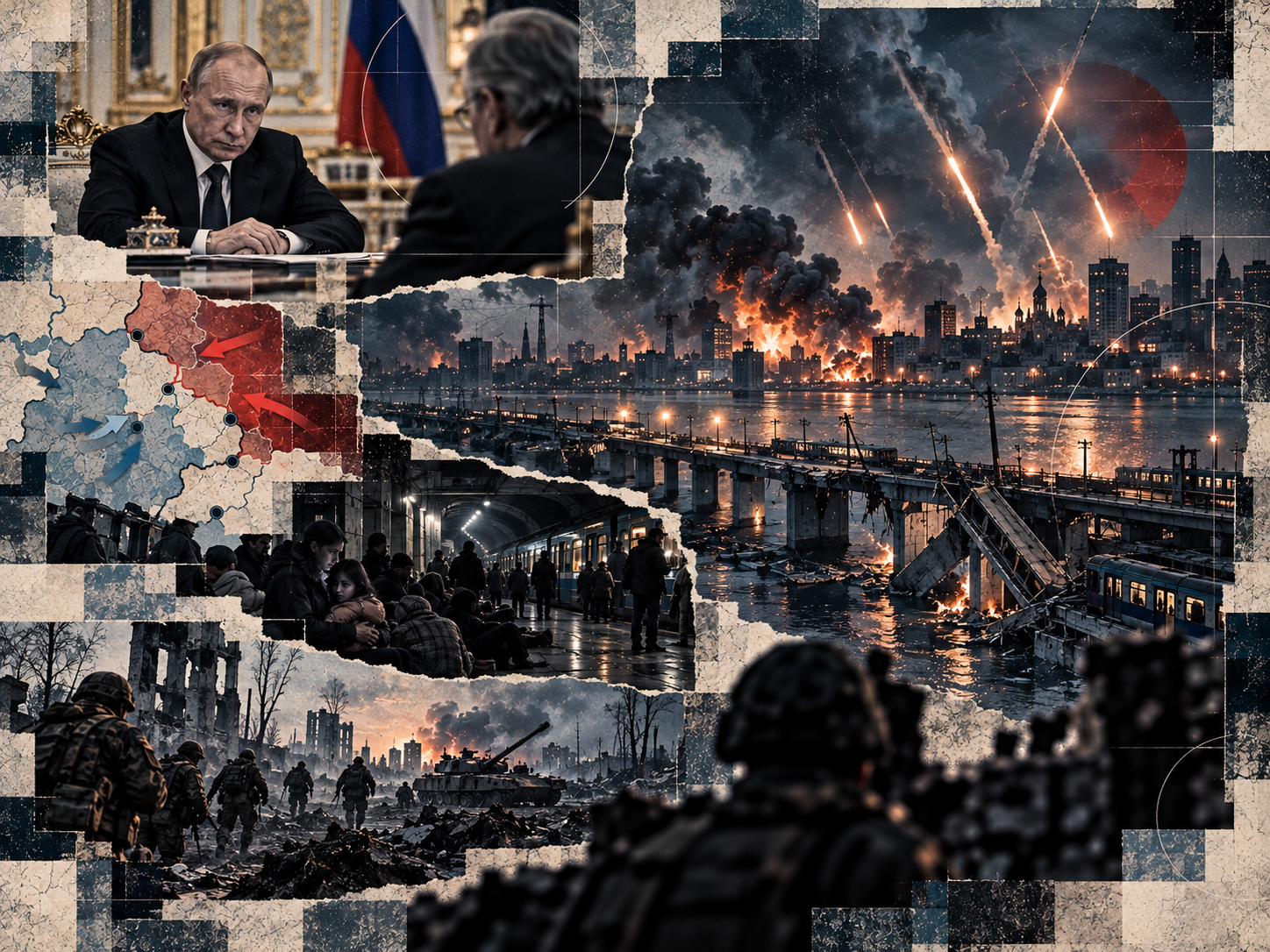
On Wednesday, Vladimir Putin spent roughly three hours with US Special Envoy Steve Witkoff at the Konstantin Palace outside St. Petersburg. The meeting produced an agreement in principle to resume trilateral talks between Russia, the United States and Ukraine after 10 November, most likely in Abu Dhabi.
That agreement to resume talks is the only genuinely new element.
Putin’s adviser Yuri Ushakov said the European and Ukrainian proposals Witkoff had brought with him from Oslo offered little of real value in resolving the conflict, although he later told Russian television that Moscow nevertheless regarded them as a step in the right direction. The discussions are expected to focus on what kind of security arrangement should govern Russia and Ukraine once the war ends.
At the same time, Kremlin spokesman Dmitry Peskov made clear that Moscow wants a peace settlement, not a temporary ceasefire. Volodymyr Zelensky, meanwhile, repeated on Wednesday that he is prepared to freeze the current front line.
Ryabkov’s Ultimatum
The following day, Deputy Foreign Minister Sergei Ryabkov gave what amounts to Moscow’s answer to the entire Western proposal.
Speaking at an economic forum in Nizhny Novgorod, he said that any settlement — political or military — must resolve the underlying causes of the war in the most reliable possible way.
Taken together with Russian statements over recent months, that appears to mean three things: Russia intends to take all of Donetsk and Luhansk; there are strong indications that Russian forces would remain in buffer zones inside the Kharkiv and Sumy regions; and Moscow will not accept a bargain along the lines of: “Russia gets Donbas, Ukraine gets NATO membership.”
Ryabkov also described the European position as the most hostile and dangerous, effectively leaving Washington responsible for bringing Europe into line.
What Moscow appears to want is not another political understanding, but a treaty.
An American promise that Ukraine will never join NATO carries little value for the Kremlin if the next US president can simply reverse it. The same applies to the security guarantees Washington has floated for Kyiv, which Russian officials say they have never actually seen.
That demand leads directly back to the two draft security treaties Russia presented in December 2021. It is difficult to imagine the US Senate ratifying anything remotely comparable today.
Moscow knows that.
Why Moscow Is Talking Anyway
Russia has never rejected negotiations as a matter of principle, and there are practical reasons for continuing to sit at the table.
India, Brazil and China all want Moscow to be seen engaging diplomatically, and the Kremlin cannot afford to look like the side refusing to talk. At the same time, if the negotiations fail, a new round of Western escalation is likely anyway. From Moscow’s point of view, there is little reason not to delay that escalation until conditions are more favourable.
There is probably nothing mysterious about the date of 10 November. The US midterm elections take place on 3 November, and the Trump administration is unlikely to devote serious attention to Ukraine until they are over.
Putin also raised the possibility of a summit with Trump and Xi Jinping in China in mid-November — a meeting that would, if it happens, push Ukraine to the sidelines.
Hours Later, Kyiv Is Hit Again
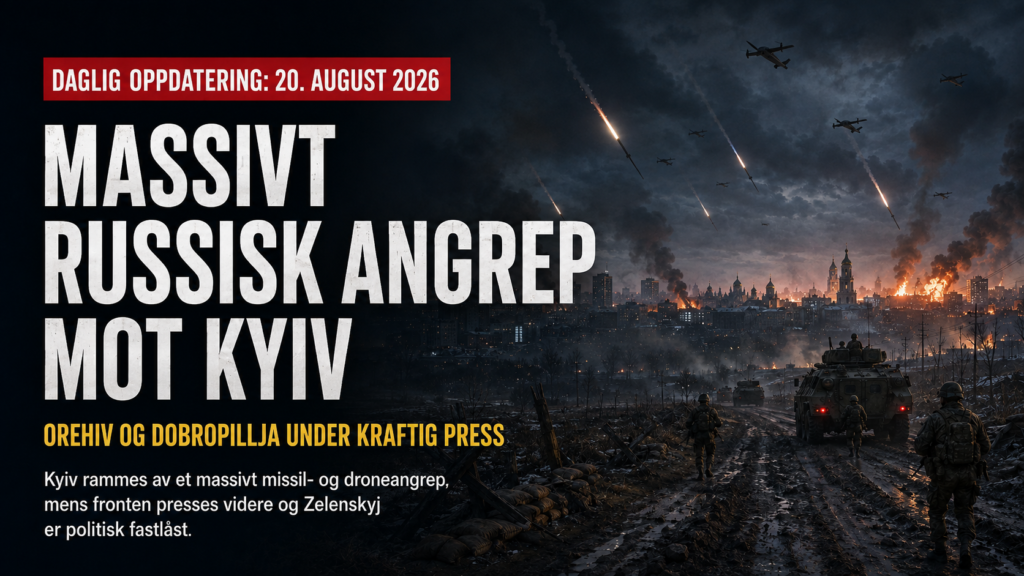
Only hours after Witkoff left St. Petersburg, the war returned to Kyiv.
Russia launched 21 ballistic missiles at the capital overnight into Thursday, according to Zelensky. Ukraine’s air-force report did not list a single ballistic missile as intercepted.
One person was killed and at least 24 were injured. The metro route across the Dnipro was effectively cut in two after infrastructure around the Southern Bridge was damaged, and traffic towards the left bank was suspended. Russian drones had already struck the bridge several times earlier in October.
Why the Southern Bridge?
It is one of the principal supply routes feeding Ukrainian forces in the east, and the attacks on bridges across the Dnipro increasingly look like a systematic campaign: first drones, now ballistic missiles.
Russia is also testing how exposed the airspace over Kyiv has become.
The answer is unlikely to reassure Ukraine. Polish Foreign Minister Radosław Sikorski has said that Poland has no Patriot missiles left to transfer, while stocks elsewhere in NATO are also limited. Russia’s Defence Ministry said the attack targeted military-industrial and transport infrastructure.
Several European outlets have presented the attack as evidence that Russia is not interested in peace.
Moscow has never agreed to a ceasefire. Until one exists, the war continues at full intensity — including during the weeks leading up to negotiations.
The Front: Moscow Claims More Than the Maps Show
Russian military sources say several more villages near Zaporizhzhia have fallen, while airborne troops are now fighting inside Orikhiv and a Ukrainian force there is being trapped in what Russian sources describe as a closing cauldron.
Ushakov said Putin told Witkoff that Russia holds the strategic initiative and is conducting an unrelenting offensive along the entire front.
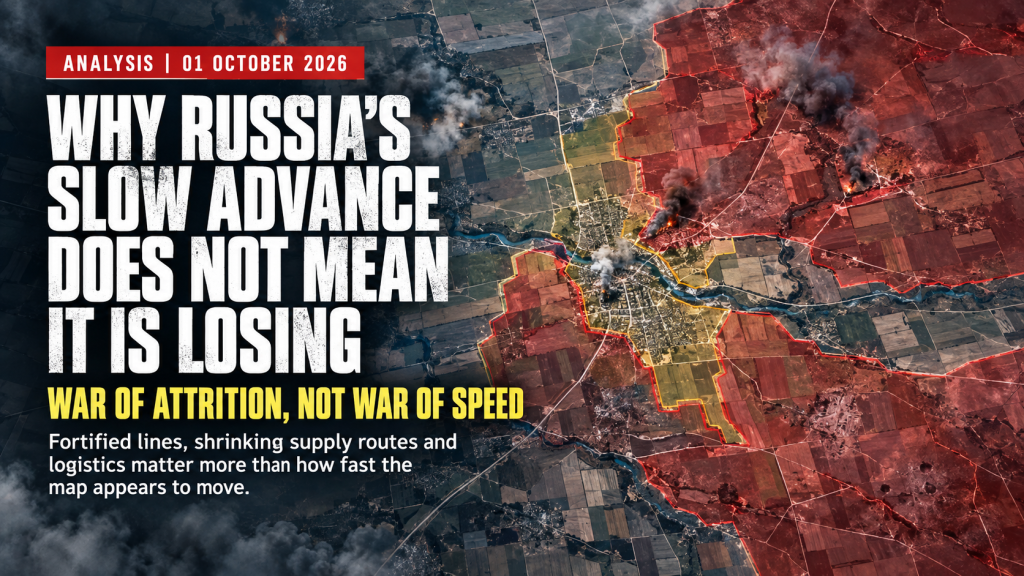
That picture remains heavily disputed. But ISW’s own figures are increasingly difficult to reconcile with other map-based sources.
DeepState is Ukrainian and can hardly be described as sympathetic to Moscow, yet its data show a markedly different picture from ISW’s estimate of roughly 73–100 square kilometres of Russian net gains since the beginning of the year.
A measurement based on DeepState’s front line as of 19 October gives approximately 887 square kilometres of Russian net gains in 2026 — almost nine times ISW’s earlier estimate of 100 square kilometres. American Veterans for Ukraine bases its calculation on DeepState’s own front-line data.
A separate analysis of DeepState figures reaches much the same result. It found that during the first nine months of the year, Russia increased the territory under its control by an average of roughly 3.4 square kilometres per day. Over nine months, that comes to around 900 square kilometres.
That also makes ISW’s assessment of Ukraine’s Vivaldi offensive near Lyman more questionable.
The institute argues that the operation has eliminated the northern arm of Russia’s plan to encircle the Donetsk fortress belt. Developments on the ground sit awkwardly with such a categorical conclusion.
Russian forces are still pressing towards Sloviansk and Kramatorsk from several directions, while fighting continues around Dobropillia and Lyman. Vivaldi may have produced local Ukrainian territorial gains, but the claim that it has broken Russia’s broader encirclement plan appears much less firmly supported than ISW suggests.
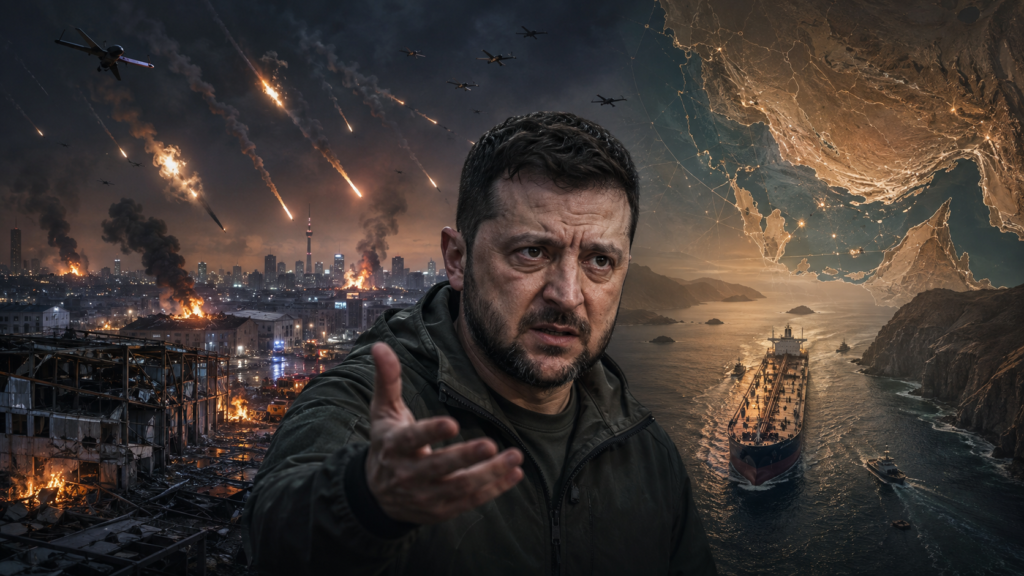
Iran and the Unspoken Timetable
The November talks over Ukraine may ultimately depend on events somewhere else entirely.
The United States is preparing to move some embassy personnel out of the Gulf and, according to Reuters, the immediate concern is renewed Houthi attacks from Yemen.
At the same time, the New York Times has reported that the United States and Israel have prepared plans for a short, intensive operation against Iran after the election. Trump has publicly ruled out an attack before the election.
If that operation goes ahead, Ukraine is likely to fall further down Trump’s list of priorities.
And if Iran responds as forcefully as it did in February, Abu Dhabi may become too dangerous a venue for negotiations. The talks could then slip into the new year.
It is also possible that Kyiv itself walks away once it becomes clear exactly what Putin told Witkoff in St. Petersburg.
The Calculation
The pattern from this week is clear. Moscow says yes to talks, but continues to insist that everything put forward so far falls short. Each diplomatic opening is followed by strikes on Kyiv’s bridges, power grid and metro, in a country that increasingly lacks the air defences needed to stop them.
Nor is the front as clear-cut as ISW presents it: Ukrainian DeepState data point to roughly 887 square kilometres of Russian net gains in 2026, far more than ISW’s estimate, while pressure in Donetsk and south of Zaporizhzhia continues.
That is the backdrop against which the November negotiations are supposed to begin — if they happen at all.