
Izmail and Reni: The Danube gateways are attacked
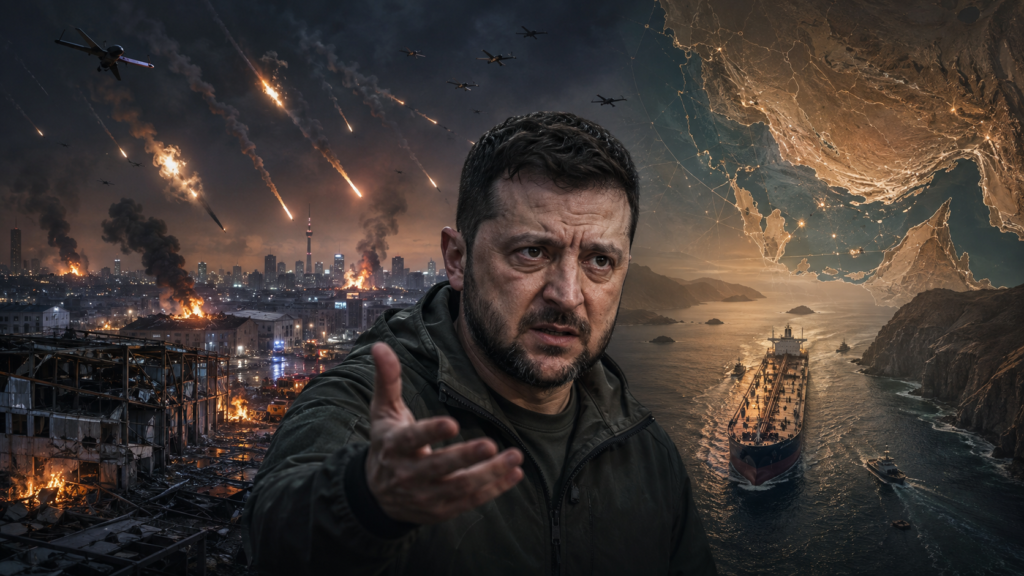
On the night of 13 August, Russian forces attacked the Ukrainian Danube ports of Izmail and Reni – Ukraine’s last operational grain export terminals after the Black Sea ports were closed in July. The Russian Ministry of Defence confirmed strikes on the Ukrainian navy’s command post in Reni and a temporary deployment point for Ukrainian forces in Izmail, as well as port infrastructure used for unloading and storing military cargo. The attacks were carried out by Geran-4 Seeker drones. Izmail’s municipal military administration confirmed the attack, that fire had broken out in the port infrastructure, and that parts of the city were without electricity, water and sewerage. Romania scrambled two F-16 fighter jets from Borcea air base after radar systems detected a group of drones over Izmail near the Romanian border.
The strategic content of these attacks is not hard to read. Reni houses the naval command post for the remaining Ukrainian Danube flotilla – what is left of the Ukrainian navy after it was pushed out of the Black Sea. Izmail is a forward staging point for Ukrainian troops, with key docks and military depots. After the Black Sea ports were blockaded in July, the Danube ports became the last functioning maritime supply corridor for military cargo from Romania and other NATO countries. These attacks are not just a tactical success – they are a strategic step towards cutting Ukraine’s last maritime supply channel.
The full picture: A blockade of all of Ukraine
What is now emerging is a picture of a planned, coordinated and gradually complete blockade of Ukraine from every direction. At sea, the Black Sea ports are closed – according to Ukraine’s own authorities, no commercial shipping has taken place from Ukrainian ports since 22 July. On land, the roads west from Odesa are being cut by Geran drones attacking vehicles and petrol stations along the roads north and west of the city. In the air, civil aviation over Ukraine is in practice impossible – no transport aircraft attempts to land at Ukrainian airports. And now – the Danube gateways.
Russian Geran-4 drones are carrying out attacks on vehicles along the roads north and west of Odesa – something the Russians have never done before. The only logical explanation is that these drones now communicate via the Rassvet satellite system and are controlled by ground operators on Russian territory. That means the drones’ geographical range expands as more Rassvet satellites are launched and manoeuvred into position. Ukrainian online media and Telegram channels are beginning to grasp what this means: Rassvet is making Geran-4 drones operationally available over the whole of Ukraine’s territory, including the west – and this is happening faster than Ukrainian intelligence had anticipated.
The Dnipro bridges remain intact – not because the Russians are incapable of destroying them, but because they appear to have a long-term plan for them. The interdiction of Western military cargo is not meant to happen at the bridges – it is meant to happen further west, as the range and precision of the Geran drones increase. The Russians are, as usual, preparing everything for maximum simultaneous effect: the Rassvet system operational, the naval blockade imposed, and then a gradual tightening of the western land links. That is the Russian military style – not throwing everything into the fight at once, but building up capabilities so that everything kicks in simultaneously.
Oleksiivka and Dobropillia: The southern Donbas is collapsing
From the battlefield: the Russian Ministry of Defence reported on Wednesday intense fighting inside Oleksiivka – the satellite town immediately south of Duvivka and north of Kramatorsk. Russian military sources report that Ukrainian resistance in Oleksiivka is “weaker than expected” and that the Ukrainians are increasingly withdrawing. In addition, the village of Petrivka, west of Duvivka, was taken by Russian forces and confirmed by the Russian Ministry of Defence the same morning.
Combined with Russian advances in Toretsk and Vasiukivka – both confirmed in previous days’ updates – the southern and south-eastern defence of the Sloviansk-Kramatorsk conurbation appears to be crumbling. A Russian military commander in the area, quoted by the Ministry of Defence, said that he and his men are in Lyman and that “mopping up continues”. According to Russian reports, a Ukrainian force is trapped east of the Siverskyi Donets river near Borova and is about to be encircled. The fall of Lyman – confirmed militarily, if not formally announced – appears to be awaiting the elimination of the remaining Ukrainian units.
In Dobropillia, the latest Russian reports are of active fighting in the city’s streets. The Ukrainian military blogger Stanislav Kapivnyk and the Russian analyst Marat Khairullin agree: DeepState’s maps do not reflect the actual situation. Western media, and probably the Ukrainian military leadership itself, are operating on the basis of maps that no longer correspond to reality.
The A-50 AWACS aircraft are back in service – and the Ukrainian drone offensive is becoming old news
There are now reports – and images have been published from Russian bases in the west – that at least one newly upgraded Beriev A-50 surveillance aircraft has returned to service after Russia spent the last two to three years bringing its A-50 reserves back from storage. Russia has a total of 25 A-50s in varying states of readiness, and the Russians now appear to have made six to eight of them operational again. These aircraft – Russia’s answer to the American E-3 Sentry AWACS system – are designed for exactly the task Russia now needs to solve: detecting, tracking and coordinating the shooting down of slow, low-flying craft such as Ukrainian drones.
If the A-50s operate inside Russian airspace – beyond the range of Ukrainian air defence – and send real-time data to Russian air defence systems along the entire front line and deep into Russian territory, it will drastically improve Russia’s ability to shoot down Ukrainian drones and Flamingo cruise missiles while they are still approaching Russian territory. Combined with the Rassvet system and the increasingly effective Pantsir gun-based air defence near key Russian targets, it is highly likely that the Ukrainian drone offensive will eventually level off and become less and less effective.
Ukraine’s answer is to send ever larger numbers of drones – on the night of 13 August, more than 360 Ukrainian drones were reported shot down over Russian regions and over the Black Sea and the Sea of Azov. Russia shot down the vast majority using cannons and machine guns – far cheaper than interceptor missiles, and inexhaustible. The cost ratio is therefore not only unfavourable for Ukraine – it is structurally impossible to sustain over time.
The Danube ports and Romania: A new border problem
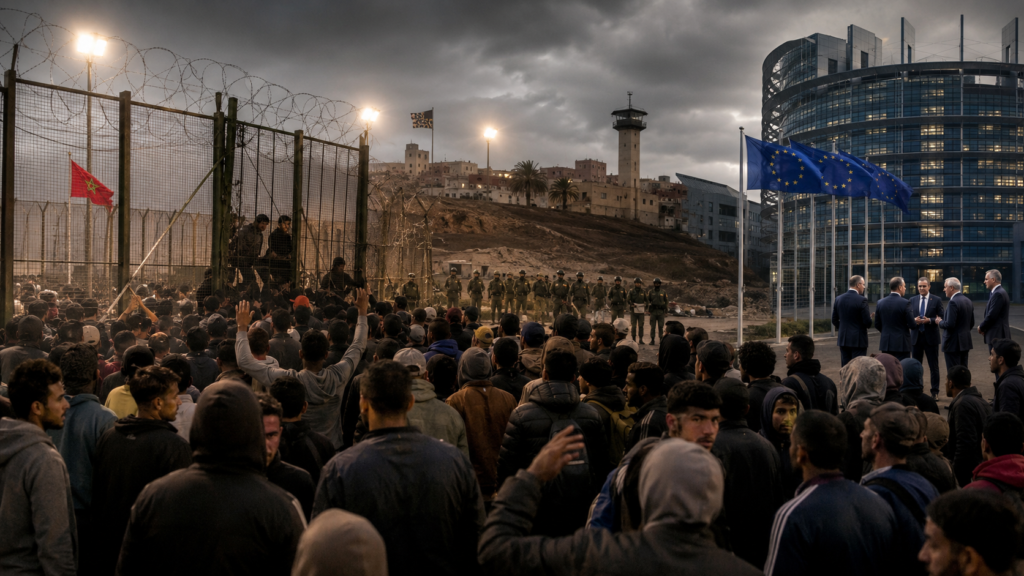
The attacks on Izmail and Reni take place right next to the Romanian border, and the Romanian F-16s that were scrambled were in a position to observe the drone activity directly. It is the third time within a month that a NATO country has scrambled fighter jets in connection with Russian drone operations near the border with Ukraine. Politically this is painless for Russia – Romania is not a target, and Russia hits precisely the military and logistical facilities it has announced it will hit. But it underlines the geopolitical unease along NATO’s eastern flank.
The North Atlantic Council has held an ambassadors’ meeting and blamed Russia for the latest drone incidents in Romania and Poland. The statement has no concrete consequence beyond the diplomatic note.
The right answer – and the advice no one asks for
According to the sum of the military, diplomatic and energy trends analysed over recent weeks, the war has now entered a decisive phase that will play out over the coming months. The British military has tried to reach Russian general staffs in Moscow and St Petersburg – and been rebuffed. Witkoff and Kushner are apparently not welcome in Moscow unless they have something new to say. Europe’s diplomatic channels to Russia are almost completely non-operational after three and a half years of consistent rejection.
The advice no one asks for, but which the situation demands: the British foreign secretary Ed Miliband should call Lavrov – not with a peace plan, not with conditions, but with a simple message: Britain wants to understand Russia’s view and hear what it has to say. Such an approach should be made discreetly, without guarantees of outcome, and without presenting Ukraine with a pre-negotiated solution. But it should be made. Every day without diplomatic contact is a day on which the bill grows – and on which what could have been negotiated last week is a little harder to negotiate this week. That is the simple arithmetic of a war the West is not winning.




Se og hør mer
Videoer, klipp og innslag knyttet til temaet.